
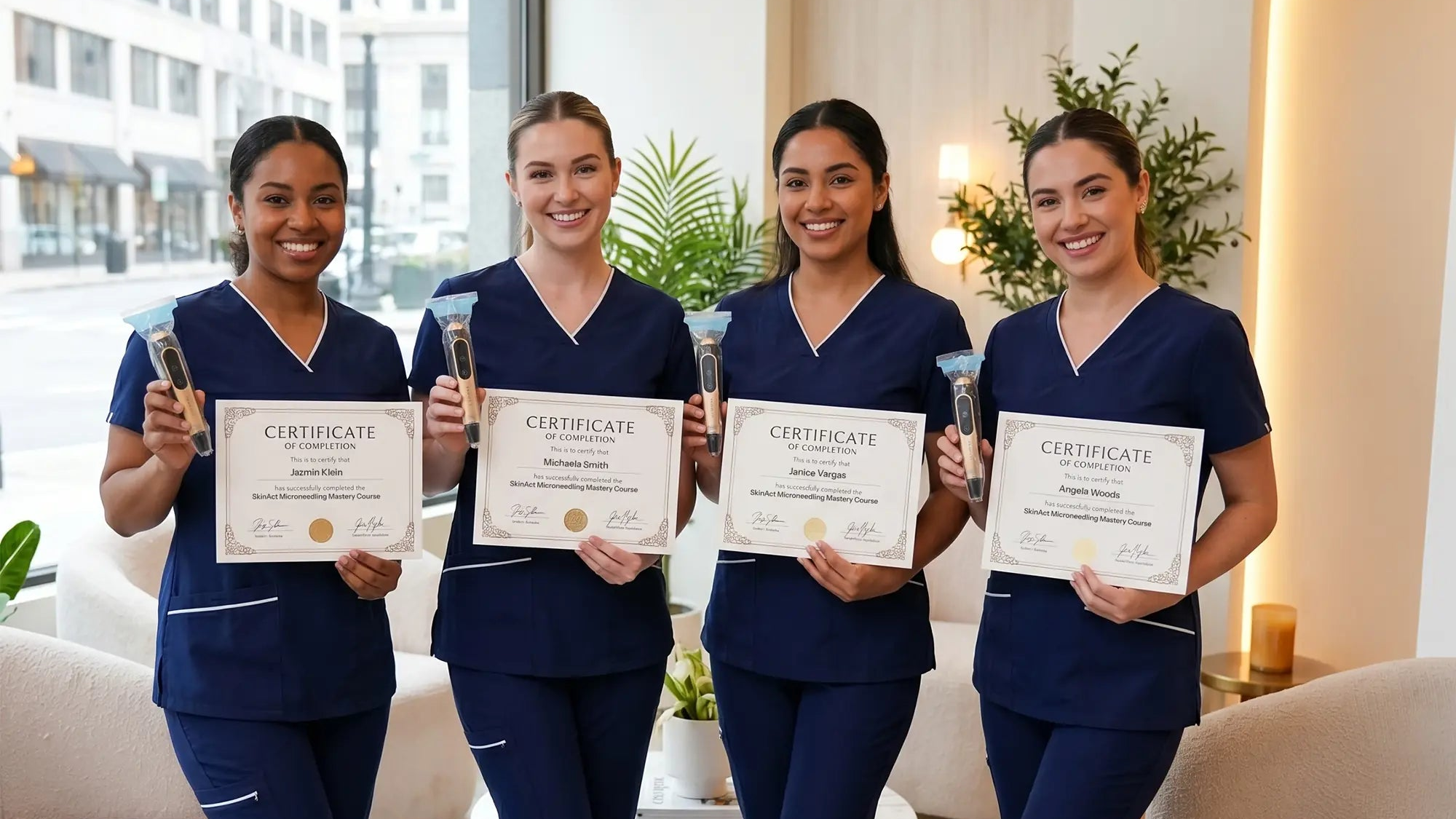
Master the art of
Advanced Skin Care
Elevate your expertise with advanced techniques designed for real client results.
Our Popular Courses
Equip yourself with the training to grow your business!
Online Microneedling Training Course for Estheticians Elevate your skincare career with the industry’s most in-demand rejuvenation treatment. This comprehensive Online Microneedling Course is designed specifically for licensed estheticians and beauty professionals ready to master the art of Collagen Induction Therapy (CIT). Moving beyond basic dermal rolling, this course provides deep instruction on professional automated devices (like pens), ensuring you understand the precise mechanics of creating controlled micro-injuries to stimulate the body’s natural wound-healing response. You will learn to confidently treat lucrative skin concerns, including acne scarring, hyperpigmentation, deep wrinkles, and textural irregularities. Bonus: Receive a complimentary, ready-to-use client intake and skin assessment form designed to support more thorough consultations, documentation, and treatment planning in your practice. What you will master: The Science of CIT: Understanding the physiology of collagen and elastin production. Depth & Precision: How to select the correct needle depth (0.25mm to 2.5mm) based on client skin type and local regulations. Nano-Needling vs. Microneedling: Knowing when to use cosmetic infusion versus medical-grade induction. Safety Protocols: Mastery of sterile technique, bloodborne pathogen safety, and absolute contraindications. Post-Care Mastery: Designing aftercare regimens that prevent infection and accelerate results. This comprehensive online course is designed for estheticians, beauty professionals, and individuals interested in mastering Microneedling treatments. From understanding the science behind Microneedling to performing safe and effective treatments, this course covers everything you need to know to offer this popular skincare treatment confidently.
Online Nanoneedling Training Course for Estheticians The Complete Nanoneedling Guide: Serum Infusion, Treatment, and Business Integration Nanoneedling is one of the most versatile treatments in modern esthetics, combining advanced skin infusion with non-invasive rejuvenation to improve hydration, radiance, and overall skin health. This comprehensive course takes you from the science of nano infusion to real-world clinical application, providing the knowledge and protocols needed to confidently perform safe, effective, and results-driven treatments. Because nanoneedling relies on precise technique, proper client selection, and ingredient compatibility, treatment safety is essential. You'll learn how to accurately identify contraindications, evaluate Fitzpatrick skin types, select appropriate treatment serums, and understand the biomechanics of nanoneedle cartridges, depth settings, and oscillation. This course also emphasizes infection control, proper cartridge handling, post-treatment recovery, and business strategies that help you seamlessly integrate nanoneedling into your practice. Bonus: Receive a complimentary, ready-to-use client intake and skin assessment form designed to support more thorough consultations, documentation, and treatment planning in your practice. Includes: Thorough Skin Analysis: Learn how to identify contraindications, assess skin health, and determine ideal treatment candidates. Ingredient Selection: Understand which professional serums enhance results—and which ingredients should never be used during nanoneedling. Clinical Protocols: Master treatment technique, cartridge selection, infection control, and post-treatment recovery protocols. Business Integration: Learn pricing strategies, treatment series planning, retail recommendations, and modality pairings to maximize client results and practice profitability.
Online High Frequency Training Course for Estheticians This practical, hands-on course is designed to give you total confidence with your High Frequency machine. We take a deep dive into the tools of the trade, explaining the specific purpose of every glass electrode, from the Mushroom for general face work to the Sparking/Zapper for stubborn blemishes and the Comb for scalp stimulation. You will master the art of "Sparking" (fulguration) to safely treat acne lesions without causing trauma. We also cover essential sanitization protocols to prevent cross-contamination and extend the life of your fragile glass electrodes. Bonus: Receive a complimentary, ready-to-use client intake and skin assessment form designed to support more thorough consultations, documentation, and treatment planning in your practice. Course Highlights: Electrode Dictionary: A visual guide to the Spoon, Mushroom, Sparker, and Rake. Step-by-Step Protocols: How to integrate High Frequency into a standard facial, post-extraction, or as a standalone acne treatment. Physiological Effects: Thermal energy, ozone formation, and vasodilation. The Argon vs. Neon Debate: Detailed use cases for acne grades vs. sensitive/aging skin. Contraindications: A comprehensive guide to safety, including pregnancy, pacemakers, and metal implants.
Online Microdermabrasion Training Course for Estheticians Build a strong foundation and understanding of professional Diamond-tip microdermabrasion with a course designed for professionals who want to offer a skin resurfacing treatment with greater precision and purpose. Explore diamond-tip microdermabrasion as a versatile form of mechanical exfoliation and learn how it can be incorporated into professional facial services as an alternative to intensive resurfacing treatments. Beyond device operation, this course covers proper diamond-tip technique, client consultation & skin analysis, treatment planning, and how to adapt microdermabrasion according to individual skin needs and treatment goals. Develop the confidence needed to perform Microdermabrasion facial treatments while supporting smoother, refreshed, and visibly rejuvenated skin. Bonus: Receive a complimentary, ready-to-use client intake and skin assessment form designed to support more thorough consultations, documentation, and treatment planning in your practice. Key Takeaways Diamond-Tip Microdermabrasion Fundamentals Understand how diamond-tip microdermabrasion works at the surface of the skin, including its interaction with the stratum corneum and the physiological response created through mechanical exfoliation and vacuum suction. Tip Selection & Treatment Settings Learn how diamond tip grit, suction level, pressure, and number of passes influence treatment intensity, with a brief comparison to crystal microdermabrasion. Skin Analysis & Contraindications Assess skin type, sensitivity, barrier condition, Fitzpatrick classification, and current skin concerns to determine when treatment is appropriate, should be modified, or avoided. Professional Technique & Customization Follow a structured microdermabrasion protocol while learning how to adjust technique, suction, and tip selection across different areas of the face, neck, and décolleté. Aftercare, Infection Control & Treatment Planning Review proper sanitation, device care, post-treatment recommendations, recovery expectations, homecare guidance, and treatment frequency to support safe and consistent professional services.
Online Microcurrent Training Course for Estheticians Perfect the art of the "non-invasive facelift." Microcurrent is highly technique-driven; your results are only as good as your movements. This hands-on, protocol-focused course is designed to give you total confidence in wielding your microcurrent probes (or gloves) to achieve immediate, wow-factor results for your clients. We break down the specific techniques required for successful muscle re-education, teaching you the precise pressure, glide, and hold times needed to manipulate muscle tissue. You will learn comprehensive, step-by-step protocols for the neck, jawline, cheekbones, and brow. Additionally, we cover how to properly prep the skin with conductive gels and serums to ensure optimal current flow without causing galvanic sensitivity. Bonus: Receive a complimentary, ready-to-use client intake and skin assessment form designed to support more thorough consultations, documentation, and treatment planning in your practice. Course Highlights: Probe Mastery: The biomechanics of pinching, lifting, and holding facial muscles. Customized Protocols: Tailoring the treatment for lymphatic drainage versus intense lifting. Conductivity & Prep: Choosing the right water-based mediums for maximum current penetration. Treatment Planning: Structuring a series of treatments for cumulative, long-lasting results.
Online Galvanic Training Course for Estheticians Galvanic therapy is a cornerstone of professional esthetics, but it requires strict adherence to safety and hygiene standards. This comprehensive course explores the foundations of the treatment through modern professional applications, emphasizing safe techniques and practical execution. Develop confidence through step-by-step protocols, real-world scenarios, and treatment adaptations tailored to individual client needs. Because Galvanic utilizes true electrical current, client safety is paramount. We provide an exhaustive review of contraindications, teaching you how to screen clients for pacemakers, metal implants, braces, pregnancy, and epilepsy. Furthermore, this course sets the standard for infection control, detailing the exact FDA and state-board compliant methods for sanitizing and storing your metal electrodes and grounding pads to prevent cross-contamination. Bonus: Receive a complimentary, ready-to-use client intake and skin assessment form designed to support more thorough consultations, documentation, and treatment planning in your practice. Includes: Client Consultation: How to perform a thorough intake to identify hidden contraindications. The Sensation Profile: Explaining the "metallic taste" and mild tingling to nervous clients. Infection Control Mastery: Strict sanitization protocols for all multi-use machine components. Treatment Integration: Where to place Galvanic treatments within your standard 60-minute facial flow.

Documents
Editable client intake forms
Streamline your clinical workflow with this comprehensive Client Intake and Skin Analysis bundle. Designed for estheticians, medspas, and cosmetic nurses, these documents standardize your consultation process, effectively map out phased treatment plans, and ensure you capture critical client medical histories to mitigate liability.
New Educational Courses
Find our most recent courses
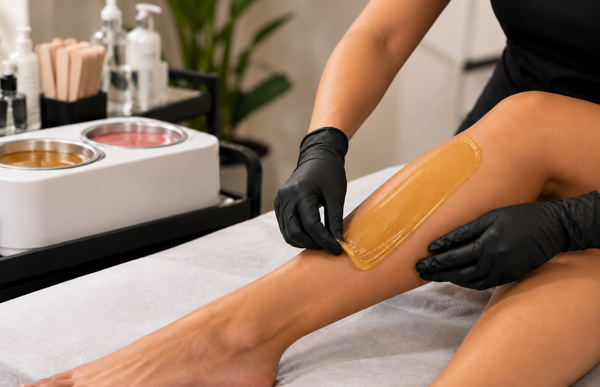
Online Waxing Course: The Esthetician’s Guide to Professional Waxing Unsure which wax to use, how much to apply, or when it's ready to remove? This comprehensive online waxing course provides practical, treatment-room guidance on hard and soft wax selection, skin preparation, hair-growth patterns, proper application, and safe removal techniques, including an in-depth look at wax formulations and environmental adaptations—from traditional, film, gel, cream, and synthetic wax options to the effects of room temperature, humidity, and skin moisture on wax performance. Learn how to confidently perform arm, leg, underarm, chest, back, and neck waxing, with detailed instruction on client positioning, skin stabilization, wax consistency, and adapting techniques to different hair textures, skin conditions, and skin tones—including visual recognition of inflammation and considerations for post-inflammatory hyperpigmentation. Beyond the basics, you'll explore real-world waxing challenges that are often overlooked in foundational education—including wax that won't release, excessive perspiration, missed hairs, skin lifting, contamination incidents, and knowing when to stop or modify a service. With 13 practical troubleshooting scenarios, professional infection-control protocols, and experienced esthetician tips, this course helps strengthen the technique, decision-making skills, and professional judgment needed to approach waxing appointments with greater confidence. Bonus: Receive a complimentary, ready-to-use client intake and skin assessment form designed to support more thorough consultations, documentation, and treatment planning in your practice. Key Takeaways Hair Biology + Growth Mapping:Understand hair-growth cycles, hair classifications, and multidirectional growth patterns to guide waxing techniques. Wax Formulations + Environmental Adaptations:Explore different hard and soft wax formulations, product selection, working consistency, and how temperature, humidity, and skin moisture affect wax performance. Skin Assessment + Preparation:Identify contraindications, select appropriate pre-wax products, and recognize skin responses across different skin tones. Body Waxing + Application Techniques:Learn proper positioning, skin stabilization, wax readiness, and controlled removal techniques for the arms, legs, underarms, torso, shoulders, and neck. Troubleshooting + Professional Judgment:Navigate 13 real-world scenarios involving adhesion issues, application errors, skin reactions, and knowing when to modify or stop a service. Infection Control + Aftercare:Apply daily, weekly, and monthly sanitation practices, respond to contamination incidents, and provide appropriate post-wax care.
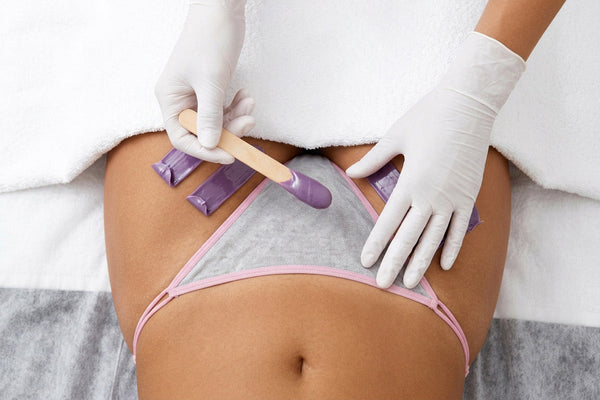
Online Brazilian Wax Specialist Training: Professional Waxing Techniques & Safety Brazilian waxing is one of the most requested body-waxing services, and performing it professionally requires far more than simply applying and removing wax. This online Brazilian wax training for estheticians teaches the foundations of professional Brazilian waxing (Hard wax), including intimate anatomy, hair-growth patterns, contraindications, hard and soft wax selection, skin preparation, client positioning, wax application and removal, infection control, consent, and Brazilian wax aftercare. Go beyond basic waxing demonstrations with practical Brazilian waxing techniques and real-world troubleshooting for situations new estheticians are often least prepared for, including skin lifting, bleeding, stuck wax, compromised skin, unexpected reactions, and knowing when to modify or stop a waxing service. Bonus: Receive a complimentary, ready-to-use client intake and skin assessment form designed to support more thorough consultations, documentation, and treatment planning in your practice. Key Takeaways Intimate Anatomy + Hair-Growth MappingUnderstand external anatomy, treatment boundaries, hair types, growth cycles, and changing growth directions. Consultation, Contraindications + ConsentScreen client history and skin concerns while learning when to proceed, modify, postpone, or refer. Establish clear consent, privacy, and professional boundaries. Wax Selection + Skin PreparationUnderstand hard versus soft wax, wax readiness, and when to use powder, pre-wax oil, or neither based on the client and treatment area. Positioning + Brazilian Wax TechniqueDevelop proper section size, application, skin tension, removal direction, removal angle, and client positioning using a systematic treatment sequence. Infection Control + SafetyApply professional standards for PPE, no double-dipping, contaminated wax, single-use supplies, and cross-contamination prevention. Troubleshooting + Knowing When to StopLearn how to respond to stuck wax, skin lifting, bleeding, unexpected lesions, client reactions, and compromised skin. Aftercare + Ingrown PreventionGuide clients through post-wax care, temporary skin responses, exfoliation, friction precautions, and practical ingrown-prevention strategies. Professional Practice + Client RetentionStrengthen the client experience through documentation, communication, rebooking, follow-up, and consistent professional standards.
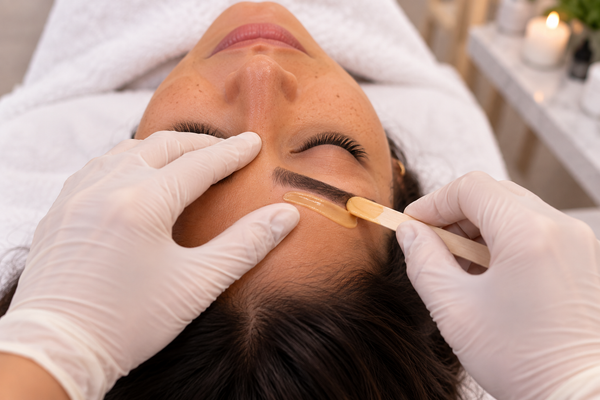
Online Brow Specialist Training: Waxing, Mapping & Precision Design for Estheticians Eyebrow waxing may look simple, but the decisions that protect the skin and preserve the brow shape happen long before the wax is removed. This comprehensive course takes estheticians beyond basic hair removal, teaching the professional judgment, recognizing wax readiness, mapping techniques, skin assessment, and controlled waxing methods needed to create balanced, client-specific results. Learn how to work with natural asymmetry, map brows, preserve strategic growth areas for clients growing fuller brows, assess contraindications, and modify positioning for skin laxity, all before you step foot in the treatment room. The course also covers real-world situations that are often overlooked in foundational waxing education—including combining brow waxing with facial services, trimming difficult growth patterns, correcting wax placement mistakes, protecting eyelash extensions, and responding appropriately to unexpected skin reactions. The goal is not simply to perform a brow wax, but to understand how to make safe, informed decisions before, during, and after every service. Bonus: Receive a complimentary, ready-to-use client intake and skin assessment form designed to support more thorough consultations, documentation, and treatment planning in your practice. Key Takeaways Strategic Brow Mapping:Map for balance, asymmetry, natural growth, and future brow goals. Contraindications + Skin Assessment:Recognize when to proceed, modify, postpone, or avoid waxing. Positioning + Removal Technique:Adapt for skin laxity and client needs while mastering tension and parallel removal. Advanced Trimming + Shaping:Work confidently with curly, downward-growing, sparse, or stubborn brow hairs. Real-World Troubleshooting:Learn what to do when wax lands where it should not, hair breaks, or adhesion fails. Treatment Responses + Safety:Differentiate expected redness from skin lifting, pinpoint bleeding, and reactions that require you to stop.
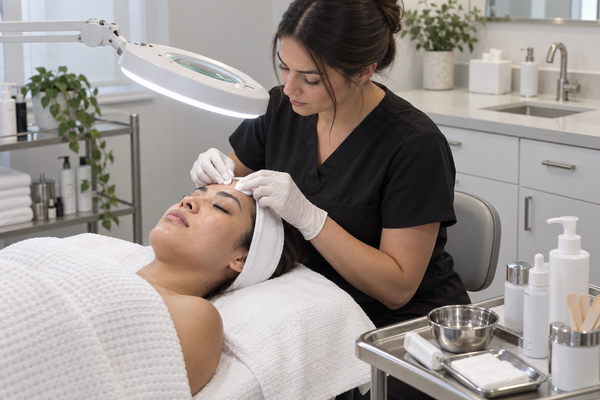
Online Acne & Extractions for Estheticians: Lesion Recognition, Skin Preparation & Professional Extraction Technique Working with acne requires far more than knowing how to perform extractions. It requires understanding how acne develops, how to evaluate what is presenting on the skin, and when treatment should be adjusted based on what you observe. This course focuses on building the professional judgment needed to approach acne-focused services with greater intention, from the initial skin analysis through treatment and ongoing client care. Special attention is given to how acne and post-inflammatory changes may present across different skin tones and Fitzpatrick types, an area that is often underrepresented in traditional esthetics education. By the end of the course, estheticians will be better prepared to make informed treatment decisions based on the condition of the skin and how it responds throughout the service. Bonus: Receive a complimentary, ready-to-use client intake and skin assessment form designed to support more thorough consultations, documentation, and treatment planning in your practice. Key Takeaways Acne Science & Lesion Identification Understand how acne develops, recognize common lesion types, identify acne look-alikes, and know when a presentation may require referral. Client Assessment & Treatment Decisions Evaluate acne grade, inflammation, barrier condition, sensitivity, and client history to determine when to proceed, modify, avoid, or refer. Extraction Preparation, Tools & Technique Learn how to prepare the skin, select the appropriate extraction method, control pressure, and recognize when a lesion should be left alone. Professional Acne Facial Protocols & Modalities Build acne-focused facial protocols using appropriate exfoliation, extraction timing, LED, high frequency, and other modalities based on the skin’s presentation. Home Care & Long-Term Management Recommend practical home care, support PIH prevention and barrier health, set realistic expectations, and adjust treatment plans as the skin changes over time.
Online Radio Frequency Training Course for Estheticians Radio Frequency Radiance: Master RF Skin Tightening & Collagen Remodeling Explore the science and professional application of radio frequency skin rejuvenation through comprehensive, SkinAct-focused training. Discover how alternating electrical current interacts with tissue impedance to generate controlled thermal energy, stimulate collagen remodeling, and improve the appearance of skin firmness, elasticity, and mild laxity. Learn how to assess facial anatomy, preserve natural volume, select the appropriate handpiece, adjust treatment variables, and perform a complete step-by-step RF treatment with confidence. This course also emphasizes temperature monitoring, client comfort, troubleshooting, infection control, documentation, and the importance of following device-specific protocols for safe, consistent results. Bonus: Receive a complimentary, ready-to-use client intake and skin assessment form designed to support more thorough consultations, documentation, and treatment planning in your practice. Key Takeaways The Science of Radio Frequency Heating: Gain a clear understanding of how alternating electrical current, tissue impedance, ion movement, and controlled heat work together to produce immediate collagen contraction and progressive dermal remodeling. Anatomy, Collagen & Facial-Volume Preservation: Explore the epidermis, dermis, extracellular matrix, fibroblasts, collagen, elastin, and subcutaneous tissue. Learn how to assess facial fat compartments, thin tissue, prominent bone, and volume-deficient areas before treatment. RF Handpieces & Energy Configurations: Understand the differences between monopolar, bipolar, tripolar, quadripolar, and multipolar RF, including their current pathways, treatment depth, intended areas, contact requirements, and return-electrode considerations. Advanced Client Assessment & Treatment Planning: Develop the ability to evaluate skin thickness, hydration, sensitivity, laxity, contraindications, anatomical structure, and treatment goals while selecting conservative, individualized parameters. The Complete Radio Frequency Protocol: Follow a detailed treatment-room workflow covering equipment inspection, cleansing, conductive-gel application, facial zoning, handpiece contact, movement patterns, overlap, temperature monitoring, finishing products, aftercare, and documentation. Troubleshooting, Safety & Infection Control: Learn how to respond to slow heating, isolated hot spots, handpiece drag, uneven erythema, client discomfort, and abnormal reactions while maintaining state-board-aligned cleaning, disinfection, and equipment-care practices.
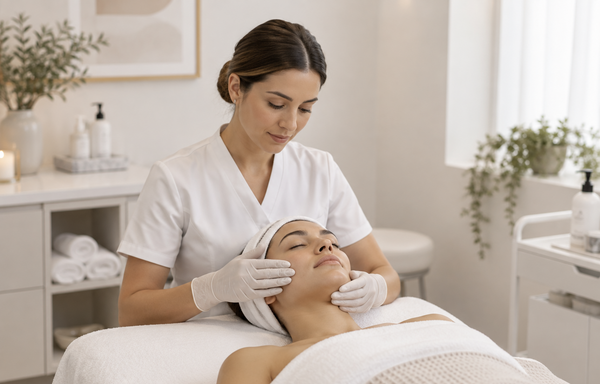
Online Advanced Skin Analysis for Estheticians: Assessment to Treatment Skin analysis is more than identifying a skin type, it is the foundation for deciding what the skin needs, what it can tolerate, and how a professional facial should be customized. This course teaches professionals how to evaluate the skin through visual, tactile, and technology-assisted assessment while connecting those findings to professional treatment decisions. Explore skin types and conditions, barrier health, acne, pigmentation, sensitivity, Fitzpatrick classification, contraindications, consultation, treatment planning, and ongoing reassessment. Develop a more systematic approach to skin analysis that supports safer product selection, appropriate modality use, customized facial protocols, and stronger professional judgment in the treatment room. Bonus: Receive a complimentary, ready-to-use client intake and skin assessment form designed to support more thorough consultations, documentation, and treatment planning in your practice. Key Takeaways Skin Types, Conditions & Skin Structure Build a stronger foundation in skin anatomy while learning to distinguish skin type from current skin condition. Understand how barrier integrity, hydration, oil production, texture, pigmentation, sensitivity, and other observable characteristics influence treatment planning. Visual, Tactile & Technology-Assisted Analysis Learn how to assess the skin before and after cleansing using magnification, systematic visual observation, palpation, Wood’s Lamp analysis, and digital skin analyzers. Use multiple assessment methods together rather than relying on a single observation or device. Skin Conditions & Diverse Skin Tones Strengthen your ability to recognize common skin concerns including acne, dehydration, barrier compromise, pigmentation, vascular changes, rosacea-related characteristics, fine lines, and other visible conditions. Learn to establish each client’s baseline and recognize inflammation and reactivity across a range of skin tones. Treatment Selection & Contraindications Connect skin analysis findings directly to professional treatment decisions. Learn when a facial step or modality may be appropriate, require modification, need to avoid specific areas, or should be postponed based on the client’s skin, contraindications, scope of practice, and modality-specific requirements. Customized Facials & Real-Time Reassessment Learn how to carry skin analysis through the entire facial rather than treating it as a one-time consultation step. Recognize unexpected changes in the skin, reassess client tolerance, modify products or modalities when necessary, and document findings to guide future treatments and track progress.
Explore Our Courses
Find the perfect training to elevate your expertise.
Online Acne & Extractions for Estheticians: Lesion Recognition, Skin Preparation & Professional Extraction Technique Working with acne requires far more than knowing how to perform extractions. It requires understanding how acne develops, how to evaluate what is presenting on the skin, and when treatment should be adjusted based on what you observe. This course focuses on building the professional judgment needed to approach acne-focused services with greater intention, from the initial skin analysis through treatment and ongoing client care. Special attention is given to how acne and post-inflammatory changes may present across different skin tones and Fitzpatrick types, an area that is often underrepresented in traditional esthetics education. By the end of the course, estheticians will be better prepared to make informed treatment decisions based on the condition of the skin and how it responds throughout the service. Bonus: Receive a complimentary, ready-to-use client intake and skin assessment form designed to support more thorough consultations, documentation, and treatment planning in your practice. Key Takeaways Acne Science & Lesion Identification Understand how acne develops, recognize common lesion types, identify acne look-alikes, and know when a presentation may require referral. Client Assessment & Treatment Decisions Evaluate acne grade, inflammation, barrier condition, sensitivity, and client history to determine when to proceed, modify, avoid, or refer. Extraction Preparation, Tools & Technique Learn how to prepare the skin, select the appropriate extraction method, control pressure, and recognize when a lesion should be left alone. Professional Acne Facial Protocols & Modalities Build acne-focused facial protocols using appropriate exfoliation, extraction timing, LED, high frequency, and other modalities based on the skin’s presentation. Home Care & Long-Term Management Recommend practical home care, support PIH prevention and barrier health, set realistic expectations, and adjust treatment plans as the skin changes over time.
Online Microcurrent Training Course for Estheticians Perfect the art of the "non-invasive facelift." Microcurrent is highly technique-driven; your results are only as good as your movements. This hands-on, protocol-focused course is designed to give you total confidence in wielding your microcurrent probes (or gloves) to achieve immediate, wow-factor results for your clients. We break down the specific techniques required for successful muscle re-education, teaching you the precise pressure, glide, and hold times needed to manipulate muscle tissue. You will learn comprehensive, step-by-step protocols for the neck, jawline, cheekbones, and brow. Additionally, we cover how to properly prep the skin with conductive gels and serums to ensure optimal current flow without causing galvanic sensitivity. Bonus: Receive a complimentary, ready-to-use client intake and skin assessment form designed to support more thorough consultations, documentation, and treatment planning in your practice. Course Highlights: Probe Mastery: The biomechanics of pinching, lifting, and holding facial muscles. Customized Protocols: Tailoring the treatment for lymphatic drainage versus intense lifting. Conductivity & Prep: Choosing the right water-based mediums for maximum current penetration. Treatment Planning: Structuring a series of treatments for cumulative, long-lasting results.
Online Advanced Skin Analysis for Estheticians: Assessment to Treatment Skin analysis is more than identifying a skin type, it is the foundation for deciding what the skin needs, what it can tolerate, and how a professional facial should be customized. This course teaches professionals how to evaluate the skin through visual, tactile, and technology-assisted assessment while connecting those findings to professional treatment decisions. Explore skin types and conditions, barrier health, acne, pigmentation, sensitivity, Fitzpatrick classification, contraindications, consultation, treatment planning, and ongoing reassessment. Develop a more systematic approach to skin analysis that supports safer product selection, appropriate modality use, customized facial protocols, and stronger professional judgment in the treatment room. Bonus: Receive a complimentary, ready-to-use client intake and skin assessment form designed to support more thorough consultations, documentation, and treatment planning in your practice. Key Takeaways Skin Types, Conditions & Skin Structure Build a stronger foundation in skin anatomy while learning to distinguish skin type from current skin condition. Understand how barrier integrity, hydration, oil production, texture, pigmentation, sensitivity, and other observable characteristics influence treatment planning. Visual, Tactile & Technology-Assisted Analysis Learn how to assess the skin before and after cleansing using magnification, systematic visual observation, palpation, Wood’s Lamp analysis, and digital skin analyzers. Use multiple assessment methods together rather than relying on a single observation or device. Skin Conditions & Diverse Skin Tones Strengthen your ability to recognize common skin concerns including acne, dehydration, barrier compromise, pigmentation, vascular changes, rosacea-related characteristics, fine lines, and other visible conditions. Learn to establish each client’s baseline and recognize inflammation and reactivity across a range of skin tones. Treatment Selection & Contraindications Connect skin analysis findings directly to professional treatment decisions. Learn when a facial step or modality may be appropriate, require modification, need to avoid specific areas, or should be postponed based on the client’s skin, contraindications, scope of practice, and modality-specific requirements. Customized Facials & Real-Time Reassessment Learn how to carry skin analysis through the entire facial rather than treating it as a one-time consultation step. Recognize unexpected changes in the skin, reassess client tolerance, modify products or modalities when necessary, and document findings to guide future treatments and track progress.
Online Brazilian Wax Specialist Training: Professional Waxing Techniques & Safety Brazilian waxing is one of the most requested body-waxing services, and performing it professionally requires far more than simply applying and removing wax. This online Brazilian wax training for estheticians teaches the foundations of professional Brazilian waxing (Hard wax), including intimate anatomy, hair-growth patterns, contraindications, hard and soft wax selection, skin preparation, client positioning, wax application and removal, infection control, consent, and Brazilian wax aftercare. Go beyond basic waxing demonstrations with practical Brazilian waxing techniques and real-world troubleshooting for situations new estheticians are often least prepared for, including skin lifting, bleeding, stuck wax, compromised skin, unexpected reactions, and knowing when to modify or stop a waxing service. Bonus: Receive a complimentary, ready-to-use client intake and skin assessment form designed to support more thorough consultations, documentation, and treatment planning in your practice. Key Takeaways Intimate Anatomy + Hair-Growth MappingUnderstand external anatomy, treatment boundaries, hair types, growth cycles, and changing growth directions. Consultation, Contraindications + ConsentScreen client history and skin concerns while learning when to proceed, modify, postpone, or refer. Establish clear consent, privacy, and professional boundaries. Wax Selection + Skin PreparationUnderstand hard versus soft wax, wax readiness, and when to use powder, pre-wax oil, or neither based on the client and treatment area. Positioning + Brazilian Wax TechniqueDevelop proper section size, application, skin tension, removal direction, removal angle, and client positioning using a systematic treatment sequence. Infection Control + SafetyApply professional standards for PPE, no double-dipping, contaminated wax, single-use supplies, and cross-contamination prevention. Troubleshooting + Knowing When to StopLearn how to respond to stuck wax, skin lifting, bleeding, unexpected lesions, client reactions, and compromised skin. Aftercare + Ingrown PreventionGuide clients through post-wax care, temporary skin responses, exfoliation, friction precautions, and practical ingrown-prevention strategies. Professional Practice + Client RetentionStrengthen the client experience through documentation, communication, rebooking, follow-up, and consistent professional standards.
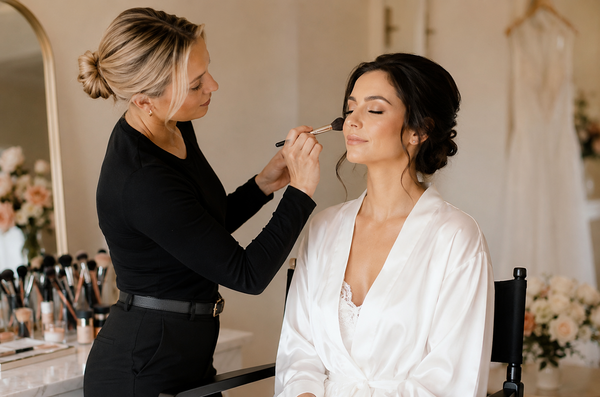
Bridal Makeup Training for New Artists: Skin Prep, Application & Wedding-Day Techniques Bridal makeup requires more than creating a beautiful look, it requires understanding how skin preparation, product selection, application technique, sanitation, and wear time work together throughout the wedding day. This guide walks new makeup artists through the bridal process, from consultation and trial planning to complexion application, lashes, lips, finishing, troubleshooting, and final checks. By the end, you’ll have a more organized and repeatable approach for creating polished, comfortable, camera-ready bridal makeup with greater confidence. Key Takeaways Bridal Consultation & Wedding-Day Planning Build a clear, repeatable bridal plan through consultation, trial application, product testing, documentation, and photography. Understand how advance planning supports consistency, efficiency, and fewer surprises on the wedding day. Skin Preparation & Complexion Application Learn how to assess the client’s current skin condition and select skincare, primer, complexion products, and application techniques accordingly. Build coverage in controlled layers while maintaining a polished, balanced, camera-ready finish. Customized Eye, Lash & Lip Techniques Understand how to customize brows, eye makeup, lashes, and lip placement according to individual features, comfort, symmetry, and the bride’s desired result. Use professional application techniques to create definition while supporting longevity and ease of touch-ups. Finishing, Troubleshooting & Final Checks Recognize common bridal makeup concerns such as pilling, separation, creasing, patchiness, and lip feathering and understand how to correct them without unnecessarily adding more product. Complete the service with strategic finishing, lighting and flash checks, and a customized touch-up plan for the bride.
Online Brow Specialist Training: Waxing, Mapping & Precision Design for Estheticians Eyebrow waxing may look simple, but the decisions that protect the skin and preserve the brow shape happen long before the wax is removed. This comprehensive course takes estheticians beyond basic hair removal, teaching the professional judgment, recognizing wax readiness, mapping techniques, skin assessment, and controlled waxing methods needed to create balanced, client-specific results. Learn how to work with natural asymmetry, map brows, preserve strategic growth areas for clients growing fuller brows, assess contraindications, and modify positioning for skin laxity, all before you step foot in the treatment room. The course also covers real-world situations that are often overlooked in foundational waxing education—including combining brow waxing with facial services, trimming difficult growth patterns, correcting wax placement mistakes, protecting eyelash extensions, and responding appropriately to unexpected skin reactions. The goal is not simply to perform a brow wax, but to understand how to make safe, informed decisions before, during, and after every service. Bonus: Receive a complimentary, ready-to-use client intake and skin assessment form designed to support more thorough consultations, documentation, and treatment planning in your practice. Key Takeaways Strategic Brow Mapping:Map for balance, asymmetry, natural growth, and future brow goals. Contraindications + Skin Assessment:Recognize when to proceed, modify, postpone, or avoid waxing. Positioning + Removal Technique:Adapt for skin laxity and client needs while mastering tension and parallel removal. Advanced Trimming + Shaping:Work confidently with curly, downward-growing, sparse, or stubborn brow hairs. Real-World Troubleshooting:Learn what to do when wax lands where it should not, hair breaks, or adhesion fails. Treatment Responses + Safety:Differentiate expected redness from skin lifting, pinpoint bleeding, and reactions that require you to stop.
Online Mesotherapy Training Course for Estheticians Unlock the ultimate methodology for deep-tissue skin nutrition. This advanced course provides a rigorous breakdown of Mesotherapy, tracing its origins from Dr. Michel Pistor’s foundational medical injections to its modern, non-invasive evolution. We dive deep into the specific cellular responses triggered by transdermal infusion, exploring how customized cocktails stimulate fibroblasts, boost collagen production, and accelerate cellular turnover. A core focus of this module is the precise mapping of ingredients to their corresponding skin layers. You will learn exactly which molecular weights and active compounds—such as non-crosslinked Hyaluronic Acid, Vitamin C, and peptides—are required to target the epidermis versus the deeper dermis. By understanding the true biological interaction between these targeted serums and the skin's architecture, you will be able to formulate highly specific treatments for hyperpigmentation, laxity, and dehydration. Bonus: Receive a complimentary, ready-to-use client intake and skin assessment form designed to support more thorough consultations, documentation, and treatment planning in your practice. What you will master: Historical Context: The evolution from traditional micro-injections to modern aesthetic applications. Cellular Mechanics: How active ingredients interact with the lipid bilayer and cell membranes. Ingredient Mapping: Selecting the correct molecular weights for superficial hydration vs. deep tissue repair.
Online Dermaplane Training for Estheticians: Skin Analysis, Blade Technique & Professional Facial Protocols Dermaplaning is about far more than removing vellus hair, it requires an understanding of the skin, precise blade control, and the ability to make informed treatment decisions as the service progresses. This course takes you through the foundations of dermaplaning, from skin science and client assessment to blade handling, facial sequencing, oil dermaplaning, treatment endpoints, and troubleshooting. Build the practical knowledge and confidence to incorporate dermaplaning into your facial services with greater control, consistency, and professional judgment. Bonus: Receive a complimentary, ready-to-use client intake and skin assessment form designed to support more thorough consultations, documentation, and treatment planning in your practice. Key Takeaways Understanding Dermaplaning & Skin Science Understand how dermaplaning provides controlled mechanical exfoliation of the stratum corneum while temporarily removing vellus hair. Connect the science of the epidermis, cellular turnover, and surface buildup to what you are actually seeing and feeling in the treatment room. Blade Control & Dermaplaning Technique Build confidence with blade handling, approximately 45° positioning, proper skin tension, light pressure, short controlled strokes, and client repositioning. Learn how to adapt your technique across facial contours instead of relying on excessive pressure or a predetermined number of passes. Client Assessment & Treatment Decisions Learn how to evaluate skin type, current skin condition, barrier health, acne, sensitivity, lesions, medications, and recent treatments before beginning a service. Know when to treat normally, modify your approach, avoid a specific area, or postpone dermaplaning altogether. Complete Dermaplaning Facial Protocol Follow a treatment-room-focused protocol from consultation and cleansing through oil dermaplaning, facial sequencing, finishing products, aftercare, and rebooking. Learn how to recognize an appropriate treatment endpoint, troubleshoot common technique problems, and customize the service around the skin’s response. Infection Control & Blade Safety Understand the infection-control practices required when working with a sharp professional implement, including hand hygiene, PPE, clean-field practices, blade handling, and immediate sharps disposal. Develop habits that support both client safety and professional treatment-room standards.
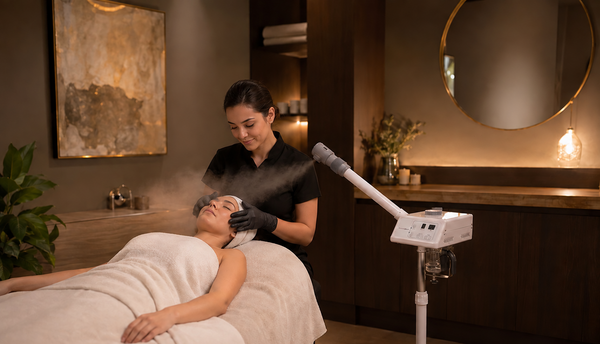
Online Facial Steamers Training Course for Estheticians Facial Steaming Fundamentals: Professional Techniques & Best Practices Bring more intention and confidence to the way you use facial steam in professional treatments. This course goes beyond basic facial steamer operation by exploring how steam can support skin preparation, hydration, extractions, and overall treatment flow. You’ll also learn how to safely customize steam based on your client’s skin type, current skin condition, and service goals. From proper positioning and steam duration to ozone, aromatherapy, contraindications, and equipment care, you’ll develop the practical knowledge and professional judgment needed to incorporate facial steaming thoughtfully into a wide range of facial services. Bonus: Receive a complimentary, ready-to-use client intake and skin assessment form designed to support more thorough consultations, documentation, and treatment planning in your practice. Key Takeaways Understanding Facial Steam Learn how warm facial steam interacts with the skin and how it can support hydration, soften surface buildup, and prepare the complexion for appropriate next steps within a facial. Understand when steaming can enhance a service, as well as when less steam, or no steam at all, may be the better professional choice. Professional Steaming Techniques Build confidence with proper steamer setup, positioning, distance, timing, and intensity. Learn how to adjust the steaming experience based on the client’s skin condition, comfort, and treatment goals while maintaining safe and consistent technique throughout the service. Client Assessment, Contraindications & Customization Learn how to evaluate the skin before steaming, recognize conditions that may require modification or avoidance, and continually monitor the client’s response during treatment. Develop the judgment needed to determine when to proceed, shorten the steaming time, increase distance, modify the service, or avoid steam altogether. Ozone & Aromatherapy Features Understand how to appropriately incorporate available steamer features, including ozone and aromatherapy, into professional facial services. Learn what each feature is designed to do, how it is activated and used, and the precautions that should be considered before incorporating it into a treatment. Equipment Care & Infection Control Learn how to properly prepare, operate, cool, clean, disinfect, inspect, and maintain your facial steamer between services. Review water care, attachment handling, routine maintenance, and professional infection-control practices that help support safe operation and extend the life of your equipment.
Online Galvanic Training Course for Estheticians Galvanic therapy is a cornerstone of professional esthetics, but it requires strict adherence to safety and hygiene standards. This comprehensive course explores the foundations of the treatment through modern professional applications, emphasizing safe techniques and practical execution. Develop confidence through step-by-step protocols, real-world scenarios, and treatment adaptations tailored to individual client needs. Because Galvanic utilizes true electrical current, client safety is paramount. We provide an exhaustive review of contraindications, teaching you how to screen clients for pacemakers, metal implants, braces, pregnancy, and epilepsy. Furthermore, this course sets the standard for infection control, detailing the exact FDA and state-board compliant methods for sanitizing and storing your metal electrodes and grounding pads to prevent cross-contamination. Bonus: Receive a complimentary, ready-to-use client intake and skin assessment form designed to support more thorough consultations, documentation, and treatment planning in your practice. Includes: Client Consultation: How to perform a thorough intake to identify hidden contraindications. The Sensation Profile: Explaining the "metallic taste" and mild tingling to nervous clients. Infection Control Mastery: Strict sanitization protocols for all multi-use machine components. Treatment Integration: Where to place Galvanic treatments within your standard 60-minute facial flow.
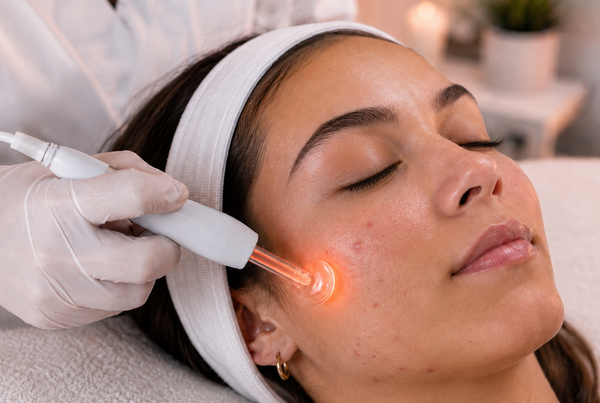
High Frequency Facial Treatment Guide: Electrode Techniques, Blemish Care & Professional Facial Applications Ready to incorporate high frequency into your facial treatments with greater confidence? This treatment guide walks you through neon and argon electrodes, electrode selection, facial mapping, continuous application and localized sparking techniques, and more. Develop a clear, step-by-step approach for safely integrating high frequency into professional facial services while adapting each treatment to the client’s skin condition, sensitivity, and treatment goals. High Frequency Fundamentals & Electrode Selection Understand how high frequency technology is used within facial treatments and how electrode selection can influence the service. Learn the differences between neon and argon electrodes, recognize the purpose of common electrode shapes, and determine which options are most appropriate for the treatment area and client’s skin concerns. Facial Application & Electrode Control Develop a consistent approach to moving the electrode across the face using controlled, continuous motions and appropriate treatment coverage. Learn how to navigate facial contours, adjust electrode selection for smaller areas, and incorporate brief localized sparking when appropriate for intact blemishes. Treatment Planning & Client Safety Strengthen your ability to evaluate the skin before treatment, identify contraindications, and modify high frequency according to sensitivity, skin condition, and treatment goals. Understand when to reduce treatment intensity, limit passes, avoid certain areas, or discontinue treatment altogether. Equipment Handling, Sanitation & Aftercare Learn how to safely insert, remove, clean, disinfect, dry, and store reusable electrodes and the high frequency wand between clients. Reinforce proper post-treatment care by educating clients on hydration, sun protection, temporary activity or product restrictions, and home-care practices that complement the complete facial service.
Online High Frequency Training Course for Estheticians This practical, hands-on course is designed to give you total confidence with your High Frequency machine. We take a deep dive into the tools of the trade, explaining the specific purpose of every glass electrode, from the Mushroom for general face work to the Sparking/Zapper for stubborn blemishes and the Comb for scalp stimulation. You will master the art of "Sparking" (fulguration) to safely treat acne lesions without causing trauma. We also cover essential sanitization protocols to prevent cross-contamination and extend the life of your fragile glass electrodes. Bonus: Receive a complimentary, ready-to-use client intake and skin assessment form designed to support more thorough consultations, documentation, and treatment planning in your practice. Course Highlights: Electrode Dictionary: A visual guide to the Spoon, Mushroom, Sparker, and Rake. Step-by-Step Protocols: How to integrate High Frequency into a standard facial, post-extraction, or as a standalone acne treatment. Physiological Effects: Thermal energy, ozone formation, and vasodilation. The Argon vs. Neon Debate: Detailed use cases for acne grades vs. sensitive/aging skin. Contraindications: A comprehensive guide to safety, including pregnancy, pacemakers, and metal implants.
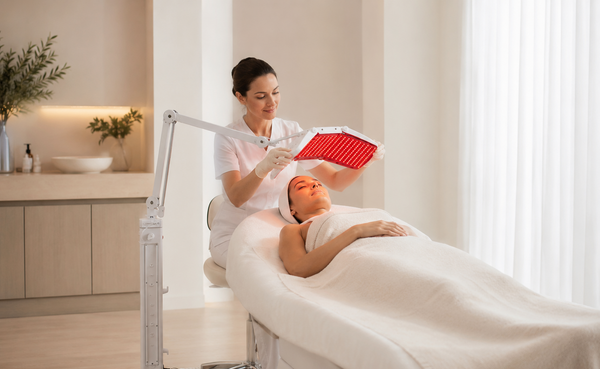
Online LED Light Therapy Treatment Guide for Estheticians: Photobiomodulation, Wavelength Selection & Professional Facial Protocols LED light therapy is about far more than selecting a color and turning on a device, it requires an understanding of how different wavelengths interact with the skin, how to select treatment settings according to the client’s needs, and how to safely integrate light therapy into a professional facial. This guide introduces the foundations of photobiomodulation, the visible and near-infrared light spectrum, wavelength selection, contraindications, treatment setup, client monitoring, and post-care. Bonus: Receive a complimentary, ready-to-use client intake and skin assessment form designed to support more thorough consultations, documentation, and treatment planning in your practice. Key Takeaways Understanding LED Light Therapy & PhotobiomodulationLearn how specific wavelengths of light interact with the skin to support cellular activity, skin recovery, and overall treatment goals. LED Wavelengths & Light-Skin InteractionUnderstand the differences between blue, green, yellow, red, and near-infrared light and how wavelength influences treatment selection. Client Assessment & Treatment SelectionEvaluate skin condition, client goals, contraindications, and device capabilities to determine an appropriate LED treatment approach. Complete LED Facial ProtocolFollow a professional sequence for cleansing, skin preparation, eye protection, wavelength selection, device positioning, monitoring, and finishing products. Treatment Setup, Safety & Post-CareReview proper positioning, treatment distance, timing, client monitoring, and practical aftercare recommendations.
Online Nano Oxygen Training Course for Estheticians Nano Oxygen systems: Advanced Hydration & Oxygen Infusion Discover the science and application of professional oxygen infusion with the SkinAct Nano Oxygen Sprayer. This comprehensive course explores the principles of nano-atomization and teaches you how to deliver ultra-fine, hydration-rich mist that enhances product absorption and leaves skin visibly refreshed and radiant. Master the proper use of this versatile device, from treatment preparation to post-service maintenance, while learning how to seamlessly integrate oxygen infusion into a variety of professional facial protocols. Bonus: Receive a complimentary, ready-to-use client intake and skin assessment form designed to support more thorough consultations, documentation, and treatment planning in your practice. Key Takeaways The Science of Nano-Atomization: Gain a deeper understanding of how micro-atomized particles interact with the stratum corneum to improve hydration, support the skin barrier, and enhance the penetration of water-based active ingredients. Mastering the Nano Oxygen Delivery System: Learn the precise techniques for operating the SkinAct Nano Oxygen Sprayer, including proper loading procedures, treatment distance, hand positioning, and continuous application patterns for consistent, even results. Advanced Treatment Integration: Discover how oxygen infusion can be incorporated into professional services, including post-extraction care, post-peel recovery, and finishing hydration protocols to calm and replenish the skin. Product Selection & Compatibility: Understand which formulations are appropriate for nano-infusion, why water-weight liquids are essential, and how improper products can compromise device performance. Infection Control & Device Maintenance: Master the proper cleaning, disinfection, and nozzle maintenance procedures to prevent clogging, maintain optimal performance, and ensure safe, professional operation.
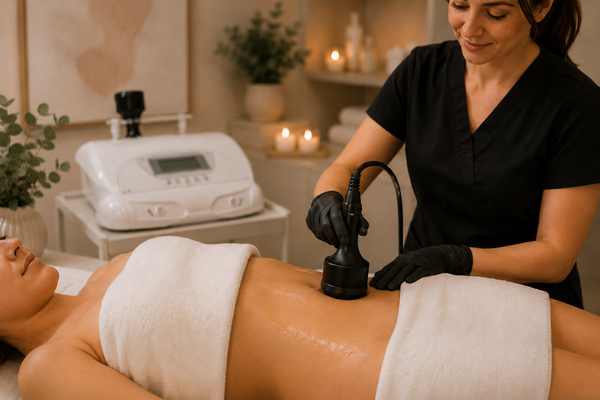
Online Body Cavitation Training Course for Estheticians Professional Ultrasonic Cavitation: Advanced Body Contouring & Treatment Protocols Develop a comprehensive understanding of the science, safety, and application of professional cavitation through this in-depth training designed for licensed estheticians. This course explores acoustic physics, adipose tissue biology, anatomical treatment planning, and evidence-based treatment protocols, providing the knowledge and technical skills needed to perform safe, consistent, and results-driven body contouring services. From understanding how cavitation disrupts fat cells to selecting appropriate treatment parameters, identifying contraindications, implementing infection control standards, and integrating cavitation into your business, you'll gain the confidence to deliver professional body contouring treatments with precision. Bonus: Receive a complimentary, ready-to-use client intake and skin assessment form designed to support more thorough consultations, documentation, and treatment planning in your practice. Key Takeaways The Science of Cavitation Understanding of how low-frequency ultrasound travels through tissue, including the acoustic cycle, cavitation physics, transient versus stable cavitation, mechanical versus thermal effects, and the biological process of adipocyte disruption and lipid metabolism. Understanding Adipose Tissue & Treatment Anatomy Learn the anatomy of the skin and subcutaneous tissue, distinguish between subcutaneous and visceral fat, identify ideal treatment candidates, evaluate tissue thickness using the pinch test, and recognize critical anatomical structures that influence safe treatment planning. Operating Professional Cavitation Systems Develop confidence using professional cavitation devices by understanding probe selection, treatment modes, intensity and power adjustments, treatment timing, coupling techniques, and how to safely customize treatment parameters based on tissue characteristics and anatomical location. Treatment Protocols & Advanced Technique Learn the complete ultrasonic cavitation protocol from client preparation through post-treatment care, including treatment mapping, proper hand positioning, probe movement patterns, continuous motion techniques, client monitoring, treatment endpoints, and advanced application methods for different body areas. Safety, Contraindications & Professional Risk Management Develop the clinical judgment to identify absolute and relative contraindications, recognize high-risk anatomical zones, prevent thermal injury, safely modify treatments when necessary, and implement thorough consultation, documentation, and informed consent procedures that support professional standards of care. Infection Control, Device Maintenance & Business Integration Learn state-board appropriate infection control practices for reusable equipment, proper cleaning and disinfection procedures, device maintenance, treatment room turnover, post-treatment client follow-up, pricing strategies, package development, client retention techniques, and how to successfully position ultrasonic cavitation as a high-value body contouring service within your practice.
Online Crystal Microdermabrasion Training Course for Estheticians Build confidence performing professional crystal microdermabrasion with a beginner-focused course designed for new estheticians. Learn the fundamentals of skin resurfacing, crystal microdermabrasion device operation, treatment depth, skin analysis, client selection, contraindications, and safe treatment planning. Students will learn how to properly operate a crystal microdermabrasion machine, control crystal flow and vacuum pressure, brace the skin, maintain correct wand contact, perform organized treatment passes, recognize safe treatment endpoints, and modify technique for different skin conditions. The course also covers pre-treatment preparation, post-treatment care, troubleshooting, equipment maintenance, treatment safety, and client documentation to help estheticians deliver more controlled and professional facial exfoliation and skin resurfacing treatments. Bonus: Receive a complimentary, ready-to-use client intake and skin assessment form designed to support more thorough consultations, documentation, and treatment planning in your practice. Includes: Skin Analysis and Safety: Identify ideal candidates, contraindications, acne severity, barrier impairment, sensitivity, pigment risk, and appropriate treatment endpoints. Device Operation Protocol Technique: Learn crystal flow, vacuum control, wand contact, skin bracing, movement speed, passes, overlap, facial zoning, troubleshooting, and equipment maintenance. Treatment and Business Integration: Follow a complete crystal microdermabrasion protocol, provide proper aftercare, plan treatment series, recommend supportive home care, and integrate the service into your esthetics practice.
Online Oxygen Facial Training Course for Estheticians Professional Oxygen Facials: Advanced Dermal Hydration Explore advanced techniques with our Oxygen Infusion training, featuring exclusive SkinAct protocols. Discover the exact science of superficial penetration and cellular oxygenation utilizing professional pressurized oxygen spray techniques, requiring no complex machinery. Master a complete, step-by-step treatment to deliver deeply restorative hydration. You will learn precisely which skin types benefit most from this therapy, allowing you to curate an exceptionally radiant experience for your clientele. Bonus: Receive a complimentary, ready-to-use client intake and skin assessment form designed to support more thorough consultations, documentation, and treatment planning in your practice. Key Takeaways The Physiology of Dermal Oxygenation: Gain a deep understanding of how oxygen interacts with the skin at a cellular level, including the specific dermal penetration layers and how targeted oxygenation accelerates cell turnover and healing. Mastering the Pressurized Delivery System: Learn the exact techniques for utilizing SkinAct’s pressurized oxygen spray. Understand the unique benefits of this standalone delivery method compared to traditional serum-and-machine combinations, focusing on precise distance, angle, and sweeping motions for even application. Advanced Client Assessment: Develop the expertise to identify which skin types and conditions (such as rosacea, acne-prone, or environmentally depleted skin) will benefit the most from oxygen therapy, alongside recognizing vital contraindications. The Complete SkinAct Protocol: Walk through a comprehensive, step-by-step treatment workflow. Learn how to properly prep the skin, execute the oxygen infusion phase for maximum absorption, and layer finishing products to lock in hydration and amplify the glowing results. Treatment Layering & Customization: Discover how to seamlessly integrate pressurized oxygen infusion into your broader treatment menu, including pairing it with modalities like microdermabrasion or chemical peels to soothe and restore the skin barrier post-exfoliation.
Online Radio Frequency Training Course for Estheticians Radio Frequency Radiance: Master RF Skin Tightening & Collagen Remodeling Explore the science and professional application of radio frequency skin rejuvenation through comprehensive, SkinAct-focused training. Discover how alternating electrical current interacts with tissue impedance to generate controlled thermal energy, stimulate collagen remodeling, and improve the appearance of skin firmness, elasticity, and mild laxity. Learn how to assess facial anatomy, preserve natural volume, select the appropriate handpiece, adjust treatment variables, and perform a complete step-by-step RF treatment with confidence. This course also emphasizes temperature monitoring, client comfort, troubleshooting, infection control, documentation, and the importance of following device-specific protocols for safe, consistent results. Bonus: Receive a complimentary, ready-to-use client intake and skin assessment form designed to support more thorough consultations, documentation, and treatment planning in your practice. Key Takeaways The Science of Radio Frequency Heating: Gain a clear understanding of how alternating electrical current, tissue impedance, ion movement, and controlled heat work together to produce immediate collagen contraction and progressive dermal remodeling. Anatomy, Collagen & Facial-Volume Preservation: Explore the epidermis, dermis, extracellular matrix, fibroblasts, collagen, elastin, and subcutaneous tissue. Learn how to assess facial fat compartments, thin tissue, prominent bone, and volume-deficient areas before treatment. RF Handpieces & Energy Configurations: Understand the differences between monopolar, bipolar, tripolar, quadripolar, and multipolar RF, including their current pathways, treatment depth, intended areas, contact requirements, and return-electrode considerations. Advanced Client Assessment & Treatment Planning: Develop the ability to evaluate skin thickness, hydration, sensitivity, laxity, contraindications, anatomical structure, and treatment goals while selecting conservative, individualized parameters. The Complete Radio Frequency Protocol: Follow a detailed treatment-room workflow covering equipment inspection, cleansing, conductive-gel application, facial zoning, handpiece contact, movement patterns, overlap, temperature monitoring, finishing products, aftercare, and documentation. Troubleshooting, Safety & Infection Control: Learn how to respond to slow heating, isolated hot spots, handpiece drag, uneven erythema, client discomfort, and abnormal reactions while maintaining state-board-aligned cleaning, disinfection, and equipment-care practices.
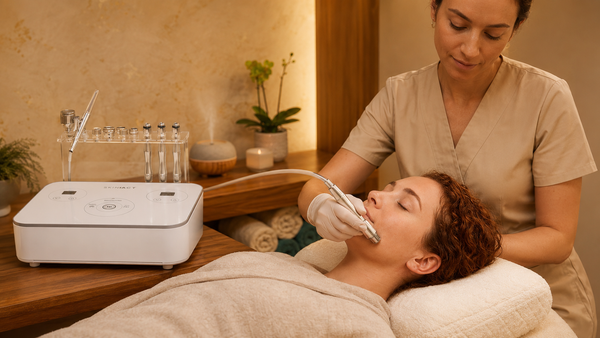
Special Event Guide: Microdermabrasion & Oxygen Infusion with Advance Protocols Discover the science and professional application of diamond-tip microdermabrasion paired with oxygen infusion. This comprehensive treatment guide teaches estheticians how to safely resurface the skin, refine visible texture, support hydration, and create a smooth, radiant complexion before special events. Learn how to assess the skin barrier, select appropriate diamond tips and suction levels, perform controlled cross-hatch passes, integrate complementary modalities, and provide effective post-treatment care for consistent, client-centered results. Bonus: Receive a complimentary, ready-to-use client intake and skin assessment form designed to support more thorough consultations, documentation, and treatment planning in your practice. Key Takeaways The Science of Mechanical Resurfacing:Understand how diamond-tip microdermabrasion removes excess stratum corneum buildup, improves the appearance of rough texture and superficial discoloration, and enhances the application of post-exfoliation skincare products. Mastering Diamond-Tip Technique:Learn how to select fine, medium, or coarse diamond tips, adjust vacuum suction conservatively, maintain continuous movement, brace the skin, and perform overlapping cross-hatch passes for uniform treatment coverage. Oxygen Infusion & Treatment Integration:Discover how to follow exfoliation with a fine mist of water-based hydrating ingredients and incorporate compatible modalities such as LED therapy, high frequency, cooling therapy, hydrating masks, or needle-free mesotherapy. Client Assessment & Treatment Customization:Identify contraindications, evaluate skin-barrier integrity, and modify treatment intensity, pass count, frequency, and product selection based on skin type, sensitivity, congestion, pigmentation, and visible acne scarring. Post-Care & Professional Treatment Planning:Master proper finishing steps, sun-protection guidance, active-ingredient restrictions, recovery expectations, treatment spacing, and home-care recommendations to support the skin barrier and maintain results.
Online Microneedling Training Course for Estheticians Elevate your skincare career with the industry’s most in-demand rejuvenation treatment. This comprehensive Online Microneedling Course is designed specifically for licensed estheticians and beauty professionals ready to master the art of Collagen Induction Therapy (CIT). Moving beyond basic dermal rolling, this course provides deep instruction on professional automated devices (like pens), ensuring you understand the precise mechanics of creating controlled micro-injuries to stimulate the body’s natural wound-healing response. You will learn to confidently treat lucrative skin concerns, including acne scarring, hyperpigmentation, deep wrinkles, and textural irregularities. Bonus: Receive a complimentary, ready-to-use client intake and skin assessment form designed to support more thorough consultations, documentation, and treatment planning in your practice. What you will master: The Science of CIT: Understanding the physiology of collagen and elastin production. Depth & Precision: How to select the correct needle depth (0.25mm to 2.5mm) based on client skin type and local regulations. Nano-Needling vs. Microneedling: Knowing when to use cosmetic infusion versus medical-grade induction. Safety Protocols: Mastery of sterile technique, bloodborne pathogen safety, and absolute contraindications. Post-Care Mastery: Designing aftercare regimens that prevent infection and accelerate results. This comprehensive online course is designed for estheticians, beauty professionals, and individuals interested in mastering Microneedling treatments. From understanding the science behind Microneedling to performing safe and effective treatments, this course covers everything you need to know to offer this popular skincare treatment confidently.
Online Nanoneedling Training Course for Estheticians The Complete Nanoneedling Guide: Serum Infusion, Treatment, and Business Integration Nanoneedling is one of the most versatile treatments in modern esthetics, combining advanced skin infusion with non-invasive rejuvenation to improve hydration, radiance, and overall skin health. This comprehensive course takes you from the science of nano infusion to real-world clinical application, providing the knowledge and protocols needed to confidently perform safe, effective, and results-driven treatments. Because nanoneedling relies on precise technique, proper client selection, and ingredient compatibility, treatment safety is essential. You'll learn how to accurately identify contraindications, evaluate Fitzpatrick skin types, select appropriate treatment serums, and understand the biomechanics of nanoneedle cartridges, depth settings, and oscillation. This course also emphasizes infection control, proper cartridge handling, post-treatment recovery, and business strategies that help you seamlessly integrate nanoneedling into your practice. Bonus: Receive a complimentary, ready-to-use client intake and skin assessment form designed to support more thorough consultations, documentation, and treatment planning in your practice. Includes: Thorough Skin Analysis: Learn how to identify contraindications, assess skin health, and determine ideal treatment candidates. Ingredient Selection: Understand which professional serums enhance results—and which ingredients should never be used during nanoneedling. Clinical Protocols: Master treatment technique, cartridge selection, infection control, and post-treatment recovery protocols. Business Integration: Learn pricing strategies, treatment series planning, retail recommendations, and modality pairings to maximize client results and practice profitability.
Online Waxing Course: The Esthetician’s Guide to Professional Waxing Unsure which wax to use, how much to apply, or when it's ready to remove? This comprehensive online waxing course provides practical, treatment-room guidance on hard and soft wax selection, skin preparation, hair-growth patterns, proper application, and safe removal techniques, including an in-depth look at wax formulations and environmental adaptations—from traditional, film, gel, cream, and synthetic wax options to the effects of room temperature, humidity, and skin moisture on wax performance. Learn how to confidently perform arm, leg, underarm, chest, back, and neck waxing, with detailed instruction on client positioning, skin stabilization, wax consistency, and adapting techniques to different hair textures, skin conditions, and skin tones—including visual recognition of inflammation and considerations for post-inflammatory hyperpigmentation. Beyond the basics, you'll explore real-world waxing challenges that are often overlooked in foundational education—including wax that won't release, excessive perspiration, missed hairs, skin lifting, contamination incidents, and knowing when to stop or modify a service. With 13 practical troubleshooting scenarios, professional infection-control protocols, and experienced esthetician tips, this course helps strengthen the technique, decision-making skills, and professional judgment needed to approach waxing appointments with greater confidence. Bonus: Receive a complimentary, ready-to-use client intake and skin assessment form designed to support more thorough consultations, documentation, and treatment planning in your practice. Key Takeaways Hair Biology + Growth Mapping:Understand hair-growth cycles, hair classifications, and multidirectional growth patterns to guide waxing techniques. Wax Formulations + Environmental Adaptations:Explore different hard and soft wax formulations, product selection, working consistency, and how temperature, humidity, and skin moisture affect wax performance. Skin Assessment + Preparation:Identify contraindications, select appropriate pre-wax products, and recognize skin responses across different skin tones. Body Waxing + Application Techniques:Learn proper positioning, skin stabilization, wax readiness, and controlled removal techniques for the arms, legs, underarms, torso, shoulders, and neck. Troubleshooting + Professional Judgment:Navigate 13 real-world scenarios involving adhesion issues, application errors, skin reactions, and knowing when to modify or stop a service. Infection Control + Aftercare:Apply daily, weekly, and monthly sanitation practices, respond to contamination incidents, and provide appropriate post-wax care.
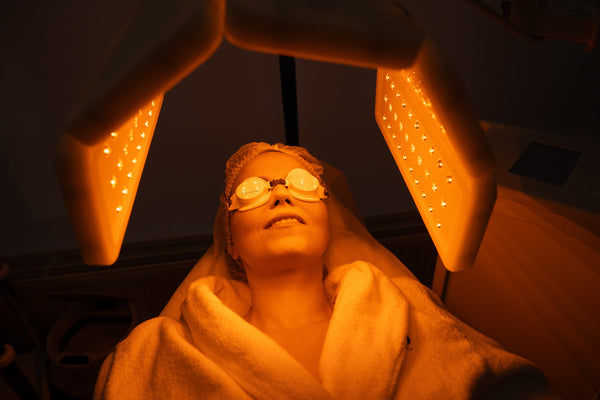
Online LED Light Therapy Training Course for Estheticians The Ultimate Professional Guide to LED Light Therapy and Photobiomodulation. This comprehensive course is your definitive roadmap to mastering LED Light Therapy. We move beyond the basics to provide a deep dive into the science of photobiomodulation, ensuring you understand exactly how light energy transforms skin at a cellular level. Whether you are a solo esthetician or a med-spa professional, this training covers the entire spectrum of light therapy treatments. We break down the complexities of different LED wavelengths, including Red Light for anti-aging, Blue Light for acne-prone skin, and Near-Infrared (NIR) for deep tissue healing—into easy-to-digest, actionable concepts. Bonus: Receive a complimentary, ready-to-use client intake and skin assessment form designed to support more thorough consultations, documentation, and treatment planning in your practice. What you will master in this course: The Science of Light: Understand the biological benefits of specific nanometer ranges. Clinical Implementation: Step-by-step guides on integrating LED into your existing professional facial protocols. Targeted Treatments: How to use LED for skin rejuvenation, inflammation reduction, and advanced acne management. Safety & Best Practices: Crucial "do’s and don’ts," contraindications, and equipment maintenance to ensure client safety and maximum ROI. Join us to gain the expertise needed to provide safe, effective, and results-driven treatments that keep your clients returning for that signature, professional glow.
Online Microdermabrasion Training Course for Estheticians Build a strong foundation and understanding of professional Diamond-tip microdermabrasion with a course designed for professionals who want to offer a skin resurfacing treatment with greater precision and purpose. Explore diamond-tip microdermabrasion as a versatile form of mechanical exfoliation and learn how it can be incorporated into professional facial services as an alternative to intensive resurfacing treatments. Beyond device operation, this course covers proper diamond-tip technique, client consultation & skin analysis, treatment planning, and how to adapt microdermabrasion according to individual skin needs and treatment goals. Develop the confidence needed to perform Microdermabrasion facial treatments while supporting smoother, refreshed, and visibly rejuvenated skin. Bonus: Receive a complimentary, ready-to-use client intake and skin assessment form designed to support more thorough consultations, documentation, and treatment planning in your practice. Key Takeaways Diamond-Tip Microdermabrasion Fundamentals Understand how diamond-tip microdermabrasion works at the surface of the skin, including its interaction with the stratum corneum and the physiological response created through mechanical exfoliation and vacuum suction. Tip Selection & Treatment Settings Learn how diamond tip grit, suction level, pressure, and number of passes influence treatment intensity, with a brief comparison to crystal microdermabrasion. Skin Analysis & Contraindications Assess skin type, sensitivity, barrier condition, Fitzpatrick classification, and current skin concerns to determine when treatment is appropriate, should be modified, or avoided. Professional Technique & Customization Follow a structured microdermabrasion protocol while learning how to adjust technique, suction, and tip selection across different areas of the face, neck, and décolleté. Aftercare, Infection Control & Treatment Planning Review proper sanitation, device care, post-treatment recommendations, recovery expectations, homecare guidance, and treatment frequency to support safe and consistent professional services.
Online Ultrasonic Training Course for Estheticians Ultrasonic Technologies: Exfoliation, Product Infusion & Professional Facial Techniques Ready to get more from your ultrasonic skin scrubber? Learn how to confidently use the SkinAct Ultrasonic & Skin Scrubber Units for professional exfoliation, product infusion, hydration-focused treatments, and congestion care. We’ll guide you through the skin scrubber, facial probe, and eye probe while showing you how to customize your technique based on your client’s skin condition and treatment goals. Build the skills and confidence to turn ultrasonic technology into a versatile addition to your professional facial services. Bonus: Receive a complimentary, ready-to-use client intake and skin assessment form designed to support more thorough consultations, documentation, and treatment planning in your practice. Key Takeaways Understanding Ultrasonic Technology Get to know the principles behind ultrasonic facial technology and how it can support exfoliation, product application, hydration-focused treatments, and congestion care. More importantly, understand when and why to incorporate ultrasonic technology into your professional facial protocols. Skin Scrubber Techniques Build confidence using the ultrasonic scrubber blade to help lift away superficial buildup, loosen accessible pore debris, and improve the appearance of skin texture. Learn proper technique so you can work effectively while keeping your client’s skin condition and comfort in mind. Client Assessment and Safety Learn how to identify appropriate candidates, recognize contraindications, and understand expected skin responses before and during treatment. Know what to look for, and when to adjust your technique or discontinue treatment, to help keep every service professional and client-focused. Equipment Care Learn the proper way to prepare, clean, disinfect, inspect, and store your ultrasonic unit and attachments between services. Good equipment care helps protect your investment while supporting the professional sanitation standards your clients expect.
Seamless integration for superior results. Discover how to maximize the potential of your SKINACT Wireless LED Mask. The "wireless" feature of this device offers a unique advantage in the treatment room, allowing for a clutter-free, relaxing experience. This course guides you through the best uses for the mask, detailing how to layer it over serums or sheet masks and how to incorporate it into facial workflows without tethering your client to a wall. We provide a detailed breakdown of treatment protocols, showing you exactly when to switch between Red, Blue, and Near-Infrared settings for different skin types. You will also learn the essential Pre and Post-care steps that ensure your clients leave with a lasting glow and zero irritation. Bonus: Receive a complimentary, ready-to-use client intake and skin assessment form designed to support more thorough consultations, documentation, and treatment planning in your practice. We cover everything you need to know for a successful treatment: Wavelength Science: What each color actually does to your skin. Contraindications: Who should avoid LED therapy and why. Step-by-Step Protocols: How to prep the skin, how long to wear the mask, and frequency recommendations. Maintenance: Best practices for cleaning and charging your wireless device to ensure longevity.


Do I need a license to take these esthetician training courses?
These courses are designed for licensed estheticians and skincare professionals. However, beginners interested in learning advanced skincare techniques may also benefit.
Are the courses online?
Yes, all SkinAct educational courses are video-based and accessible online, allowing you to learn at your own pace anytime.
Will I receive certification after completing the course?
You will receive a certificate upon completing the training, helping you enhance your credentials and professional offerings. These courses are NOT state accredited training and should not be used as such.
What types of treatments will I learn?
You will learn advanced skincare treatments including hydrodermabrasion, microcurrent, LED therapy, oxygen facials, and more.
How long do I have access to the course?
You get lifetime access! Once you purchase, you can watch the modules at your own pace and revisit them anytime you need a refresher.
Can these courses help me grow my spa business?
Absolutely. Our courses are designed to help estheticians expand their service offerings, improve client results, and increase revenue.