Best Ergonomic Chairs for Esthetician Comfort
Table of Contents
- Why Ergonomic Chairs Matter for Estheticians
- Quick Comparison: Top Ergonomic Chairs for Esthetician Comfort
- Esthetician Stool with Back Support
- Saddle Stool for Estheticians: Posture and Precision
- Adjustable Esthetician Chair Options
- Esthetician Chair Height and Positioning
- How to Choose the Right Chair for Your Practice
- Frequently Asked Questions
Last Updated: October 17, 2026
Why Ergonomic Chairs Matter for Estheticians
Poor seating forces your lower back to round, shoulders to hunch, and neck to crane, damage that accumulates over months and years.
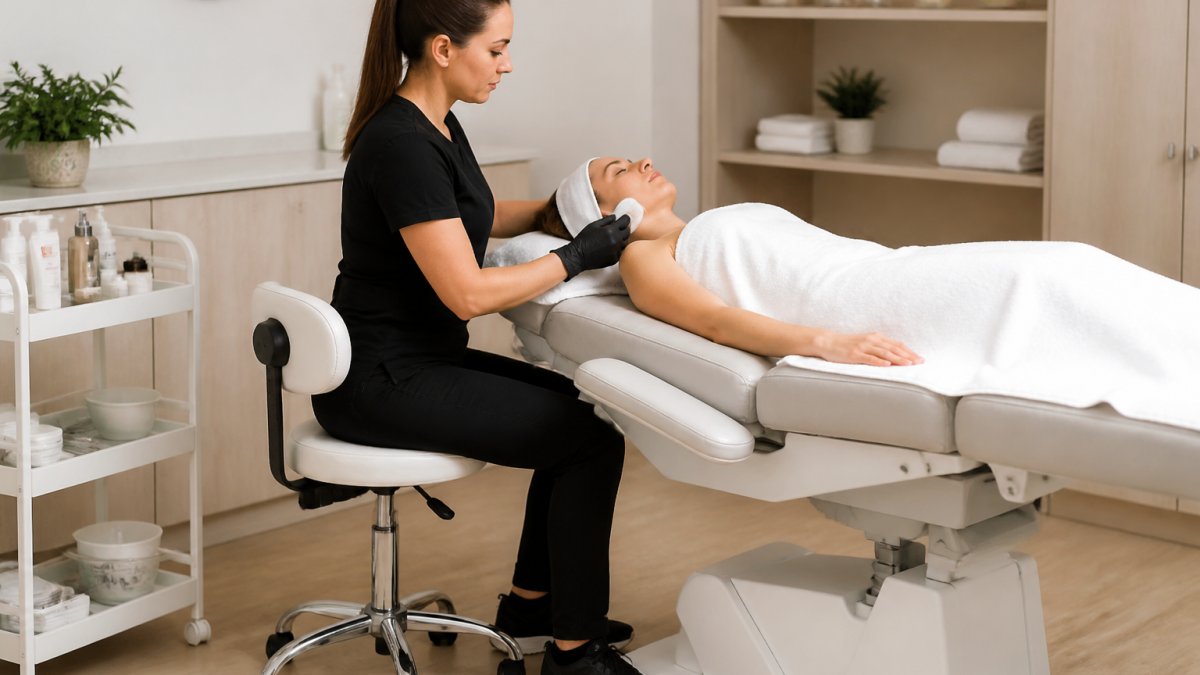
The right chair supports spinal alignment, reduces muscle fatigue, and lets you focus on client care instead of discomfort.
Adjustable height, lumbar support, and stable bases are functional requirements, not cosmetic features, they make the chair an extension of your practice rather than a distraction.
Quick Comparison: Top Ergonomic Chairs for Esthetician Comfort
| Chair Model | Starting Price | Key Adjustments | Best For |
|---|---|---|---|
| Pro Beauty Stool | $129.00 | Height only | Budget-conscious estheticians |
| Lux Comfortable Stool | $159.00 | Height, hydraulic base | Small treatment rooms |
| Lago Pro Stool | $149.00 | Seat height, backrest height | Modern spa aesthetics |
| Esthetician Saddle Stool | $189.00 | Height, tilt, backrest angle | Posture-focused practitioners |
| Gold Series Stool | $189.00 | Height, tilt, backrest angle, multiple colors | Design-conscious spas |
| Comfortable Esthetician Chair | $199.00 | Height, tilt, lumbar support, 360-degree swivel | Premium comfort and mobility |
| Luma Esthetician Stool | $199.00 | Height, backrest height, backrest angle, quiet wheels | Precision work and quiet environments |
| Vero Esthetician Saddle Stool | $199.00 | Height, backrest height, backrest angle, quiet wheels | Maximum lumbar support and posture |
| Brava Esthetician Saddle Stool | $189.00 | Height, tilt, backrest angle, color options | Lightweight portability |
| Supra Medical Stool | $181.44 | Adjustable features for clinical use | Medical spa environments |
Esthetician Stool with Back Support
An esthetician stool with back support transforms how your body handles long treatment days.


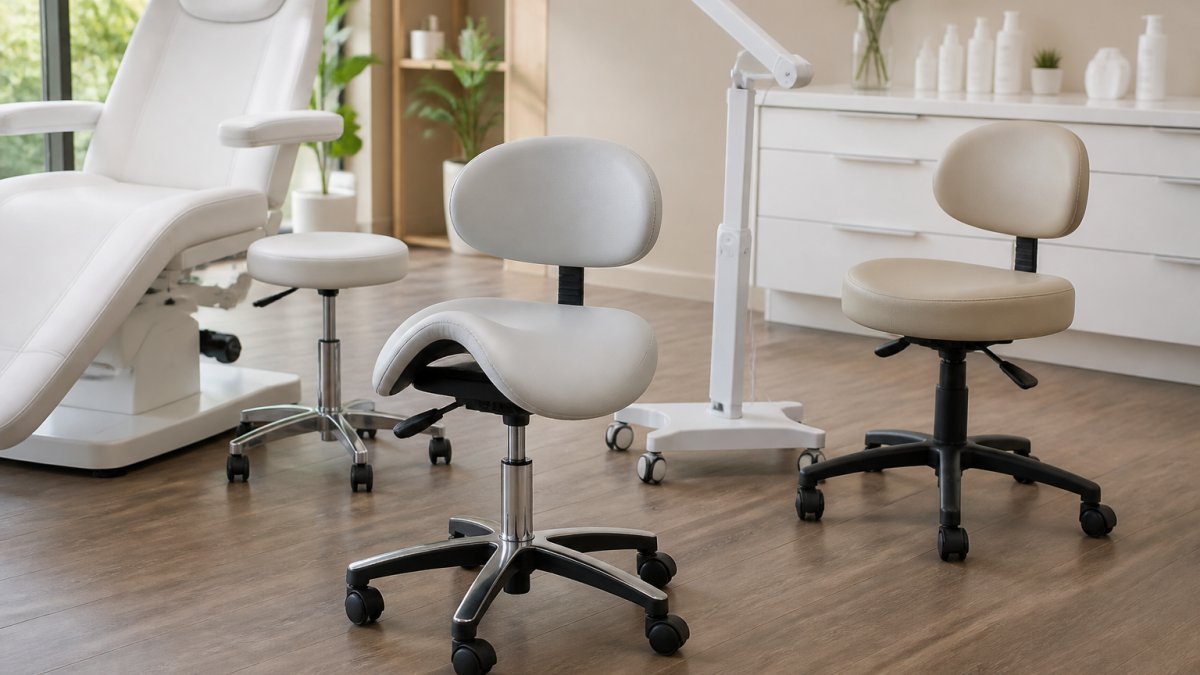
The Esthetician Saddle Stool delivers comprehensive adjustability: seat height, seat tilt, backrest height, and backrest angle all tune independently, so each esthetician can dial in a perfect fit.
The lumbar-support backrest (18″ × 11″) cradles your lower back during extended sessions, while the contoured seat cushion (16.5″ × 14″) spreads pressure evenly. At $189.00, it's accessible for solo practitioners.
Weight capacity runs to 400 pounds across all professional models, and the vinyl upholstery cleans easily, essential in a hygiene-focused environment.
Saddle Stool for Estheticians: Posture and Precision
A saddle stool for estheticians uses a distinctive seat shape that promotes a "neutral" spine position, opening your hips and aligning your back to reduce the fatigue of hours of leaning and reaching.
Unlike flat seats that encourage slouching, the saddle shape guides your pelvis into a forward tilt that chains up your spine: lower back arches slightly, shoulders relax back, and your neck follows.
The Vero Esthetician Saddle Stool exemplifies this design at the premium end.
The Brava Esthetician Saddle Stool delivers the same ergonomic benefits at $189.00.
Saddle stools excel when your work requires stability and fine motor control. The open-hip position keeps your core engaged without forcing tension, so you maintain precision through your sixth consecutive facial.
Adjustable Esthetician Chair Options
Adjustability separates professional seating from basic stools. When every client has a different height and your own position shifts throughout the day, a chair that adapts becomes indispensable.
The Comfortable Esthetician Chair at $199.00 packs multiple adjustments into one package: height, seat tilt, lumbar support, and 360-degree swivel.

The 360-degree swivel matters: moving between a client's face, neck, and décolletage, swiveling beats standing and repositioning repeatedly, less fatigue and more time focused on technique.
The Luma Esthetician Stool at $199.00 emphasizes three-way adjustability: seat height, backrest height, and backrest angle all move independently, letting you match your posture to each treatment type, from gentle facials to intensive extractions.
The ultra-quiet premium rubber castor wheels on the Luma deserve mention.
Esthetician Chair Height and Positioning
Chair height most directly determines whether you spend your career reaching down or working at neutral eye level, but it only works when matched to your treatment table, torso length, and arm length. Treat chair height and table height as one system.
The elbow-angle rule
The benchmark is simple: when your hands rest on the treatment surface, your elbows should sit at roughly 90 degrees, forearms parallel to the floor or angled slightly down. Elbows below 90 degrees mean you're reaching up and loading your shoulders; above 90 degrees means you're hunching and compressing your lower back.
To test it, sit at your normal working distance, rest your hands flat on the surface, and have someone photograph you from the side. Adjust chair height first, then table height if possible.
Pro Beauty Stool Esthetician Chair →
Matching chair height to table height
Standard facial beds sit roughly 24 to 26 inches high. Most professional esthetician chairs adjust across about 20 to 29 inches, but the useful number is the overlap between your chair's range and your table's height.
- If your table is at the low end (around 24 inches), a chair that tops out near 26 inches keeps you slightly above table level, which lets gravity assist your work rather than fighting it.
- If your table is at the high end (around 26 inches), you need a chair that reaches at least 28 inches so you can stay at or above the surface instead of reaching up.
- If you're shorter in the torso, a lower chair range (starting around 20 inches) prevents your knees from jamming under the table and keeps your feet flat.
Measure your table height before you order. Write the number down. Then compare it against the chair's published height range, not the starting price, not the feature list. The overlap is what you're buying.
Body proportions matter more than total height
Two estheticians of the same overall height can need different settings if their torso-to-leg ratio differs. A long-torso practitioner may need a lower chair to keep elbows at 90 degrees; a long-legged practitioner needs a higher seat to keep feet flat.
A quick self-check: sit in the chair with feet flat on the floor. Your thighs should be roughly parallel to the floor, knees at about 90 degrees, and there should be a small gap behind your knee at the seat edge.
Positioning for different treatment zones
Your ideal height shifts depending on where you're working. For facial work, sit slightly above the surface looking down at a comfortable angle. For neck and décolletage work, drop the chair an inch or two to keep wrists neutral.
This is where a chair with a wide adjustment range earns its keep. A chair that only moves three inches forces a compromise; a chair spanning six to eight inches lets you shift position between treatment zones without standing up.
Foot support and floor contact
Don't overlook the floor. If your feet can't rest flat, your pelvis tilts and your posture chain collapses. A foot ring or stable five-star base helps, but the real fix is matching seat height to leg length. On thick carpet or mats, account for the extra height the flooring adds.
How to Choose the Right Chair for Your Practice
Most chair-buying advice tells you to "consider your needs" and "set a budget." That's not a decision process. What helps is a repeatable evaluation you can run before you spend money, ideally with the chair in front of you and a real treatment table.
Step 1: Measure your treatment room first
Before you look at a single chair, measure the floor space where you'll sit and the height of your treatment table. Write both numbers down.
- Floor footprint: A chair base of roughly 21 to 22 inches in diameter is compact; larger bases need more clearance. In a small room, check that the base won't block your movement around the table or catch on cabinetry.
- Table height: Standard facial beds sit around 24 to 26 inches. Your chair's height range needs to overlap that number so you can reach the 90-degree elbow position described above.
- Clearance for swivel: If you want a 360-degree swivel chair, confirm you have room to rotate without clipping the table or a wall.
Step 2: Run a fit test with a real body
If you can try the chair in person:
- Set the chair to its lowest height and sit down with feet flat. Check that your knees are at roughly 90 degrees and your thighs are supported.
- Raise the chair until your elbows hit 90 degrees with your hands on the table surface. Note the setting.
- Simulate your most common treatment posture for at least five minutes. Does your lower back stay supported? Do your shoulders relax? Does the seat edge press behind your knee?
- If you employ other estheticians, have each person run the same test. A chair that fits one practitioner but not another is a poor team purchase.
If you can't try before buying, ask the seller for the exact height range, seat dimensions, and base diameter, then compare those numbers against your measurements. A chair that doesn't publish its height range is a chair you can't evaluate.
Step 3: Check the return and warranty terms
This is the step most buyers skip. Before you order:
- Confirm the return window. A chair that feels wrong after a week of real treatments should be returnable. Ask how many days you have and who pays return shipping.
- Read what the warranty covers. Most warranties protect against manufacturing defects but not normal wear on upholstery, casters, or hydraulic cylinders. Know which parts are excluded.
- Ask about replacement parts. Casters and hydraulic cylinders are the parts most likely to wear out. Confirm you can buy replacements rather than replacing the whole chair.
Step 4: Match features to your actual treatment mix
Feature lists are long; your treatment mix is specific. Use it to prioritize:
- Detailed facial work, peels, extractions: prioritize stable bases, adjustable backrest angle, and a seat that keeps you at neutral spine.
- Multiple treatment types in a day: prioritize a wide height range and 360-degree swivel so you can shift position without standing.
- Quiet spa environments: prioritize premium rubber casters over standard plastic wheels, which catch and squeak on floor transitions.
- Shared team seating: prioritize independent seat-height and backrest adjustment so different body types can share one chair.
Step 5: Do the cost-per-hour math
A chair you use six to eight hours a day for several years costs very little per hour of use. Compare that against the cost of a back injury, lost treatment days, or reduced client capacity from chronic pain.
Proper ergonomics also supports your long-term professional growth. If you're expanding your service offerings or training team members, resources like Online Service Training for Estheticians help you and your staff master new techniques with the body awareness and postural control that the right seating enables.
Frequently Asked Questions
What should estheticians look for in an ergonomic chair?
Look for adjustable seat height, lumbar support, and a sturdy base. The chair should allow you to position yourself at the correct height relative to your client, support your lower back during extended sessions, and remain stable on various floor types. Many estheticians prefer models with swivel capability and smooth-rolling casters for easy mobility between treatment stations.
Are saddle stools good for estheticians?
Yes. Saddle stools promote a neutral spine position by opening the hips and aligning the back, which reduces physical fatigue during long skincare and aesthetic treatments. They're especially effective for estheticians who spend hours performing detailed work. Look for saddle models with adjustable backrest height and angle to customize support throughout the day.
How high should an esthetician chair be?
Your chair height should allow your elbows to bend at approximately 90 degrees when working on a client at standard treatment-bed height. Most ergonomic esthetician chairs adjust between 20 and 28 inches, letting you fine-tune the height to your body proportions and treatment-room setup. Proper height reduces shoulder and neck strain during extended sessions.
Should an esthetician chair have a backrest?
A backrest is highly beneficial for estheticians working long hours. It provides lumbar support, reduces lower back strain, and allows you to adjust your posture throughout the day. Many professional-grade chairs offer adjustable backrest height and angle, so you can customize support based on the treatment you're performing and your personal comfort needs.