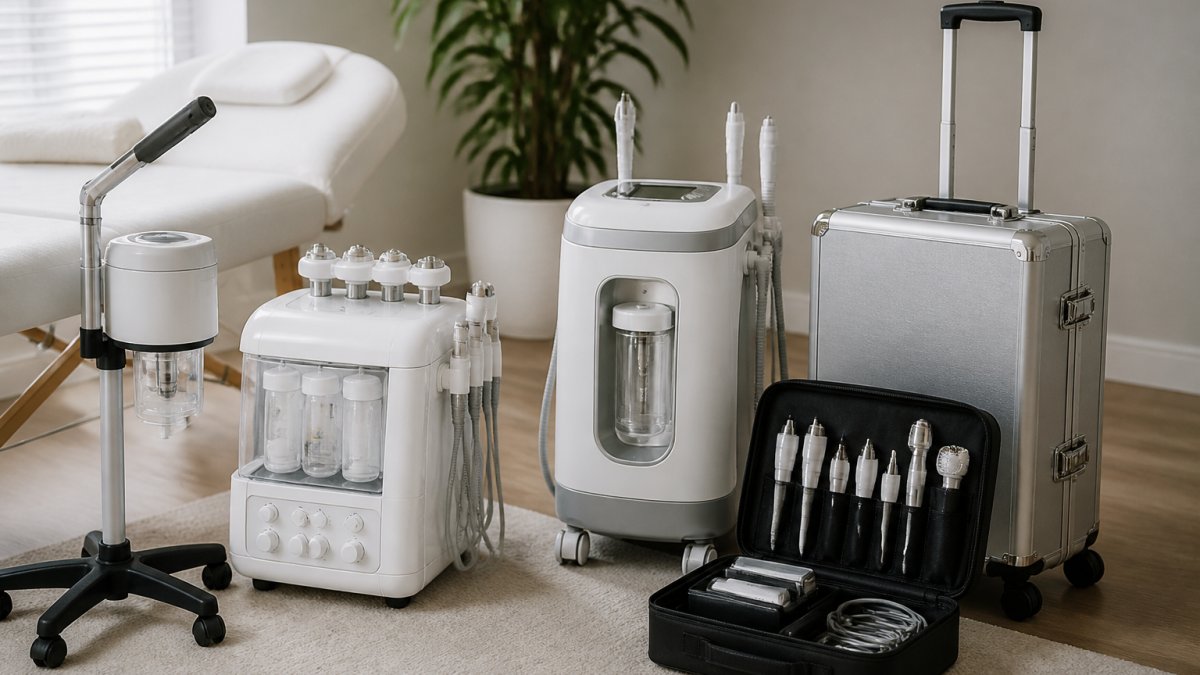
Durable Equipment for Beauty Schools: 2026 Buying Guide
Table of Contents
- What Makes Equipment for Beauty Schools Actually Durable
- Your Beauty School Equipment Checklist by Program Area
- Cosmetology Lab Furniture: Stations, Storage, and Wet Areas
- Durable Salon Chairs and Seating for Student Training
- Spa Treatment Beds for Training: What Holds Up to Daily Practice
- Cleaning, Disinfection, and Storage That Protect Your Investment
- Budgeting for the Long Run: Costs, Layout, and Accessibility
- Frequently Asked Questions
Last Updated: October 16, 2026
What Makes Equipment for Beauty Schools Actually Durable
Durable equipment for beauty schools is furniture and tools built to survive years of daily student use, not occasional client visits, which is why durable equipment for beauty schools must be specified for constant handling.
Most buying guides focus on price per unit, which misses the real cost: a cheap styling chair that needs replacing twice during a student's training cycle costs more than a heavier chair that outlasts the program.
The U.S. Department of Education's career and technical education resources note that hands-on instruction hours are central to cosmetology program completion, which means your equipment runs almost continuously.
Frame, Upholstery, and Motor Specs That Decide Service Life
A welded steel frame with a powder-coated finish resists the twisting and leaning that dozens of students put a chair through each week; bolted or stapled frames loosen over time.
Upholstery decides how the chair looks in year three. Commercial-grade vinyl resists oils, color products, and repeated disinfection better than standard fabric, and high-density foam holds its shape where low-density foam compresses into a permanent dip within months.
Motorized equipment adds another variable. The Cleo Professional Electric Treatment Table, for example, is built with quiet electric operation and fine height adjustment for repeated daily positioning.

- Frame: welded steel or solid hardwood, powder-coated or sealed
- Upholstery: commercial-grade, oil-resistant vinyl
- Foam: high-density, multi-layer
- Motors: rated for frequent cycling, not occasional use
- Hardware: replaceable parts, not sealed assemblies
Your Beauty School Equipment Checklist by Program Area
A beauty school equipment checklist should be organized by program area, because a cosmetology lab, an esthetics room, and a barbering floor need different things. Use the table below as your framework, then run it through the five-step procurement process that follows.
| Program Area | Core Equipment | Durability Priority |
|---|---|---|
| Cosmetology lab | Styling stations, chairs, shampoo bowls, mirrors | Frame stability, upholstery wear |
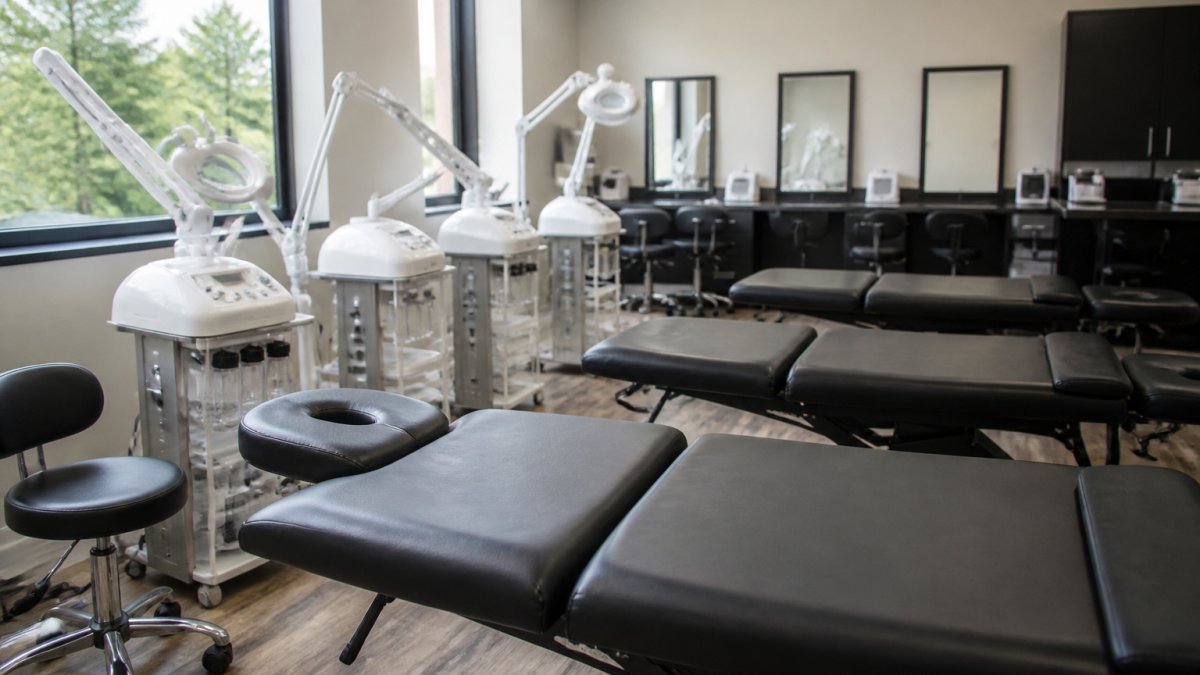
| Esthetics room | Treatment beds, facial chairs, utility carts | Motor cycle life, foam density |
| Barbering floor | Barber chairs, clippers, shears, combs | Hydraulic or electric lift reliability |
| Nail technology | Nail tables, ventilation, tool storage | Surface resistance, easy disinfection |
| Classroom | Mannequins, training kits, dryers, irons | Replaceable parts, heat tolerance |
Two categories get overlooked in most checklists: storage and mobile equipment. Rolling utility carts move between stations all day, and cheap casters fail first. The 3-Shelf Spa Utility Cart with Drawer uses chemical-resistant molded plastic and swivel casters, which suits a training room where carts get pushed, loaded, and wiped down constantly.

Five-Step Procurement and Layout Process
1. Measure the room before you shop. Record usable wall length, ceiling height, and door swing in each zone.
**2.
3. Check utilities against the equipment list. Wet stations need hot and cold water, a drain, and GFCI-protected outlets within cord reach.
4. Confirm delivery path and installation. Measure doorways, elevator dimensions, and stair turns. A treatment bed that won't fit through the door becomes a return.
5. Stage the rollout. Don't replace every station at once.
Cosmetology Lab Furniture: Stations, Storage, and Wet Areas
Cosmetology lab furniture splits into three zones: dry stations, wet stations, and storage. Dry stations hold mirrors, a work surface, and a styling chair.
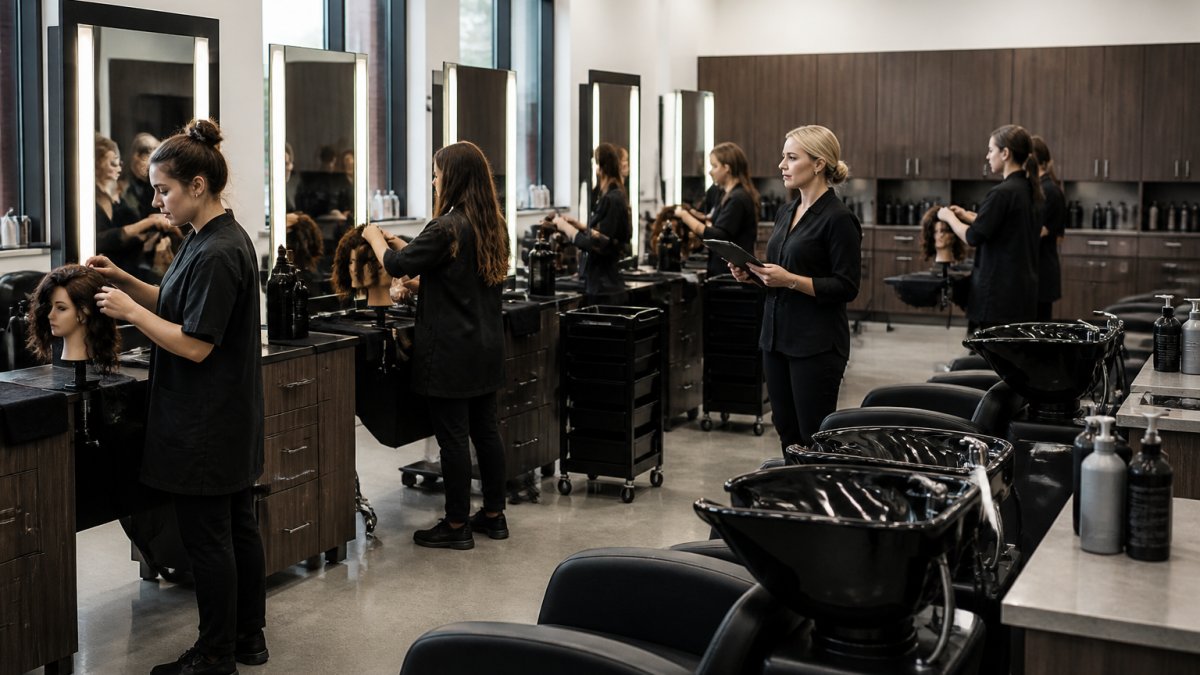
Layout matters as much as construction. Leave enough clearance behind each styling chair for a student to step back without colliding with the next station.
Storage is where most labs run short. Plan closed storage for student kits, open shelving for products, and a locked cabinet for anything regulated.
For wet areas, choose surfaces that tolerate standing water and repeated disinfection. Molded plastic and sealed laminate outlast unfinished wood, which swells and separates at the seams once water finds a gap.
Durable Salon Chairs and Seating for Student Training
Durable salon chairs for a training floor need one quality that client-facing chairs don't: they must survive misuse, not just use. Students are learning. They will drop the chair, over-pump the hydraulic lift, and lean back at the wrong angle.
Priorities for training-floor seating:
Serene Professional Electric Treatment Table with Ambient LED Lighting →
- Hydraulic or electric lift rated for constant cycling, not occasional adjustment
- Wide, weighted base to prevent tipping during practice
- Replaceable upholstery so one torn seat doesn't retire the whole chair
- Simple mechanisms that students can learn on without damaging them
For shampoo areas, a shampoo chair with proper neck support reduces strain during long practice sessions.
The thing nobody tells you about training chairs is that the lift mechanism usually fails before the upholstery does. Ask suppliers whether the hydraulic cylinder or actuator is a stocked replacement part.
Spa Treatment Beds for Training: What Holds Up to Daily Practice
Spa treatment beds for training face a different test than beds in a working spa. A student may raise and lower the bed twenty times in one practice session. Multiply that by a full cohort, and the motor becomes the wear item.
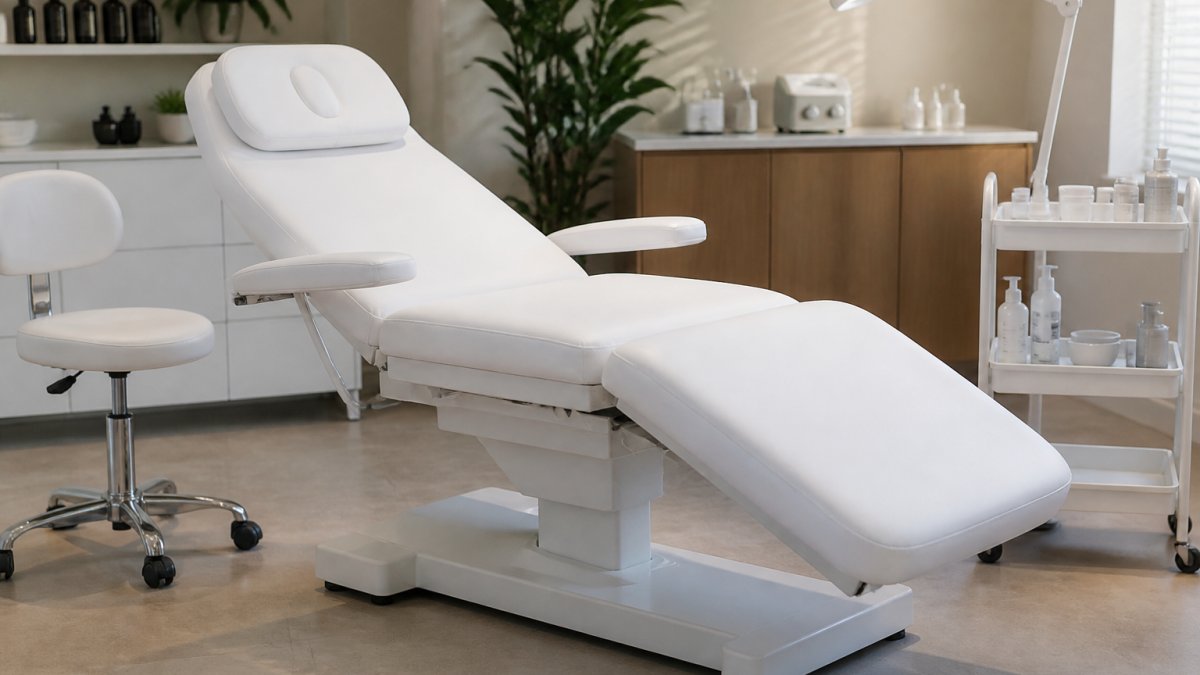
Electric treatment tables with quiet lift systems and fine height adjustment handle that repetition better than manual or single-position beds. The Serene Professional Electric Treatment Table pairs a solid wood pedestal base with a precision electric lift and multi-layer high-density foam, which holds up when a bed is used by a rotating group of students rather than one practitioner.
What to check before buying training beds:
- Lift type and cycle rating: electric lifts with quiet motors suit frequent repositioning
- Weight capacity: confirm it accommodates all body types, including larger practice models
- Foam and upholstery: oil-resistant, multi-layer foam resists compression
- Height range: students of different heights need a bed that adjusts to them, not the reverse
- Repair access: can you reach the motor and wiring without dismantling the frame?
Cleaning, Disinfection, and Storage That Protect Your Investment
Cleaning and disinfection are where durability and compliance meet. Equipment that can't be wiped down between students either fails early or creates a hygiene gap.
Build a daily routine around three steps: clean visible debris, disinfect surfaces with an EPA-registered product appropriate for your state's board requirements, and store tools so they stay clean until next use.
Storage protects the investment as much as cleaning does. A UV Sterilizer and Sanitizer Cabinet with Timer gives you two drawers and two shelves with UV lights positioned at the top and bottom, plus reflective interior walls.

- Wipe upholstery with a product safe for vinyl, not harsh solvents
- Vacuum or brush out debris from chair mechanisms monthly
- Lubricate moving parts per the manufacturer's schedule
- Inspect casters, hinges, and lift mechanisms quarterly
- Replace worn upholstery before foam is exposed
Budgeting for the Long Run: Costs, Layout, and Accessibility
Total cost of ownership, not sticker price, should drive your purchasing decisions. The formula is simple even when the inputs aren't: purchase price plus replacement parts plus repair labor plus downtime cost, divided by expected service life in years. A chair that costs more but lasts three times as long usually wins, but only if you plan for the parts and labor that keep it running.
Lifecycle Budget Categories
- Initial purchase: stations, chairs, beds, storage, tools
- Consumables: mannequins, shears, combs, brushes, irons, dryers
- Replacement parts: casters, upholstery, lift mechanisms, cords, footrests
- Maintenance: cleaning supplies, disinfection products, service visits
- Contingency: a reserve for mid-year failures
A common pattern is that small parts, casters, gas cylinders, footrest brackets, cord sets, account for a disproportionate share of downtime even though they cost little individually. Stock a small spare-parts shelf: two sets of casters per rolling item, one spare hydraulic cylinder or actuator per lift type, and a roll of upholstery patch material. That shelf costs far less than a single lost teaching day.
Repairability Criteria to Ask Before You Buy
Durability claims are easy to make and hard to verify. Ask these questions instead:
- Is the wear item replaceable? Can you swap the hydraulic cylinder, actuator, or caster without replacing the whole unit?
- Are fasteners standard? Metric or SAE bolts you can source locally beat proprietary hardware.
- Is the upholstery field-replaceable? A seat cover that zips or staples on independently of the frame extends chair life by years.
- Is the motor or lift rated for continuous cycling? Ask for the duty-cycle rating, not just the lift capacity.
- Is there a published parts list? If the supplier can't send one, assume the item is disposable.
- What does the warranty cover, and for how long? Frame, motor, and upholstery are usually covered on different terms, read each separately.
Preventive Maintenance Schedule
Put these on a calendar and assign an owner. Downtime drops when maintenance is scheduled rather than reactive.
- Daily: wipe upholstery with a vinyl-safe cleaner; inspect cords and hoses for damage
- Weekly: vacuum or brush debris from chair and bed mechanisms; check caster function
- Monthly: lubricate moving parts per the manufacturer's schedule; tighten visible fasteners
- Quarterly: inspect casters, hinges, and lift mechanisms; test GFCI outlets; check hydraulic fluid where applicable
- Annually: review warranty status, replace worn upholstery before foam is exposed, and re-evaluate which models are worth replacing versus repairing
Layout and Accessibility
Layout and accessibility belong in the same budget conversation as parts and labor, because a poorly planned room accelerates wear. Leave wheelchair-accessible clearance around at least one station in each zone, keep cords and hoses off walking paths, and position mirrors so students of different heights can work without straining. Adjustable-height beds and chairs fit a wider range of students and practice models without buying separate furniture.
SkinAct supplies treatment furniture and salon equipment built for exactly this kind of daily use, and our online service training for estheticians helps instructors and graduates add modalities that keep equipment earning its place on the floor.
Frequently Asked Questions
What supplies do I need for beauty school?
Start with the core categories: student training kits with shears, combs, brushes, and practice tools; mannequins for cutting and styling; styling chairs and stations; shampoo bowls or sinks; dryers, curling irons, flat irons, and clippers; and classroom supplies like towels and organizers. Add a UV sterilizer cabinet and utility carts so tools stay clean and within reach. Build your beauty school equipment checklist around the programs you teach, then buy durable versions of the items students touch every day.
How do beauty schools choose equipment that can withstand daily use?
Look at what the equipment is made of and how it is built. Frames should be steel or solid hardwood, not thin particleboard. Upholstery should resist oils and chemicals. Electric tables and chairs should have motors rated for repeated cycles, and hydraulic or electric lifts should move smoothly under load. Check warranty terms and whether replacement parts are available, because a chair that cannot be repaired becomes landfill. Durable equipment for beauty schools is usually heavier, simpler to service, and backed by a supplier that stocks components.
What should schools look for in a student salon station?
A good student salon station has a stable base that will not tip when a student leans on it, a laminate or solid surface top that resists acetone and color products, and enough drawer or shelf space for tools and supplies. Height should suit seated and standing work, and the station should pair with a durable salon chair that adjusts easily. Measure your floor plan first so stations, mirrors, and electrical outlets line up, and leave clearance for wheelchairs and mobility aids.
How can beauty schools maintain treatment beds and salon chairs?
Wipe upholstery after every client or student session with a cleaner approved for the material, and avoid soaking seams or motors. Inspect bolts, casters, and lift mechanisms monthly, and tighten or replace worn parts before they fail. Keep a log of repairs so you can see which models cost the most to keep running. For spa treatment beds for training, follow the manufacturer's weight limits and cycle guidance, and store supplies on utility carts rather than on the bed itself. A UV sterilizer cabinet with a timer helps standardize tool sanitation between classes.
Outfitting a beauty school means choosing equipment that survives hundreds of students, not one careful owner. SkinAct builds treatment tables, salon equipment, and storage designed for that reality, with welded and solid-wood construction, commercial-grade upholstery, and replaceable parts so a single failure doesn't sideline a station. View our professional-grade equipment and see how it holds up to your training floor.