Durable Spa Equipment for Franchises: A Selection Guide
Table of Contents
- Why Durable Spa Equipment Matters for Franchise Operations
- Spa Treatment Tables: The Foundation of Your Service Menu
- Professional Spa Equipment: Pedicure Chairs, Storage, and Accessories
- Standardizing Equipment Across Spa Locations
- Spa Equipment Maintenance Checklist and Durability Standards
- Construction Materials and Durability Testing
- Lifecycle Cost and Total Cost of Ownership
- Accessibility, Sanitation, and Regulatory Considerations
- Frequently Asked Questions
Last Updated: October 7, 2026
Why Durable Spa Equipment Matters for Franchise Operations
When you're managing multiple spa locations, equipment failure isn't just an inconvenience, it's a revenue killer. A broken treatment table means canceled appointments.

This is where durable spa equipment becomes your operational backbone. At SkinAct, we've worked with franchise networks to understand what separates equipment that lasts from equipment that requires constant repairs.
Franchises face unique pressures that solo practitioners don't. You need standardized equipment specifications across all locations. You need supply chain reliability so you can order replacements without delays.
Durable spa equipment for franchises isn't just about picking the sturdiest option. It's about understanding weight capacity, frame construction, material durability, and how maintenance schedules actually work in a busy environment.
Spa Treatment Tables: The Foundation of Your Service Menu
Your treatment table is the workhorse of your spa. It's where massages happen, facials are performed, body wraps are applied, and hot stone therapy is delivered.
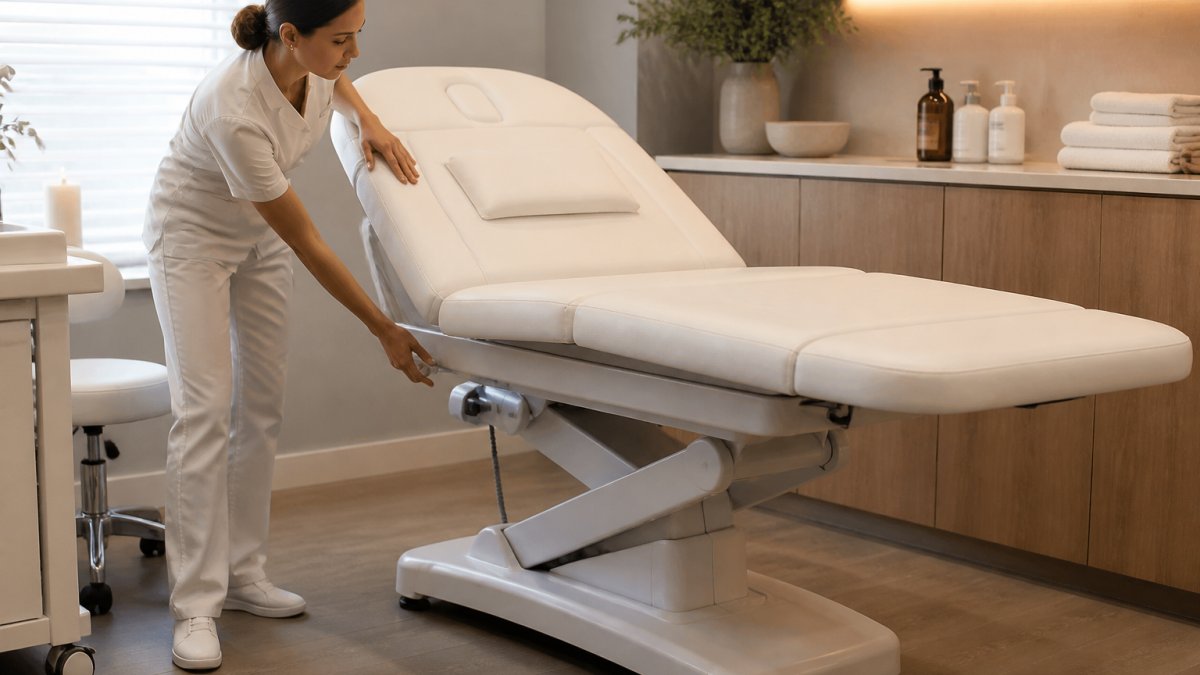
Professional spa treatment tables come in two main configurations: electric and manual. Electric tables offer adjustability with the push of a button, height adjustment, tilt functions, heated surfaces. Manual tables rely on mechanical adjustment, which reduces moving parts but requires physical effort to reposition.
The Aluma Electric Spa Treatment Table from SkinAct delivers the kind of reliability franchises need. It features five independent adjustment controls for height, top and bottom tilt, headrest, and leg rest. The heated cushioning keeps clients comfortable throughout their service, which directly impacts satisfaction scores.
Electric vs. Manual Options
Electric tables dominate franchise environments because they're faster to adjust and reduce physical strain on staff. A therapist can reposition a client in seconds using preset buttons rather than manually cranking adjustments. Over a day with dozens of clients, this efficiency adds up. Manual tables cost less upfront but require more physical effort and take longer to adjust between services.
For franchises running high-volume schedules, the speed advantage of electric tables justifies the investment. You're also reducing worker compensation claims from repetitive strain injuries. Staff fatigue decreases when they're not manually adjusting tables all day.
Weight Capacity and Frame Construction
Frame construction determines how long a table will actually last under daily use. Look for tables with reinforced steel posts and a sturdy base that doesn't flex or wobble under client weight.
Weight capacity matters more than most operators realize. A table rated for 350 lbs. used by clients averaging 200 lbs. will degrade faster than a table rated for 518 lbs. used the same way.
When evaluating construction materials, polypropylene and vinyl upholstery hold up better than cheaper alternatives under constant use and cleaning. Steel frames resist rust when properly finished. Look for tables with reinforced seams and stitching that won't separate after months of use.
Professional Spa Equipment: Pedicure Chairs, Storage, and Accessories
Beyond treatment tables, your equipment ecosystem includes pedicure chairs, service trays, mobile storage, and accessories that support your service delivery. Each piece needs to withstand daily use while maintaining a professional appearance.
Pedicure chairs take constant abuse. Clients sit in them for 30-60 minutes at a time. The hydraulic systems get used repeatedly. The upholstery needs cleaning multiple times daily. For franchises, you need chairs that maintain their appearance and function after thousands of hours of use.
Selecting Chairs That Support High-Volume Services
Pedicure chairs for franchise environments need specific features. Hydraulic systems should be smooth and responsive, with no jerky movements or slow response times. The footrest should be stable and adjustable to accommodate different client heights.
Look for chairs with durable upholstery that resists staining and cleans easily. Vinyl and polyurethane hold up better than fabric. The base should be wide and stable, narrow bases create tipping risks and feel unstable to clients.
For franchises standardizing across locations, consistency matters. If location one has chairs that recline smoothly and location two has chairs with stiff recline mechanisms, your clients notice. That inconsistency damages your brand perception.
Mobile Storage and Utility Carts
The 3-Shelf Spa Utility Cart with Drawer from SkinAct solves a real problem in busy treatment rooms: keeping supplies and equipment organized and accessible. This cart rolls alongside your treatment table or station, giving you immediate access to tools, products, and supplies without leaving the client.
Made from chemical-resistant molded plastic, this cart won't rust or degrade from constant cleaning. Three shelves provide room for supplies and tabletop devices. The slide-out drawer keeps smaller implements organized. Swivel casters make repositioning between services effortless. For franchises, having standardized mobile storage across locations means staff can work efficiently at any location without searching for supplies or adapting to different cart layouts.
| Equipment Type | Key Durability Factor | Franchise Benefit |
|---|---|---|
| Treatment Tables | Reinforced frame + weight capacity | Consistent service delivery across locations |
| Pedicure Chairs | Hydraulic quality + upholstery durability | Professional appearance maintained |
| Mobile Carts | Chemical-resistant materials + swivel casters | Staff efficiency and supply organization |
| Towel Cabinets | UV sterilization + temperature consistency | Hygiene standards standardized |
Standardizing Equipment Across Spa Locations
Franchise success depends on consistency. Clients expect the same service quality whether they visit location one or location five. That consistency starts with equipment standardization.
When you standardize equipment, you reduce training complexity. Staff moving between locations don't need to relearn how to adjust different table models or operate unfamiliar chairs. You also simplify replacement and maintenance. When a part fails, you know exactly which replacement fits because all locations use the same model.
Creating a Franchise-Wide Equipment Specification Framework
Start by documenting exactly what equipment each treatment room needs. Specify the exact model for each piece, treatment table, pedicure chair, mobile cart, towel warmer, lighting. Include weight capacity requirements, material specifications, and performance standards.
This specification document becomes your procurement bible. When you need to replace equipment or open a new location, you reference this document rather than making ad-hoc decisions. You also use it to evaluate new equipment options.
Include performance metrics in your specifications. Treatment tables should adjust smoothly with no grinding sounds. Pedicure chairs should recline without jerky movements. Mobile carts should roll smoothly on all floor types. These aren't vague quality standards, they're testable requirements.
Consistency, Supply Chain, and Multi-Location Rollout
When you standardize on specific equipment models, your supply chain becomes predictable. You know which parts you'll need and can establish relationships with suppliers. You can negotiate volume pricing across all locations.
For multi-location rollouts, standardization accelerates setup. New locations don't require custom equipment selection. You order the standardized package, staff receives training on the standard equipment, and the location opens with the same capabilities as existing locations.
Aluma Electric Spa Treatment Table →
The 24-Piece Hot Towel Cabinet with UV Sterilizer from SkinAct demonstrates how standardization works in practice. This cabinet maintains temperatures between 148°F and 168°F, keeping pre-moistened towels ready for facials, massages, and other services. The UV sterilization feature adds a sanitation layer.

Spa Equipment Maintenance Checklist and Durability Standards
Equipment durability depends partly on how well you maintain it. A well-maintained table outlasts a neglected one by years. For franchises, establishing maintenance protocols ensures consistent equipment performance across all locations.
Weekly and Monthly Inspection Routines
Weekly inspections catch small problems before they become big failures. Check treatment tables for loose bolts or creaking sounds. Test all adjustment functions. Inspect upholstery for tears or stains that need addressing. Clean mobile carts and ensure casters roll smoothly.
Monthly inspections go deeper. Check hydraulic systems on pedicure chairs for smooth operation. Test heating elements on towel cabinets. Inspect frame welds or joints for stress cracks. Document all findings in a maintenance log.
This preventive approach costs far less than emergency repairs. When a table adjustment mechanism fails mid-service, you're canceling appointments and paying for emergency repairs. When you catch wear during monthly inspection, you schedule maintenance during off-hours.
Materials That Withstand Daily Use
The materials your equipment is made from determine how well it handles constant use. Steel frames resist bending and maintain structural integrity. Polypropylene and vinyl upholstery resist tearing and staining better than cheaper alternatives. Quality hydraulic systems operate smoothly for thousands of cycles.
When evaluating durable spa equipment for franchises, ask about material specifications. What gauge steel is the frame? What type of upholstery is used? What hydraulic system powers the adjustments? These details separate equipment that lasts from equipment that requires constant repair.
SkinAct's Multi-Purpose Disinfecting Cleaner for Upholstery protects your equipment investment. Using the right cleaner prevents chemical damage to upholstery and surfaces. Harsh cleaners can crack vinyl or degrade plastic components.

Construction Materials and Durability Testing
The materials used in spa equipment directly impact how long it lasts and how well it performs. Understanding material choices helps you evaluate equipment quality.
Steel frames provide the structural foundation. Stainless steel resists rust better than standard steel but costs more.
Upholstery materials matter significantly. Vinyl and polyurethane resist staining and clean easily. They handle repeated disinfection without degrading.
Hydraulic systems should use quality seals and smooth-operating pistons. Cheap hydraulic systems leak or operate jerkily. Quality systems maintain smooth adjustment for years.
When evaluating equipment, ask manufacturers about durability testing. Have they tested the equipment for thousands of cycles? Do they have real-world usage data from busy spas?
Lifecycle Cost and Total Cost of Ownership
The purchase price is only the beginning. Total cost of ownership includes maintenance, repairs, replacement parts, and eventual replacement.
A cheaper table that requires frequent repairs costs more over five years than a more expensive table that runs reliably. Calculate total cost by adding purchase price, average annual maintenance, typical repairs, and replacement parts over the equipment's expected lifespan.
For franchises with multiple locations, this calculation multiplies across all sites. A $500 annual maintenance difference per location becomes significant when you're managing five or ten locations.
Quality equipment from manufacturers like SkinAct typically costs more upfront but delivers lower total cost of ownership. The equipment runs reliably, requires minimal maintenance, and lasts longer before replacement becomes necessary.
Accessibility, Sanitation, and Regulatory Considerations
Professional spas must meet sanitation standards and accessibility requirements. Your equipment choices support or complicate compliance.
Treatment tables should be easy to clean and disinfect. Removable, replaceable covers simplify sanitation. Crevices where bacteria can hide should be minimized. Upholstery should resist staining and clean easily.
Accessibility matters too. Treatment tables should adjust to heights that accommodate clients with mobility challenges. Mobile carts should roll smoothly for staff with physical limitations. Pedicure chairs should have stable armrests and footrests.
Hot towel cabinets like SkinAct's 24-piece model with UV sterilization directly support sanitation compliance. The UV light provides an additional sterilization step beyond washing. The temperature control maintains proper warmth without overheating towels.
Franchise spa operations succeed when equipment performs consistently across every location. Explore our professional-grade treatment tables, storage solutions, and accessories designed for high-performance spa environments. Your team can also strengthen their expertise through Online Service Training for Estheticians, ensuring staff across all locations deliver consistent, professional service standards.
Frequently Asked Questions
What features should I look for in durable spa equipment for franchise locations?
Look for reinforced steel frames, high weight capacity (typically 500+ lbs), chemical-resistant materials like polypropylene, and quality wheels on mobile storage. Equipment should have independent adjustment controls, removable and replaceable covers for easy cleaning, and sturdy construction that withstands 8+ hours of daily use. Electric components should be UL-certified, and materials must resist staining from oils and disinfectants used in professional settings.
How can I standardize equipment across multiple spa franchise locations?
Create a detailed equipment specification framework that documents exact model numbers, dimensions, weight capacity, and service compatibility for each piece. Establish a single supplier relationship to ensure consistent quality and availability. Document setup procedures, maintenance schedules, and replacement parts lists for each location. This approach reduces training time for new staff, simplifies inventory management, and ensures clients receive the same experience across all franchise locations.
What is the typical lifespan of professional spa equipment with proper maintenance?
Well-constructed spa treatment tables and professional-grade equipment typically last 5-10 years with consistent maintenance. Electric components may need replacement sooner if heavily used. Regular inspection, prompt repair of worn parts, and proper cleaning with non-abrasive disinfectants extend equipment life significantly. Franchises that follow structured maintenance schedules report fewer unexpected breakdowns and better ROI on their equipment investment.
How often should spa equipment be inspected and serviced?
Conduct visual inspections weekly for visible damage, loose bolts, or worn upholstery. Monthly, test all electrical functions, check wheel mobility, and verify hydraulic or mechanical adjustments operate smoothly. Deep cleaning should happen monthly using gentle, non-chemical disinfectants. Schedule professional servicing annually or after 2,000+ hours of use. Keep detailed maintenance logs to track repairs and identify patterns that signal replacement needs.