Best Ergonomic Esthetician Stools for Daily Use
Table of Contents
- Why Ergonomic Design Matters for Estheticians
- Esthetician Stool Comparison Table
- Esthetician Saddle Stools: Posture and Precision
- Esthetician Stool with Back Support: Premium Comfort Options
- Adjustable Esthetician Stools: Customization for Your Workflow
- Rolling Stools for Estheticians: Mobility and Accessibility
- Budget-Friendly and Practical Options
- How to Choose the Right Stool for Your Practice
- Frequently Asked Questions
Last Updated: October 8, 2026
Why Ergonomic Design Matters for Estheticians
Proper seating with ergonomic esthetician stools isn't a luxury for estheticians who spend hours bent over clients during facials, peels, and extractions. An ergonomic esthetician stool prevents these injuries while improving treatment quality: aligned posture means steadier hands and better reach.
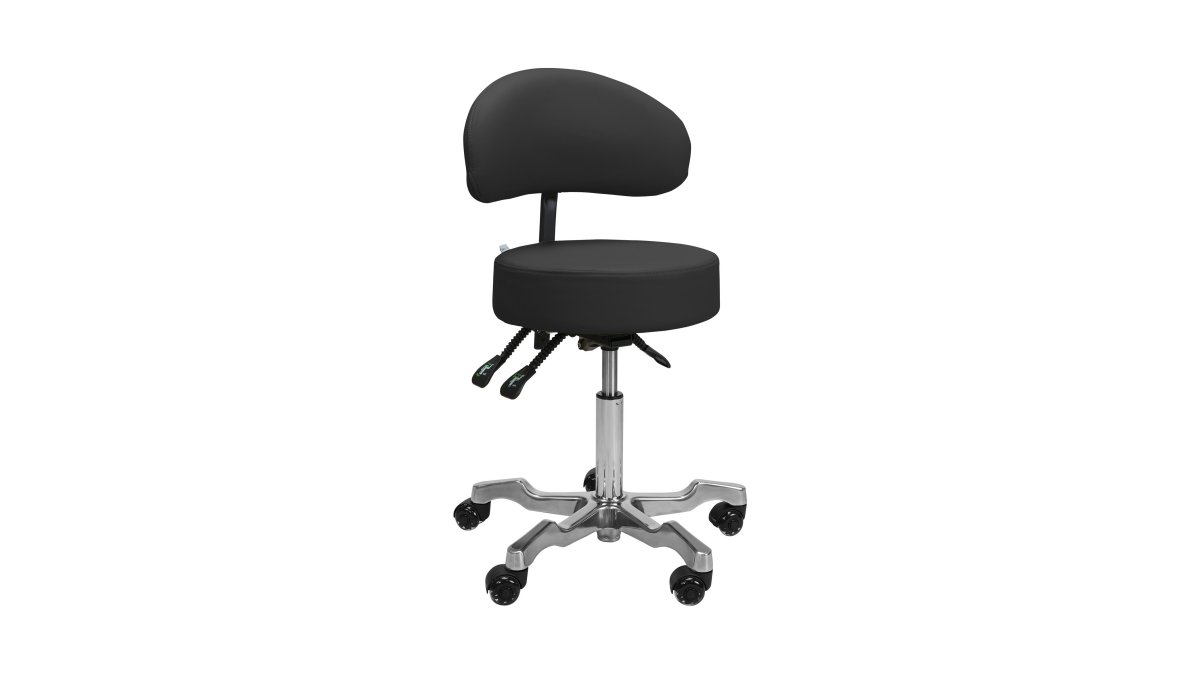
The right stool supports your lumbar spine, opens your hips, and keeps your feet stable, reducing fatigue and preventing the chronic pain that forces many estheticians to cut hours or leave the profession.
Choosing the right ergonomic esthetician stool depends on your treatment type, space, and budget. Below, we break down the key features that matter and compare the best options available.
Esthetician Stool Comparison Table
| Stool Model | Starting Price | Seat Type | Backrest | Best For | Weight Capacity |
|---|---|---|---|---|---|
| Vero Esthetician Saddle Stool | $199.00 | Saddle | Adjustable angle | Precision work, long sessions | 400 lb |
| Luma Esthetician Stool | $199.00 | Contoured | 3-way adjustable | All-day comfort, lumbar support | 400 lb |
| Esthetician Saddle Stool | $189.00 | Saddle | Adjustable | Posture-focused work | 400 lb |
| Brava Esthetician Saddle Stool | $189.00 | Saddle | Adjustable | Budget saddle option | 400 lb |
| Gold Series Esthetician Stool | $189.00 | Contoured | Adjustable | Style and comfort blend | 400 lb |
| Comfortable Esthetician Chair | $199.00 | Wide contoured | Adjustable lumbar | Maximum comfort seating | 400 lb |
| Lux Comfortable Esthetician Chair Stool | $159.00 | Cushioned | Standard backrest | Good support, mid-range | 400 lb |
| Lago Pro Stool | $149.00 | Contoured | Adjustable | Versatile, modern design | 400 lb |
| Pro Beauty Stool Esthetician Chair | $129.00 | Cushioned | Modest backrest | Budget-conscious practices | 400 lb |
| Hydraulic Stool | $79.00 | Basic cushioned | None | Minimal budget option | 400 lb |
Esthetician Saddle Stools: Posture and Precision
The saddle stool design is purpose-built for estheticians. Unlike traditional round seats, it opens your hips and promotes a neutral spine, the posture your body prefers during detailed facial work. This reduces lower back strain and distributes weight across your sit bones rather than your tailbone.


The saddle seat tilts your pelvis forward slightly, aligning your spine naturally. Your legs spread wider than on a traditional stool, opening your hip flexors and reducing the anterior pelvic tilt that causes lower back pain.
Vero Esthetician Saddle Stool
The Vero is the gold standard for estheticians who prioritize ergonomic design and silent, smooth movement. At $199.00, it's a premium saddle option with independent controls for seat height, backrest height, and backrest angle.
What sets the Vero apart is its ultra-quiet premium rubber castor wheels.
The saddle design promotes a neutral spine position that opens your hips and aligns your back, significantly reducing the physical fatigue associated with long skincare and aesthetic treatments. For estheticians who spend 6+ hours daily on their feet, this stool pays for itself in reduced pain and extended career longevity. Occupational Safety and Health Administration ergonomic guidelines emphasize the importance of proper seating posture to prevent repetitive strain injuries in professional settings.
Best for: Estheticians performing extended precision work who want the quietest, most customizable saddle option available.
Esthetician Saddle Stool and Brava Esthetician Saddle Stool
The standard Esthetician Saddle Stool at $189.00 and the Brava Esthetician Saddle Stool at $189.00 both deliver core saddle-seat ergonomics without the Vero's premium features.

The Esthetician Saddle Stool has a 22-inch diameter metal base and weighs 35 lb.
Both give you saddle-design posture benefits at a lower price than the Vero. The trade-off is standard plastic casters instead of premium rubber wheels, a sensible choice if you're not moving your stool constantly.
Best for: Budget-conscious estheticians who want saddle-seat posture support without premium wheels or the highest-end customization.
Esthetician Stool with Back Support: Premium Comfort Options
When you're seated for 8+ hours daily, lumbar support becomes non-negotiable. An esthetician stool with back support distributes weight across your entire back rather than concentrating pressure on your lower spine, reducing fatigue and preventing the chronic pain that develops when your core muscles work overtime to stabilize an unsupported spine.
The best esthetician stools with back support offer adjustable backrest height and angle, so you can fine-tune support to your body and your work. Adjustability matters when you switch between treatment types throughout the day.
Luma Esthetician Stool
The Luma Esthetician Stool at $199.00 is the ultimate ergonomic esthetician chair for professionals who want precision and all-day comfort.
The adjustable backrest provides the lumbar support necessary for career longevity. Its ultra-quiet premium rubber castor wheels are floor-safe and glide silently across tile, laminate, or vinyl, ideal for a serene spa environment.
The Luma's contoured design and full adjustability suit estheticians of different heights and body types. Unlike one-size-fits-all stools, the Luma adapts to you.
Best for: Estheticians performing all-day treatments who need maximum adjustability and silent, smooth movement between clients.
Comfortable Esthetician Chair and Gold Series Esthetician Stool
The Comfortable Esthetician Chair at $199.00 prioritizes maximum comfort with an extra-wide seat cushion and adjustable lumbar support.
The Gold Series Esthetician Stool at $189.00 blends style with functionality.
Both stools support up to 400 lb and come with a 1-year warranty. Choose the Comfortable Esthetician Chair for maximum cushioning and hip support, or the Gold Series for adjustable lumbar support with a modern aesthetic.
Best for: Estheticians prioritizing comfort during long sessions (Comfortable Chair) or those wanting style and adjustability in one package (Gold Series).
Adjustable Esthetician Stools: Customization for Your Workflow
Height adjustment is fundamental to ergonomic seating. Your feet should rest flat on the floor or a footrest, knees at a 90-degree angle, and hips level with or slightly higher than your knees.
Most quality esthetician stools offer a 4-6 inch height range, accommodating different body heights and treatment tables.
The Lux Comfortable Esthetician Chair Stool at $159.00 features a hydraulic base for easy raising and lowering, plus wheels for maneuverability. The Lago Pro Stool at $149.00 offers adjustable seat and backrest heights in six colors.
For estheticians working in multiple treatment rooms, adjustability plus portability is key, you want to spend energy on clients, not wrestling with equipment.
Rolling Stools for Estheticians: Mobility and Accessibility
Smooth rolling casters are essential if you move between treatment stations, equipment, or clients throughout the day. Standard plastic wheels catch on seams and create noise. Premium rubber casters glide silently and won't damage flooring.
The Vero and Luma both feature ultra-quiet premium rubber wheels designed for spa environments.
The Pro Beauty Stool Esthetician Chair at $129.00 offers smooth-rolling casters with a compact 21.5-inch base that fits tight treatment rooms. The Hydraulic Stool at $79.00 is the most portable at just 9 lb, with a 20.5-inch base and height adjustment from 18.5" to 24".
Rolling mobility matters most in larger spas where you move between facial stations, extraction areas, and body treatment tables. In a small solo practice, you may adjust your stool once per client and leave it in place.
Budget-Friendly and Practical Options
Not every practice needs a premium stool. If you're starting out, on a tight budget, or need backup seating for multiple treatment rooms, practical options deliver solid ergonomic support at lower prices.
The Pro Beauty Stool Esthetician Chair at $129.00 balances comfort, functionality, and style: a durable hydraulic base, smooth-rolling casters, height adjustment from 20.5" to 26.5", a cushioned seat, and a modest backrest, all backed by a 1-year warranty.
The Hydraulic Stool at $79.00 is the entry-level choice: a soft cushioned seat in plush vinyl, a durable metal base, adjustable height from 18.5" to 24", and 400 lb capacity in a compact 20.5" footprint.
Both come with 1-year warranties and easy-to-clean vinyl upholstery. For a beauty school training room where durability matters more than premium features, these options hold up well to daily use.
How to Choose the Right Stool for Your Practice
Selecting the right ergonomic esthetician stools for daily use requires balancing three factors: treatment type, space, and durability.
Treatment Type and Daily Use Patterns
Your primary treatment determines which features matter most. Facials and extractions benefit from saddle designs that promote a neutral spine and open hips. Body treatments or work at varying client heights benefit from maximum height adjustment and swivel capability.
Consider your daily schedule. If you perform 6+ hours of precision work (facials, peels, extractions), invest in full adjustability and premium lumbar support, the Vero, Luma, or Comfortable Esthetician Chair. If you alternate between treatment types, adjustable backrest angle matters.
Also consider whether you stay in one spot or move constantly. If you're expanding your service offerings or training team members in new techniques, Online Service Training for Estheticians can help you and your staff master proper positioning and body mechanics alongside equipment selection.
Space, Weight Capacity, and Durability
Measure your treatment room before ordering. The Hydraulic Stool has a 20.5-inch diameter base, while the Esthetician Saddle Stool has a 22-inch base. In a tight space, these extra inches matter.
All SkinAct esthetician stools support 400 lb, accommodating virtually all users. Weight capacity is standard across the range; the difference is comfort and adjustability, not structural support.
Durability depends on upholstery material and frame construction. All SkinAct stools use easy-to-clean vinyl upholstery and durable metal bases.
Maintenance and Warranty Considerations
All SkinAct esthetician stools come with 1-year warranties covering defects in materials and workmanship.
The real durability factor is how well you maintain the stool.
For practices keeping equipment 5+ years, the mid-range and premium options (Vero, Luma, Gold Series) can offer better long-term value than budget options.
Estheticians often upgrade stools as their practice grows.
Choosing the right ergonomic esthetician stool for daily use is one of the most important investments you'll make in your practice.
Frequently Asked Questions
What makes an esthetician stool ergonomic for daily use?
An ergonomic esthetician stool combines adjustable seat height, lumbar support, and a design that promotes neutral spine alignment. Features like backrest angle adjustment, seat tilt control, and proper cushioning reduce strain on your lower back and hips during extended treatment sessions. Saddle-style designs open the hips and align the spine naturally, while premium rubber casters allow silent mobility without disrupting the treatment environment. Quality upholstery and durable bases ensure the stool maintains support through hours of daily use.
Are saddle stools better than traditional seats for estheticians?
Saddle stools excel for estheticians who spend long hours performing detailed work. The saddle design promotes a neutral spine position by opening the hips and aligning the back, significantly reducing physical fatigue. However, the best choice depends on your treatment type and personal comfort. Saddle stools work exceptionally well for facials, peels, and precision treatments where you need to lean forward. Traditional seats with lumbar support may suit practitioners who alternate between seated and standing work or prefer a more conventional feel.
How do I choose between adjustable and fixed-height esthetician stools?
Adjustable esthetician stools offer personalized comfort by allowing you to fine-tune seat height, backrest height, and backrest angle to match your body and work style. This customization reduces strain during long shifts and accommodates different treatment types. Fixed-height options are more budget-friendly and compact, making them ideal for small treatment rooms or solo practitioners with space constraints. If you perform multiple treatment types or work extended hours daily, adjustable features justify the investment in long-term comfort and career longevity.
What's the difference between rolling casters and stationary bases on esthetician stools?
Rolling casters enable seamless mobility between your treatment area and equipment, reducing unnecessary standing and strain. Premium rubber casters glide silently across tile, laminate, and vinyl without squeaking or catching, maintaining a serene spa environment. Stationary bases provide stability and are ideal for small spaces where you don't need to move frequently. Many modern ergonomic esthetician stools feature ultra-quiet premium rubber wheels that combine mobility with professional ambiance, making them suitable for most treatment rooms.
How often should I replace an esthetician stool used daily?
With proper maintenance and care, a quality ergonomic esthetician stool can last several years of daily use. Most professional-grade stools are backed by 1-year warranties and built to withstand the demands of busy treatment rooms. Durability depends on weight capacity, material quality, and maintenance habits. Regular cleaning of vinyl upholstery, checking hydraulic mechanisms, and inspecting the base for wear extend the stool's lifespan. If you notice decreased lumbar support, hydraulic pump failure, or visible damage, replacement becomes necessary to maintain ergonomic support and prevent injury.