The Esthetician Classroom Equipment Safety Checklist
Last Updated: November 12, 2026
Quick Summary
A classroom equipment safety checklist covers four areas: furniture inspection, device hazards, cleaning and storage by equipment type, and a clear path for reporting damage. Students run a two-minute pre-use pass before every practical and tag any device that fails a check out of service.
- Inspect facial bed upholstery, frame, locks, and stool padding before the first client model sits down.
- Pair each device with its risk, setup check, safe-use step, and shutdown step.
- Refilling a steamer mid-session because it ran dry is the most common cause of a training-room scald.
- Give students rotating responsibility for one maintenance category each week.
- Record every burn, shock, cut, or chemical exposure on the station sheet under a no-blame reporting rule.
Table of Contents
- What Belongs in an Esthetician Classroom Equipment Safety Checklist
- Pre-Use Inspection of Facial Beds, Stools, and Treatment Furniture
- Equipment-Specific Hazards: Steamers, Galvanic Devices, and Hot Wax
- The Esthetician Equipment Maintenance Checklist for Shared Classrooms
- Cleaning, Disinfection, and Storage by Equipment Type
- Your Esthetician Treatment Room Safety Checklist for Student Stations
- Building an Esthetician Supplies List PDF Students Can Follow
- Where to Source Classroom Equipment That Holds Up to Training
- Frequently Asked Questions
What Belongs in an Esthetician Classroom Equipment Safety Checklist
A workable esthetician classroom equipment safety checklist covers four things: furniture inspection, device hazards, cleaning and storage by equipment type, and a clear path for reporting damage. Treatment furniture and devices are commonly supplied to schools and clinics, and the same gaps in student safety routines show up again and again. Most programs have a sanitation poster on the wall. Far fewer have a written classroom equipment safety routine that students actually follow before every practical.
That gap matters because a classroom is not a spa. Twenty students share one facial bed, one steamer, and one wax pot in a single day.
Below, we break the checklist into the sections you can print, post at each station, and sign off on. The goal is simple: every student inspects before they touch, and every instructor knows what to escalate.
Pre-Use Inspection of Facial Beds, Stools, and Treatment Furniture
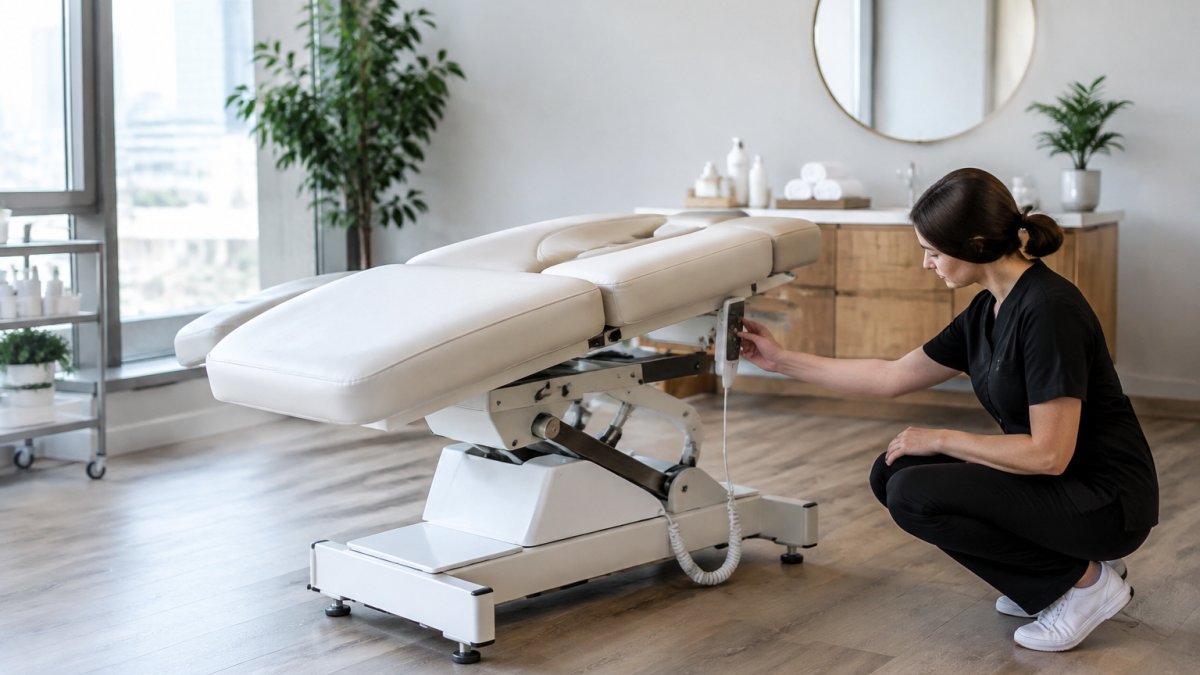
Start every practical with a two-minute furniture check. Students should inspect the facial bed or treatment table, the stool, and the auxiliary table before the first client model sits down.
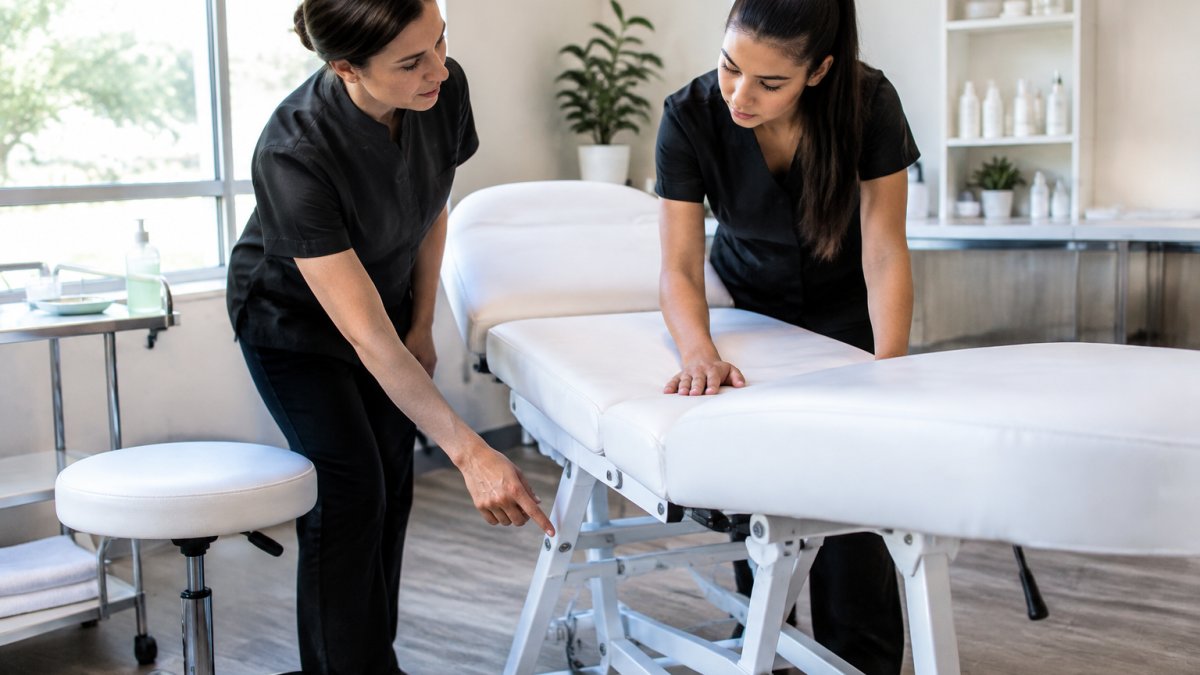
Run through these checkpoints:
- Upholstery free of cracks, tears, or exposed foam
- Frame and joints stable, with no wobble when weight shifts
- Height adjustment and locking mechanisms hold position
- Stool backrest secure and seat padding intact
- Auxiliary table level, with no loose shelves or wheels
- No stains or residue left from the previous student
Cracked upholstery is the one students skip most often. A split in vinyl traps product and moisture, and it cannot be cleaned properly once it opens. Tag the bed and pull it from rotation.
If you are replacing worn furniture rather than repairing it, browse the facial beds and massage tables we stock so you can match the size and height range your classroom uses.
Equipment-Specific Hazards: Steamers, Galvanic Devices, and Hot Wax
Each device in an esthetics classroom carries its own hazard, and students need the specific one before they power anything on. Generic "be careful" warnings do not prevent burns or shocks.
Facial steamers and vaporizers. The risk is scald burns from hot water and steam (the CDC).
Galvanic current apparatus and infrared lamps. The risk is electric shock and, for galvanic devices, interference with implanted electronic devices such as pacemakers.
Hard wax systems and hair removal equipment. The risk is thermal burns from overheated wax and from the pot itself.
Magnifying lamps and skin-analysis tools. The risk is bulb heat, pinched cords, and cross-contamination from shared lenses and loupes. Setup check: confirm the bulb is seated, the lens is clean, and the arm holds position without drifting.
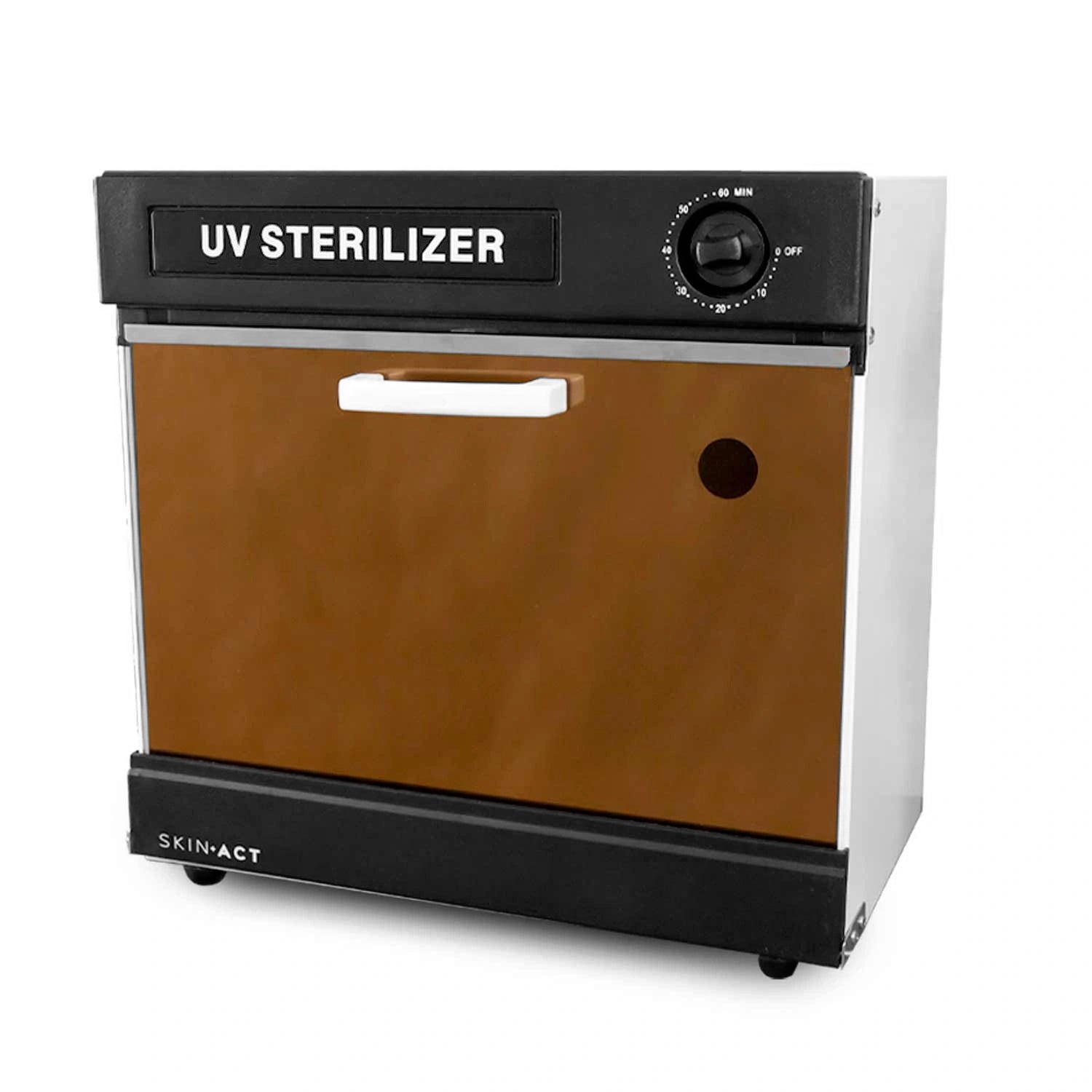
UV sterilizer cabinets. The risk is UV exposure to eyes and skin when the door is open or the seal fails. Setup check: confirm the door closes fully, the timer works, and the bulb is functioning.
If you are reviewing steamer and lamp inventory for a training room, our facial steamers and lamps collection shows the models schools typically buy.
Watch out: a student who refills a steamer mid-session because it ran dry is the single most common cause of a scald in a training room. Build the water-level check into the pre-use routine, not the middle of a treatment.
When any device fails a setup check, the student should stop, unplug it if it is electrical, tag it out of service, and tell the instructor before the next client sits down.
The Esthetician Equipment Maintenance Checklist for Shared Classrooms
Shared equipment needs a maintenance schedule, not just a daily wipe-down. Assign each task a frequency and a named owner so nothing depends on who remembers.
| Equipment Category | Safety Focus | Maintenance Frequency |
|---|---|---|
| Facial beds and treatment tables | Upholstery, frame, locks | Daily check, monthly deep clean |
| Stools and backrests | Stability, padding | Daily check, quarterly tightening |
| Steamers and vaporizers | Water level, cord, nozzle | Daily empty and dry, weekly descale |
| Galvanic and electrical devices | Cord, plug, grounding | Before each use, monthly cord check |
| Hard wax systems | Temperature, cord, pot | Daily clean, weekly thermostat check |
| Magnifying lamps and skin scopes | Bulb, lens, cord | Weekly lens clean, monthly cord check |
| Hand tools and spatulas | Damage, cleanliness | Before each use, after each client |
| UV sterilizer cabinet | Bulb function, timer | Weekly bulb check, monthly timer test |
A common mistake is treating maintenance as the instructor's job alone. Give students rotating responsibility for one category each week. They learn the habit, and the instructor gets a second set of eyes.
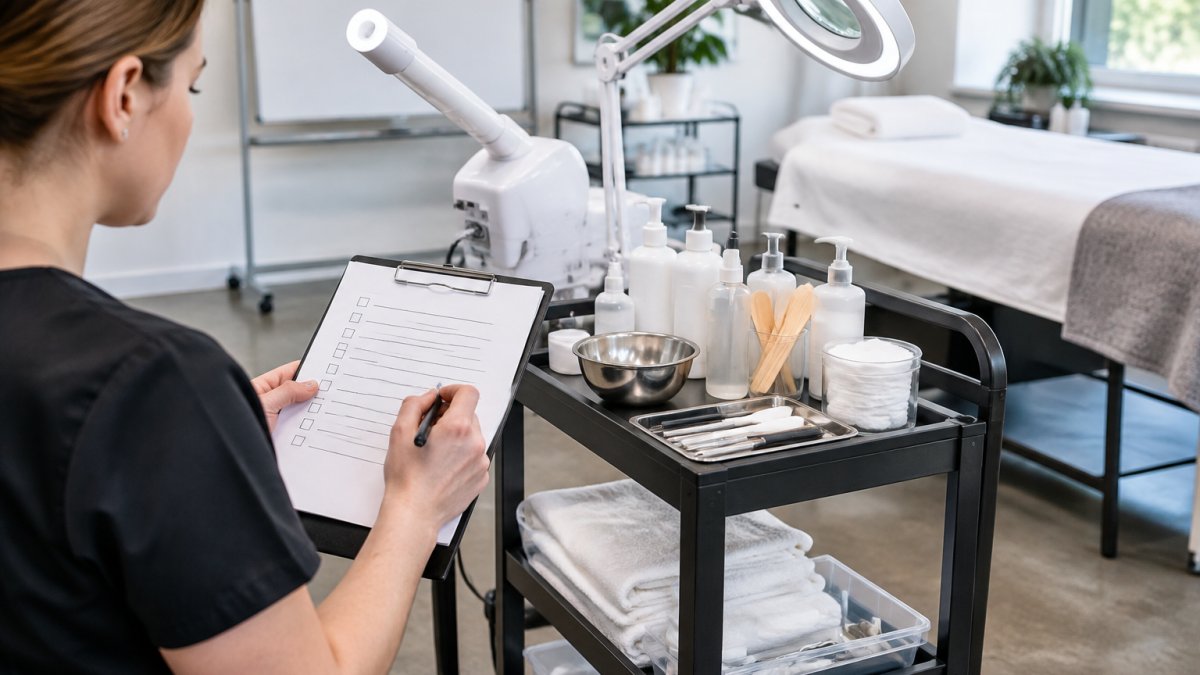
The pre-use inspection routine. Before the first client model sits down, the student assigned to the station runs a two-minute pass: furniture stability and upholstery, cord and plug condition on every powered device, water level in the steamer, wax temperature, and clean-versus-used tool separation.
Tagging equipment out of service. When a check fails, the student stops, unplugs electrical devices, attaches an out-of-service tag with the date and the student's name, and moves the item away from the station. The instructor decides whether it is repaired or retired. Nothing tagged goes back into rotation without an instructor sign-off.
Incident reporting and escalation. If a burn, shock, cut, or chemical exposure happens, the student stops the treatment, tells the instructor immediately, and documents the event on the same station sheet: what happened, which device, what the student was doing, and what first aid was given.
Electrical and chemical safety in a shared room. Route cords away from walkways and sinks, keep liquids off powered devices, confirm outlets are not overloaded, and check that every spray bottle is labeled with its contents.
Accessibility and ergonomics. Set stations so students can reach the bed, auxiliary table, and sink without stepping over cords. Use adjustable furniture so shorter and taller students can work at safe heights, and rotate tasks to reduce repetitive strain during long practical blocks.
Cleaning, Disinfection, and Storage by Equipment Type
Cleaning rules change with the surface, and mixing them up damages equipment or leaves it unsafe. Sort your supplies by equipment type and post the routine at each station.
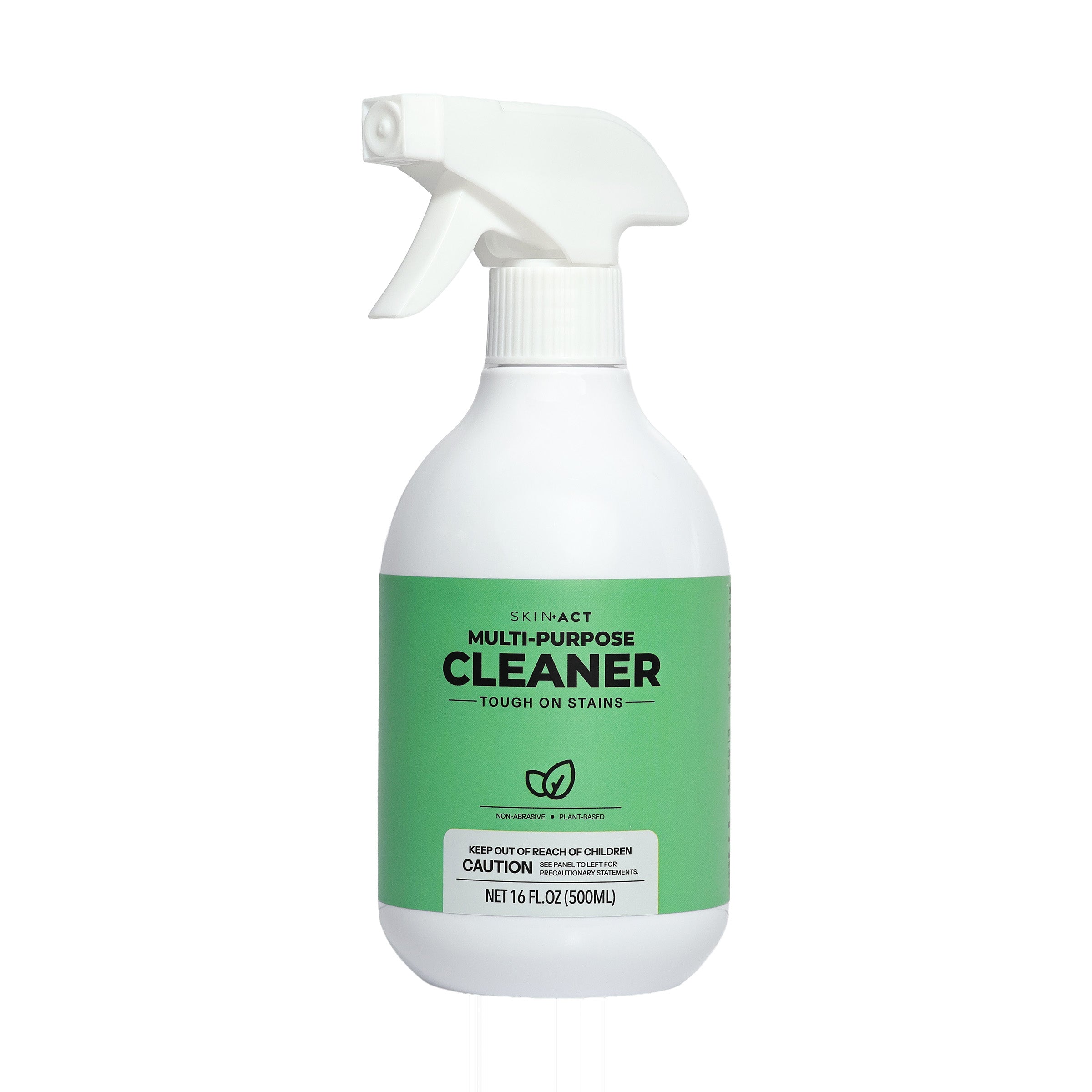
For upholstery, vinyl, and PVC surfaces, use a non-abrasive cleaner that will not crack the material. A multi-purpose disinfecting cleaner is formulated for upholstery, PVC, vinyl, tools, and metal, and is non-abrasive. For metal hand tools and implements, a covered soak jar keeps items submerged and organized between clients. For storage and sanitizing routines, a UV sterilizer cabinet with timer includes a built-in timer for setting the cycle.
Keep these rules in mind:
- Disinfect porous items only with products labeled for that surface
- Store clean tools separately from used ones, never in the same tray
- Let electrical devices cool and dry fully before storage
- Label every spray bottle with its contents
- Replace disposable supplies, gloves, and cotton pads after each client
Your Esthetician Treatment Room Safety Checklist for Student Stations
Every student station should run the same safety routine, so the habit transfers to a real treatment room later. This esthetician treatment room safety checklist covers the station itself, not just the equipment.
- Gloves, safety glasses, and PPE stocked and within reach
- Hand sanitizer at the station and refilled
- Electrical cords routed away from walkways and water
- Waste bin lined and not overfilled
- Product labels legible and containers closed
- Hand tools inspected and separated into clean and used trays
- Station wiped down before the next student takes over
Set up stations so students can move between the bed, the auxiliary table, and the sink without stepping over cords. Good layout prevents more accidents than any warning sign.
Building an Esthetician Supplies List PDF Students Can Follow
A printed checklist beats a verbal one, because students can sign off and instructors can audit. Build your esthetician supplies list PDF around the class workflow: setup, treatment, cleanup, and storage.
Include these sections in the document:
- Station setup items and quantities
- Pre-use inspection checkpoints for each piece of equipment
- Cleaning and disinfection steps by surface type
- Damage reporting form with a place for the student's signature
- Weekly maintenance assignments
Keep it to a few pages and update it whenever you add equipment. If your program is adding new modalities, our online service training for estheticians helps staff and students learn the devices before they work on models.
Where to Source Classroom Equipment That Holds Up to Training
Classroom equipment often sees heavy daily use, so buyers commonly weigh durability alongside price. Look for reinforced frames, replaceable upholstery, and devices with accessible cords and parts.
Our guide to the best spa equipment for beauty schools covers equipment options for training facilities.
Before you buy, ask three questions:
- Can the upholstery be replaced without replacing the whole bed?
- Are cords and plugs user-replaceable?
- Will the supplier keep stocking the same model next year?
Equipping a classroom is a long-term decision, and inconsistent furniture slows every student down. SkinAct supplies treatment furniture and devices built for daily professional use, with factory-level pricing and strict quality control across every order. Our catalog covers facial beds, stools, steamers, and sterilizer cabinets, and we can customize equipment to match your program's setup. Get started with SkinAct and give every student a station that holds up to training.
Frequently Asked Questions
What equipment does an esthetician classroom need for safe student training?
A working esthetician classroom needs a facial bed or treatment table, a stool with back support, an auxiliary table, a magnifying lamp, a facial steamer, electrical devices such as a galvanic current apparatus and infrared lamp, a hard wax system, and hand tools like spatulas and brushes. Safety supplies round it out: gloves, safety glasses, a UV sterilizer cabinet, and disinfectant jars. Each item needs a pre-use inspection step, a cleaning routine, and a storage spot so students learn the full workflow, not just how to operate the device.
How often should esthetician classroom equipment be inspected?
Run a quick pre-use inspection before every student treatment, checking cords, plugs, upholstery, and water levels. Add a deeper weekly review of electrical equipment, steamers, and wax systems, and a monthly check of furniture frames, casters, and lamps. Keep a sign-off sheet so instructors can see who checked what and when. Any item that fails a check should be tagged out of service immediately and reported through your school's escalation process rather than returned to the student floor.
How should damaged or malfunctioning esthetics equipment be handled in a shared classroom?
Stop using the item, unplug it if it is electrical, and attach a clear out-of-service tag so no student picks it up. Log the fault, the date, and the student or instructor who found it, then route the report to the person responsible for facility maintenance. Damaged cords, cracked housings, and faulty steamers should never be repaired by students. Keep a spare unit on hand where possible so one failure does not stall a scheduled treatment session, and confirm the repair or replacement before the equipment returns to the classroom.
What should students wear and use for hygiene during classroom treatments?
Students should arrive in a clean uniform or professional apparel, tie back long hair, and remove jewelry that could catch on tools. Before each treatment, they wash hands and put on gloves, and they wear safety glasses when handling chemicals or hot wax. Single-use items like cotton pads, spatulas, and disposable supplies go straight into the waste bin. Reusable hand tools move from cleaning to disinfection to storage in a covered container, and the station is reset before the next student takes over.