How to Add Oxygen Facials to Your Spa Menu
Last Updated: November 7, 2026
Quick Summary
Oxygen facials are a hydration-focused facial service that uses pressurized oxygen, often combined with a serum or activator, to deliver products into the skin's surface. Adding them to a spa menu typically means choosing a unit with a suitable oxygen output range, compatible activators, and included training, then comparing total cost of ownership.
- Compare oxygen output across the flow range, not only at a single setting.
- Confirm which activators and serums the manufacturer approves for its handpiece.
- Measure your treatment room before buying, including footprint and noise level.
- Ask about maintenance, warranty terms and who repairs the unit if it fails.
- Calculate break-even using equipment cost divided by margin per session.
Table of Contents
- What Oxygen Facials Offer Your Clients
- Choosing an Oxygen Facial Machine for Spa Use
- Building a Repeatable Oxygen Facial Treatment Protocol
- Oxygen Facial vs HydraFacial: Choosing the Right Service
- Practice Economics: Revenue, Cost and Client Retention
- Safety, Realistic Claims and Staff Training
- How to Add Oxygen Facials to a Spa Menu Next
- Frequently Asked Questions
What Oxygen Facials Offer Your Clients
Oxygen facials are a facial service that uses pressurized oxygen, often combined with a serum or activator, to deliver hydration-focused products into the skin's surface.
Clients usually ask about hydration, a brighter-looking complexion and a fresher feel after treatment. Treatment outcomes vary by skin type, and no single session should be presented as a guaranteed result.
For practice owners, the service matters because it can be added to an existing menu without a full redesign.
Choosing an Oxygen Facial Machine for Spa Use
A professional oxygen unit is a capital purchase, and the specifications that matter are the ones that show up in your treatment room every day: oxygen concentration at the flow rate you actually run, pressure stability, serum compatibility, maintenance schedule, warranty terms, training included, and service support when something fails.
Use the following framework to compare units side by side rather than relying on marketing claims. To see a ready-made option, review the Refine Replenish Oxygen Facial Bundle and check its listed contents against the criteria below.

1. Oxygen Output and Flow Range
Oxygen concentration is usually expressed as a percentage across a stated flow range in liters per minute (LPM). The DeVilbiss O2 Facial Oxygen Unit is listed at 87% to 96% oxygen output across a 0.5 to 5 LPM operating range. That range matters because different protocols call for different flow settings, a gentle hydration pass may run at a lower LPM, while a longer infusion step may run higher. A unit that only performs well at one setting limits the protocols you can offer.
2. Pressure and Delivery Method
Oxygen facials rely on pressurized delivery of an activator or serum. Pressure stability affects how evenly the product is distributed and how comfortable the treatment feels. Too much pressure can feel cold or stinging; too little produces a weak, uneven result. Confirm whether the unit uses a fixed pressure setting or an adjustable regulator, and whether the handpiece or airbrush gun is compatible with the activators you plan to stock.
3. Serum and Activator Compatibility
Not every activator is formulated for every delivery method. The Hyaluronic Acid Oxygen Activator and the Collagen Oxygen Activator, both listed at $35.00, are labeled for use with an oxygen machine and airbrush gun. Before you buy a unit, confirm which activators and serums the manufacturer approves for use with its handpiece, and whether the viscosity of those products will clog the nozzle.
4. Footprint, Noise, and Room Fit
Measure the treatment room before you buy. The DeVilbiss O2 unit measures 13.5 inches wide, 24.5 inches high and 12 inches deep, and weighs 36 pounds, which is manageable for a single treatment room.
For higher volume or a compact footprint, a table-top unit such as the OxyFusion Microdermabrasion plus Oxygen Sprayer, listed at $1,499.00, can fit a busy schedule. The Oxygen Infusion System And Microdermabrasion Machine, listed at $4,999.00, combines two treatment functions in one unit for practices that want a broader device and can justify the higher capital outlay.
5. Maintenance, Warranty, and Service Support
Ask three questions before you sign: What is the recommended maintenance schedule, and who performs it? What does the warranty cover, and for how long? Who repairs the unit if it fails, and what is the turnaround time? The DeVilbiss O2 unit carries a 1-year limited warranty, so keep records of maintenance and any service issues from day one. A unit with a strong warranty but no local service support can still leave you without a working device for weeks.
6. Training Included
Confirm whether the supplier includes training with the purchase, and what format it takes. The SkinAct online course Professional Oxygen Facials: Advanced Dermal Hydration is listed at $69.99, and the Nano Oxygen systems: Advanced Hydration and Oxygen Infusion course is listed at $27.99. For practice owners and estheticians who want structured online learning before going live, Online Service Training for Estheticians is another option to compare. Budget staff time for training before the service goes live.
7. Total Cost of Ownership
Compare units on total cost of ownership, not sticker price alone. Add the equipment cost, activator and consumable cost per session, training, maintenance, and the time each treatment takes. A lower-priced unit that consumes more activator per session or requires frequent nozzle replacement can cost more over a year than a higher-priced unit with better efficiency.
Compare units on total cost, not sticker price alone.
Building a Repeatable Oxygen Facial Treatment Protocol
A repeatable protocol protects your results and your staff's confidence. Write the steps down so every practitioner delivers the same service.
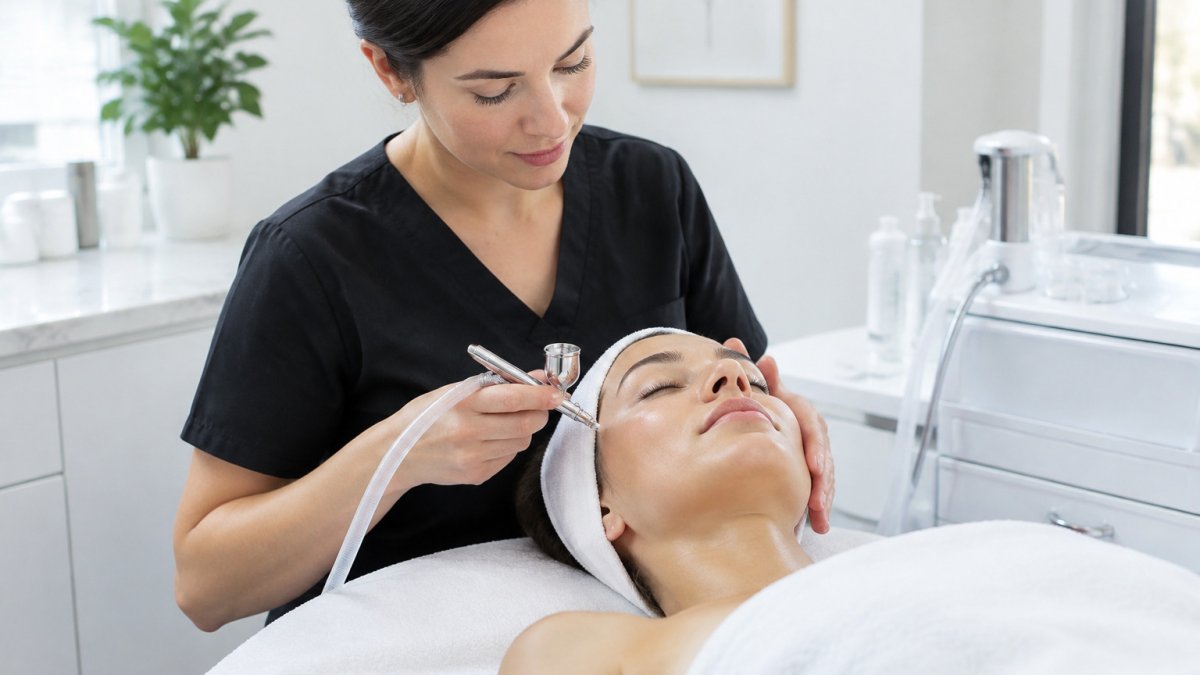
Start with a consultation and skin assessment, then cleanse, apply the chosen activator, run the oxygen delivery and finish with a moisturizer suited to the client's skin.
Training helps your team learn the technique before they run the service on paying clients. The Nano Oxygen Systems Mastery Training Course walks through structured steps you can adapt into your own protocol.

Oxygen Facial vs HydraFacial: Choosing the Right Service
Oxygen facials and HydraFacial-style treatments are both marketed for hydration and a refreshed look, but they use different delivery methods and equipment.
Many practices offer both, positioning the oxygen facial as a lighter, quicker treatment and the other as a deeper session. Decide which fits your existing menu, your room setup and your client base, rather than replacing one service with the other by default.
Practice Economics: Revenue, Cost and Client Retention
This section gives you a framework to model whether adding a professional unit pays for itself, using your own numbers.
Build a Per-Session Cost Model
Start with the costs that recur every time you run the service:
- Activator or serum cost per session. Several SkinAct oxygen activators, including the Hyaluronic Acid Oxygen Activator and the Collagen Oxygen Activator, are listed at $35.00. Divide the bottle cost by the number of sessions it yields to get a per-session product cost.
- Consumables. Nozzles, tubing, wipes, and any single-use items add a small but real per-session cost.
- Staff time. Multiply the treatment time plus room turnover by your practitioner's loaded hourly cost. A 45-minute service with 15 minutes of turnover consumes an hour of room and staff time.
- Equipment depreciation. Divide the unit's purchase price by the number of sessions you expect over its service life, or by the sessions you expect in the first year for a conservative first-year figure.
Add those four figures to get your fully loaded cost per session. That is the number your price must clear.
Model Break-Even Before You Buy
Break-even is simple arithmetic: divide the total equipment cost by the contribution margin per session (price minus per-session variable cost). The result is the number of sessions you need to run before the unit pays for itself.
Run the math at three utilization levels, low, expected, and high, because the answer changes dramatically with volume. A unit that breaks even at 40 sessions in year one looks very different from one that needs 200. If your expected volume does not clear break-even within a reasonable window, the unit is not the right fit for your practice yet, regardless of how good the treatment is.
Price and Position the Service
Price the standalone service to clear your fully loaded cost with margin, then price the add-on version lower to encourage attachment to existing appointments.
Drive Utilization and Retention
Equipment earns its cost only when it is used. Three levers move utilization:
- Attach to existing services. Offer the oxygen facial as a 15-to-20-minute add-on to facials, peels, and microdermabrasion. This fills otherwise idle treatment time.
- Build a series or package. A course of sessions, often sold as a package, gives clients a reason to rebook and gives you predictable volume to model against.
- Track repeat visits, not just first bookings. Measure the percentage of clients who rebook within 60 days. A high first-booking number with low rebooking means the service is not converting; adjust the protocol, the consultation, or the aftercare guidance before you buy a second unit.
Track the Right Metrics
Review four numbers monthly: sessions run, revenue per session, fully loaded cost per session, and rebooking rate. Those four tell you whether the unit is paying for itself and whether clients see a reason to return. No revenue figure should be assumed until you have your own booking data, competitor projections are not a substitute for your P&L.
Watch out: Do not price the service below your fully loaded cost per session to drive trial bookings. A discounted launch price that never rises to a sustainable level trains clients to expect a loss-making service and makes break-even harder to reach.
The table below lists the cost and utilization figures from this section that you can plug into your own model.
| Item | Value | Note |
|---|---|---|
| Activator price (Hyaluronic Acid or Collagen) | $35.00 | Divide by sessions per bottle for per-session cost |
| Break-even formula | Equipment cost ÷ (price − variable cost) | Result is sessions needed before the unit pays off |
| Rebooking window to track | 60 days | Measure percentage of clients who rebook |
| Metrics to review monthly | 4 | Sessions, revenue per session, cost per session, rebooking rate |
| Suggested add-on length | 15-20 minutes | Attach to facials, peels and microdermabrasion |
Safety, Realistic Claims and Staff Training
Keep your marketing accurate. Describe the treatment as hydrating and refreshing, and avoid promising specific outcomes.
Train every practitioner on device cleaning, nozzle maintenance and client screening before the service goes live. The Special Event Guide to Microdermabrasion and Oxygen Infusion covers oxygen infusion protocols and safety for staff training.

Watch out: Do not let staff run the device without completing training. Improper use can affect both client comfort and equipment performance.
How to Add Oxygen Facials to a Spa Menu Next
Start small. Choose one machine that fits your room, train one or two practitioners, and set a single protocol and price. Review bookings and client feedback after the first 30 days, then decide whether to expand the service.
To explore equipment options, review the O2 Facial Oxygen Unit and the Refine Replenish Oxygen Facial Bundle on the SkinAct site. SkinAct supplies professional spa equipment for medical spas, estheticians and salons, and can help you compare what fits your practice.
Frequently Asked Questions
What are the benefits of an oxygen facial?
Oxygen facials are typically marketed for hydration, a brighter-looking complexion, smoother-feeling skin and a plumper appearance. Professional oxygen units deliver a stream of oxygen, often combined with a serum, onto the skin. Because published clinical evidence for oxygen facials is limited, describe results as appearance-based and avoid promising outcomes such as collagen growth or deep detoxification. Set realistic expectations in consultations and in your marketing.
How can an oxygen facial unit benefit a skincare practice?
A dedicated oxygen unit lets you add a service that uses a short, repeatable protocol and can be layered onto other facials. Units such as the DeVilbiss O2 Facial Oxygen Unit ($1,499.00) or the Oxygen Infusion System and Microdermabrasion Machine ($4,999.00) let you offer a premium add-on or a standalone treatment. Track booking rates, add-on uptake and product sales per service to measure whether the equipment is paying for itself in your specific practice.
What's better, HydraFacial or oxygen facial?
Neither is better for every client. A HydraFacial is a multi-step device treatment, while an oxygen facial focuses on delivering oxygen and hydrating serums. Compare the equipment investment, treatment time and client profile before deciding which service fits your menu.
What training is needed to offer oxygen facials professionally?
Estheticians should learn the treatment protocol, device operation, product compatibility and contraindications before offering oxygen facials to clients. SkinAct offers online courses such as Professional Oxygen Facials: Advanced Dermal Hydration ($69.99) and Nano Oxygen systems: Advanced Hydration & Oxygen Infusion ($27.99), which cover oxygen facial techniques. Confirm your state licensing requirements and follow manufacturer instructions for maintenance and infection control.