Professional High Frequency Facial Machines for Beauty Schools
Last Updated: November 8, 2026
Quick Summary
A professional high frequency facial machine for beauty schools should offer durable casings, simple intensity controls, and standard glass electrodes that can be swapped and sanitized between students. Table-top units with a full electrode set and adjustable intensity suit standard classroom use, while portable wands work for mobile demos and small groups.
- The High Frequency Table Top Facial Unit from SkinAct is priced at $99.
- The Portable High Frequency Unit produces 10 watts at 50-60Hz with four wand heads.
- The Deluxe Galvanic unit combines high frequency and galvanic with four glass electrodes and two pairs of galvanic handles.
- Test intensity on your own hand before touching the client, and keep the electrode in constant motion.
- Cracked electrode tubes are the number one failure in training programs, so inspect them before every session.
Table of Contents
- What Makes a High Frequency Facial Machine Right for a Beauty School
- Specifications That Matter: Electrodes, Power, and Build Quality
- The Best High Frequency Machine for Estheticians in Training
- How to Use a High Frequency Machine in a Facial: A Classroom Protocol
- Safety Protocols and Contraindications for Student Practice
- Facial Machine Maintenance for Beauty Schools: Keeping Devices Classroom-Ready
- Total Cost of Ownership and Procurement for Training Programs
- Equipping Your Classroom with SkinAct
- Frequently Asked Questions
What Makes a High Frequency Facial Machine Right for a Beauty School
A professional high frequency facial machine for beauty schools has to survive years of student hands, not a single treatment room. That means durable casings, simple controls, and electrodes that can be swapped and sanitized between practice sessions without breaking.
A classroom machine is a teaching tool first and a treatment device second.
What separates a school-ready unit from a home device comes down to three things: build quality, electrode compatibility, and how easy the machine is to teach. Below, we break down the specifications that matter, walk through a classroom protocol, and compare five units side by side so program directors can buy with confidence.
Specifications That Matter: Electrodes, Power, and Build Quality
The best high frequency machine for estheticians in training is one that students can operate safely with minimal supervision. Look for a clearly labeled intensity dial and glass electrodes that can be swapped out between sessions.
Here is what actually matters when you evaluate a unit:
-
Electrode tubes: Most machines ship with mushroom, bend, comb, and tongue tubes. Schools need enough sets that students can practice without waiting.
-
Adjustable frequency: Students need to learn intensity control, so a dial with clear settings beats a fixed-output device.
High Frequency Machine Electrodes and Included Accessories
Electrode compatibility is where cheap machines fail. If a school buys a unit with proprietary tubes, replacements become a supply problem. Glass electrode tubes that are easy to replace keep a classroom running.
The High Frequency Table Top Facial Unit from SkinAct ships as a table-top device with the thermal Tesla current used for facial and scalp treatments. It is priced at $99.

The Best High Frequency Machine for Estheticians in Training
A table-top unit with a full electrode set and simple intensity control is one option to consider for classroom use. Portable wands can be useful for demonstrations. The comparison below standardizes the specifications program directors actually weigh when buying for a classroom: output control, electrode compatibility, included accessories, warranty, and best-fit use.
| Unit | Price | Output / Controls | Electrodes Included | Warranty | Best For |
|---|---|---|---|---|---|
| Portable High Frequency Unit | $69.00 | 10 watts, 50-60Hz, adjustable intensity | 4 wand heads (comb, tongue, bend, mushroom) | 1 year | Mobile demos, small groups, backup station |
| High Frequency Table Top Facial Unit | $99.00 | Thermal Tesla current, adjustable intensity dial | Standard glass electrode set | 1 year | Standard classroom use |
| High Frequency Case Facial Unit | $99.00 | Thermal Tesla current, adjustable intensity dial | Standard glass electrode set | 1 year | Storage and transport between rooms |
| Deluxe Galvanic High Frequency Table Top Unit | $249.00 | High frequency plus galvanic, adjustable intensity | 4 glass electrodes plus 2 pairs of galvanic handles | 1 year | Teaching two modalities in one station |
| 5 Function Skin Care System | $399.00 | High frequency plus four other functions, adjustable intensity | High frequency electrodes plus multifunction attachments | 1 year | Full facial curriculum |
Price
A few specifications deserve a closer look before you commit a program budget:
- Electrode compatibility: Standard glass electrode tubes that fit multiple devices keep a classroom running when a tube cracks. Proprietary tubes turn a single broken electrode into a supply delay.
- Included accessories: The portable unit ships with four wand heads, while the table-top units ship with a standard glass electrode set. Programs teaching galvanic alongside high frequency should note the Deluxe unit includes two pairs of galvanic handles and four glass electrodes in one package.
The Portable High Frequency Unit produces 10 watts of power at 50-60Hz and includes comb, tongue, bend, and mushroom tubes.
For programs that teach galvanic treatment alongside high frequency, the Deluxe Galvanic High Frequency Table Top Unit combines both in one space-saving package with two pairs of galvanic handles and four glass electrodes.
How to Use a High Frequency Machine in a Facial: A Classroom Protocol
Teaching the protocol matters more than the device. A repeatable sequence lets students learn electrode handling, machine settings, and client comfort in the same order every time.
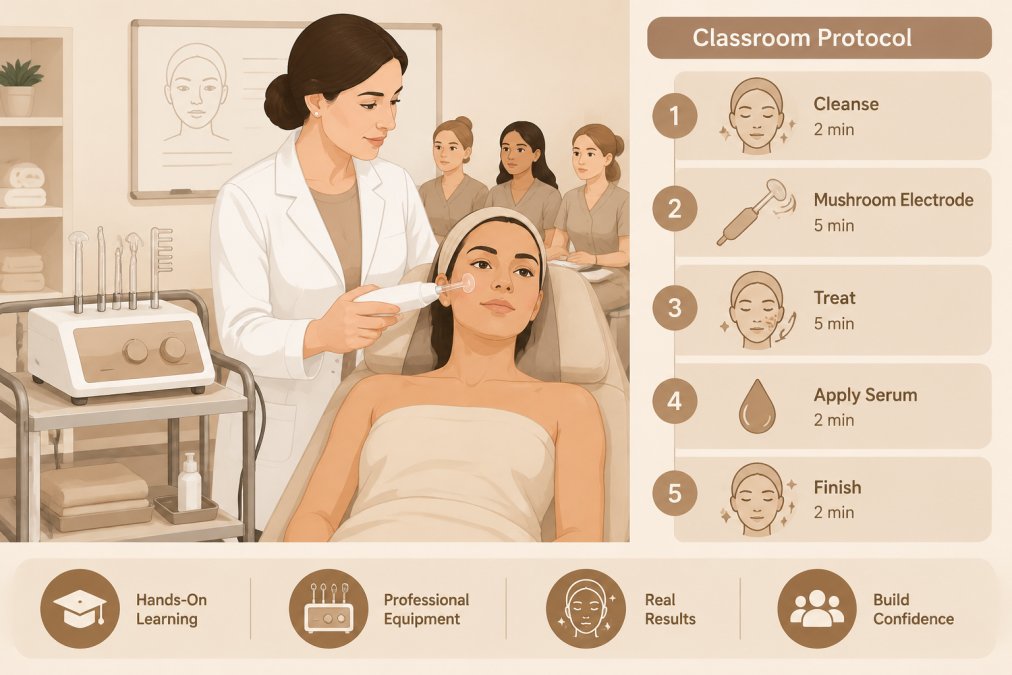
Our recommended classroom sequence:
- Cleanse and dry the skin surface completely.
- Apply a thin layer of conductive product.
- Test intensity on your own hand before touching the client.
- Start at the lowest setting and move the electrode in slow circles.
- Work section by section: forehead, cheeks, chin, neck.
- Reduce intensity for sensitive areas and the scalp.
- Sanitize the electrode tube after each student.
Instructors who want structured refresher material for their students can also turn to Online Service Training for Estheticians to reinforce proper technique between hands-on sessions.
Safety Protocols and Contraindications for Student Practice
Device safety is the part new estheticians underestimate, and it is also the area most buying guides skip. High frequency is a non-invasive treatment, but the electrical current still requires clear rules, and a classroom multiplies the risk because dozens of students rotate through the same device with different practice models.
Build these rules into every practice session:
- Screen before treatment. Ask about implanted electrical devices such as pacemakers, pregnancy, epilepsy, and metal implants in the treatment area. A written intake form that students review with an instructor before the first practice treatment makes screening a habit rather than an afterthought.
- Keep the electrode in constant motion. Never hold it still on one spot. The thermal effect builds when the glass stays put, and a stationary electrode is the most common cause of discomfort in training clinics.
- Remove all metal jewelry from the treatment area before the electrode touches the skin.
- Never use the device near the eyes or over broken, inflamed, or recently waxed skin.
- Test intensity on your own hand before touching the client. Students who test on a client instead of their own hand are the most common cause of discomfort complaints in training clinics.
- Sanitize the electrode tube between every student. Wipe the glass with an approved disinfectant and let it dry fully before the next practice model sits down.
Sanitation sequencing is where classrooms differ from a single treatment room. A workable rotation is: disinfect the electrode, inspect it for cracks, confirm the intensity dial is at its lowest setting, then hand the device to the next student. Logging each handoff on a simple clipboard sheet gives instructors a record if a client reports a reaction.
Watch out: cracked electrode tubes are the number one failure in training programs, and a cracked tube can arc or deliver uneven current. A visual check before every session catches most problems before a student ever powers on the device. The High Frequency Facial Treatment Guide covers safe treatment protocols and contraindications for student practice.

Facial Machine Maintenance for Beauty Schools: Keeping Devices Classroom-Ready
Facial machine maintenance for beauty schools is a scheduling problem as much as a technical one. With dozens of students using the same device weekly, cleaning and inspection need a fixed routine.
A simple weekly checklist keeps units classroom-ready:
- Wipe the casing and handle with an approved disinfectant
- Inspect each glass electrode for cracks before use
- Check the cord and connections for wear
- Confirm the intensity dial moves smoothly
- Log any device that fails inspection and remove it from rotation
A visual check of electrode tubes before every session can catch cracks early.
Total Cost of Ownership and Procurement for Training Programs
Procurement decisions should weigh total cost of ownership, not sticker price. A $69 portable unit that fails in a semester costs more than a $99 table-top unit that lasts years.
Factor in these costs when you build a budget:
- Replacement electrodes and tubes
- Disinfectant supplies
- Warranty coverage, which on SkinAct units runs one year
- Instructor training time
- Downtime when a device is out for repair
For a wider view of durability standards and purchasing timelines, our durable equipment for beauty schools buying guide covers how to compare options across a full program.
Equipping Your Classroom with SkinAct
Outfitting a classroom is easier when one supplier handles the whole order. SkinAct supplies high-performance spa equipment with factory-level pricing and strict quality control.
The High Frequency Facial Skincare Bundle packages the skincare products and device support a training room needs in one purchase.

Equipping a beauty school means choosing devices that hold up to daily student use, teaching a repeatable protocol, and budgeting for the full cost of ownership. SkinAct builds table-top and portable high frequency units with durable casings, standard glass electrodes, and one-year warranties, backed by factory-direct pricing and dependable long-term supply. Get started with SkinAct and equip your classroom with devices built for training.
Frequently Asked Questions
What features should a beauty school look for in a professional high frequency facial machine?
Look for a device with a clear intensity adjustment, a full set of glass electrodes (mushroom, bend, comb, and tongue tubes), and a stable table top base that survives daily student handling. A high frequency facial machine with simple controls lets students practice without complex settings. Durability, electrode compatibility, and easy cleaning matter more than extra features for classroom use.
How do students learn to use a high frequency facial machine safely?
Students should first test intensity on their own hand before touching a client, keep the electrode in constant motion, and avoid broken glass tubes. Training should cover contraindications such as pacemakers, pregnancy, and active breakouts with open skin. Pair hands-on practice with structured coursework so students understand machine settings, treatment technique, and device safety before working on live models.
What electrodes are commonly used with high frequency facial machines?
Most units include a mushroom tube for broad facial areas, a bend tube for hard-to-reach spots, a comb tube for scalp treatment, and a tongue tube for targeted blemish care. Glass electrodes are filled with argon or neon gas, and each produces a different current for acne treatment or skin rejuvenation. Schools should stock spare tubes because glass breaks with heavy student use.
How should a beauty school clean and maintain a high frequency machine?
Wipe glass electrodes with an approved disinfectant after each client, inspect tubes for cracks before every use, and store them in a padded case. Wipe the table top unit and wand with a soft cloth, keep cords untangled, and check the intensity dial regularly. Log maintenance weekly and replace damaged electrodes immediately so student practice stays safe and devices last through years of training.