Laser Hair Removal vs IPL: Which Device Fits Your Practice
Last Updated: October 23, 2026
Quick Summary
Laser hair removal vs IPL both use targeted light energy to destroy hair follicles, but lasers produce a single focused wavelength for precision while IPL emits broad-spectrum light. Multi-wavelength diode lasers offer flexibility across skin tones and hair types, making them ideal for diverse practices, while single-wavelength systems work well for homogeneous client bases.
- The 808nm wavelength is considered the gold standard for treating all hair types.
- Treatment typically requires 6-8 sessions spaced 4-6 weeks apart because only 20-30% of hairs are in the active growth phase at any time.
- Multi-wavelength systems like the SkinAct Advance include 755nm, 808nm, 940nm, and 1064nm to safely treat different skin tones and hair colors.
- Professional systems run at 1200W and treat large areas in minutes, while consumer devices run at 5-50W and require significantly longer treatment times.
- Integrated cooling systems reduce client discomfort and protect the epidermis from burns during treatment.
Table of Contents
- How IPL and Laser Hair Removal Work
- Diode Laser Hair Removal Machine Specifications and Performance
- Laser Hair Removal Machine Types: Understanding Your Options
- Comparison: Laser vs IPL for Different Skin Types
- Treatment Sessions, Frequency, and Long-Term Results
- Safety, Comfort, and Skin Protection During Treatment
- Professional Equipment vs Consumer Devices: What Matters
- Choosing the Right Technology for Your Practice
- Frequently Asked Questions
How IPL and Laser Hair Removal Work
When comparing laser hair removal vs IPL, both work on the same principle: targeted light energy destroys hair follicles at the root. Both rely on selective photothermolysis, light absorbed by melanin in the hair shaft converts to heat, damaging the cells responsible for hair growth.
The key difference is the light source. A diode laser produces a single, focused wavelength, typically 808nm, 755nm, 940nm, or 1064nm, delivering energy precisely to the target. IPL emits broad-spectrum light across many wavelengths. Think laser pointer versus flashlight: one narrow and intense, the other wider and more diffuse.
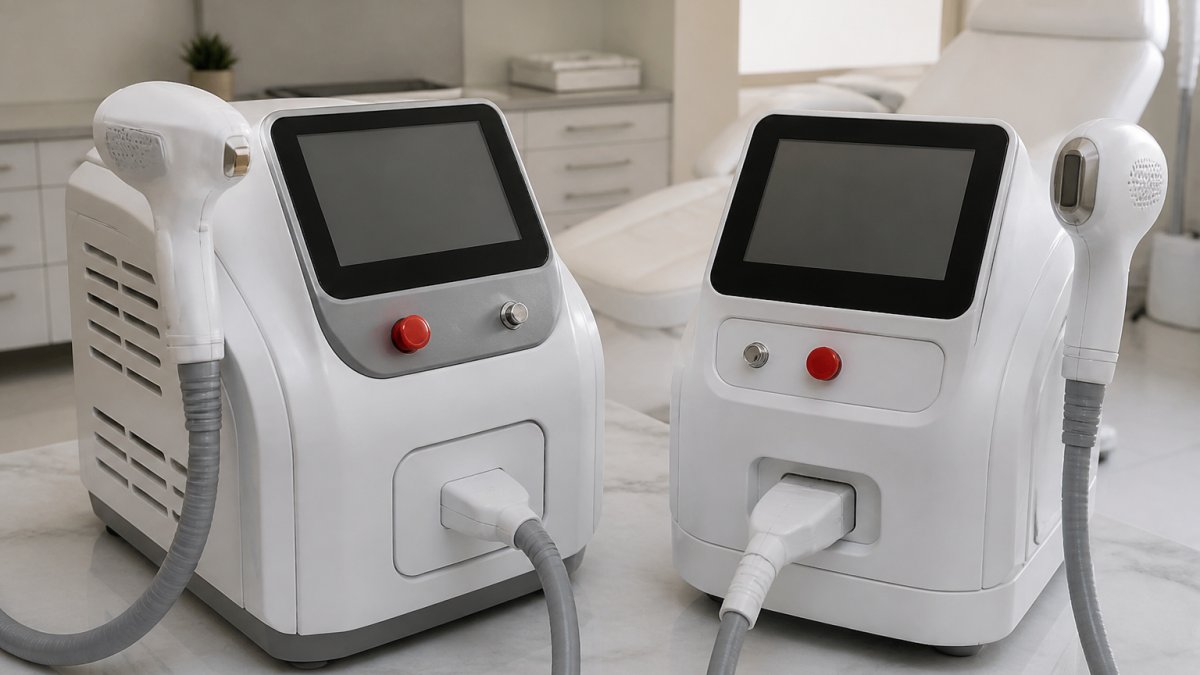
For practitioners evaluating laser hair removal machines vs IPL devices, this distinction affects treatment speed, precision, and suitability for different skin types and hair colors. The SkinAct Advance Diode Laser Hair Removal System integrates multiple wavelengths (755nm, 808nm, 940nm, and 1064nm) into one platform, letting practitioners customize treatments while keeping the precision of focused laser light.

Diode Laser Hair Removal Machine Specifications and Performance
Several specifications determine how effectively a diode laser hair removal machine treats clients and how efficiently your practice runs. Power output, measured in watts, affects speed and efficacy: a 1200W system, like the SkinAct Diode Laser Hair Removal and Cooling System and SkinAct Advance Diode Laser Hair Removal System, treats large areas quickly and safely.

Wavelength selection is equally critical. Single-wavelength 808nm systems suit practitioners who want simplicity and proven results across most skin types. Multi-wavelength systems offer flexibility: 755nm works well on lighter skin with fine hair, 808nm handles most clients, 940nm targets deeper follicles, and 1064nm is safest for darker skin tones.
Spot size, the diameter of the treatment head, affects coverage and precision. Larger spot sizes (typically 12-15mm) cover more area per pulse, cutting treatment time; smaller ones provide control for delicate areas like the upper lip or bikini line. The SkinAct Advance includes interchangeable treatment heads for switching sizes by body area.
Cooling systems are not optional: they reduce client discomfort and protect the epidermis from burns. The integrated cooling plate in the SkinAct Diode Laser Hair Removal and Cooling System maintains skin temperature during treatment, allowing higher energy levels safely while keeping clients comfortable.
Laser Hair Removal Machine Types: Understanding Your Options
Single-Wavelength Diode Systems
A single-wavelength diode laser, typically at 808nm, is the workhorse of professional hair removal. The 808nm wavelength penetrates deep enough to reach the follicle bulb while minimizing heat damage to surrounding tissue.

Single-wavelength systems are straightforward to operate: the same settings work for most clients, with minor adjustments for skin tone and hair density. This can suffice for solo practitioners or small clinics with a homogeneous client base.
The trade-off is versatility. A pure 808nm system works well on most skin types but isn't optimal for very light skin with fine blonde hair, nor for the darkest skin tones. With a diverse clientele, you may have to turn clients away.
Multi-Wavelength Diode Systems
Multi-wavelength systems integrate two or more laser wavelengths into a single platform. The SkinAct Advance Diode Laser Hair Removal System combines 755nm, 808nm, 940nm, and 1064nm, letting practitioners select the optimal wavelength for each client's skin tone and hair characteristics.
This flexibility is powerful: Fitzpatrick Type I skin with blonde hair benefits from 755nm, Type VI skin is safest with 1064nm, and most clients fall in the middle range where 808nm excels.
Multi-wavelength systems also support dual operating modes. The SkinAct Advance includes HR Preset mode for straightforward treatments and HR Professional mode for advanced customization, so new practitioners start with presets while experienced clinicians fine-tune parameters.
A multi-wavelength system costs more, but the return comes from treating a wider range of clients and reducing referrals to competitors.
Comparison: Laser vs IPL for Different Skin Types
The choice between laser hair removal machines vs IPL devices becomes clearest when you consider skin tone and hair color compatibility. Both rely on melanin absorption but differ in how precisely they target it.
Darker skin tones require careful wavelength selection because melanin is present in the epidermis as well as the follicle. If superficial melanin absorbs energy too quickly, it heats the skin before reaching the follicle, causing irritation or burns. Longer wavelengths like 1064nm penetrate deeper, bypassing surface melanin (Effect of wavelength and beam width on penetration in light-tissue interaction using...).
For light skin with dark hair, both IPL and laser work well: the contrast means light is absorbed efficiently by the follicle with minimal absorption in the skin itself.
Fine or light-colored hair challenges both technologies because melanin content is lower. Longer wavelengths (808nm, 940nm, 1064nm) are more effective than shorter ones. A multi-wavelength diode laser lets practitioners select the optimal wavelength.
| Skin Tone | Hair Color | Best Technology | Why |
|---|---|---|---|
| Light (Type I-II) | Dark | Laser or IPL | High contrast; both work well |
| Light (Type I-II) | Blonde/Red | Multi-wavelength Laser | Longer wavelengths penetrate finer hair |
| Medium (Type III-IV) | Dark | Multi-wavelength Laser | Flexibility in wavelength selection |
| Dark (Type V-VI) | Dark | Multi-wavelength Laser (1064nm) | Longer wavelength bypasses surface melanin safely |
| Dark (Type V-VI) | Any | Multi-wavelength Laser | Safety margin essential for darker skin |
Treatment Sessions, Frequency, and Long-Term Results
Hair grows in cycles. At any time, roughly 20-30% of hairs are in the active growth phase (anagen), when the follicle is fully formed and melanin is present, the only phase laser and IPL can destroy.
This is why a single session does not produce permanent hair removal. Practitioners typically recommend 6-8 sessions spaced 4-6 weeks apart, each targeting a fresh cohort of hairs that entered the growth phase since the last treatment.
Maintenance treatments are often necessary because hormonal changes, aging, and other factors can stimulate regrowth. Many practitioners recommend annual or semi-annual touch-ups.
Sessions and spacing affect your revenue model. Practices offering discounted package pricing for full series (6-8 sessions) often see better client retention than those charging per session.
Treatment duration depends on area size and device specifications. A full back takes 20-30 minutes with a high-powered system like the SkinAct Advance. Smaller areas like the upper lip take 5-10 minutes. This speed is a competitive advantage: clients appreciate quick treatments.
Safety, Comfort, and Skin Protection During Treatment
Client comfort during laser hair removal depends on pain management and skin protection. The sensation is often described as a rubber band snap or mild pinch, and tolerance varies widely.
Diode Laser Hair Removal and Cooling System, FDA Registered →
Cooling systems reduce pain and protect skin simultaneously. The integrated cooling plate in the SkinAct Diode Laser Hair Removal and Cooling System maintains skin temperature during treatment, providing an anesthetic effect.
Skin irritation and burns are the primary safety risks, occurring when epidermal melanin absorbs energy too quickly rather than the follicle selectively.
A patch test is essential before full treatment. Practitioners apply the laser to a small, inconspicuous area and observe the skin for 24 hours, confirming the client's skin response and allowing settings adjustment before treating larger areas.
Eye protection is non-negotiable. Both client and practitioner must wear appropriate eyewear rated for the specific wavelength being used. This is a regulatory requirement and a liability issue.
Post-treatment care is simple but important.
Professional Equipment vs Consumer Devices: What Matters
The gap between professional laser hair removal machines and consumer IPL devices is wider than price alone: it spans power, precision, safety features, and durability.
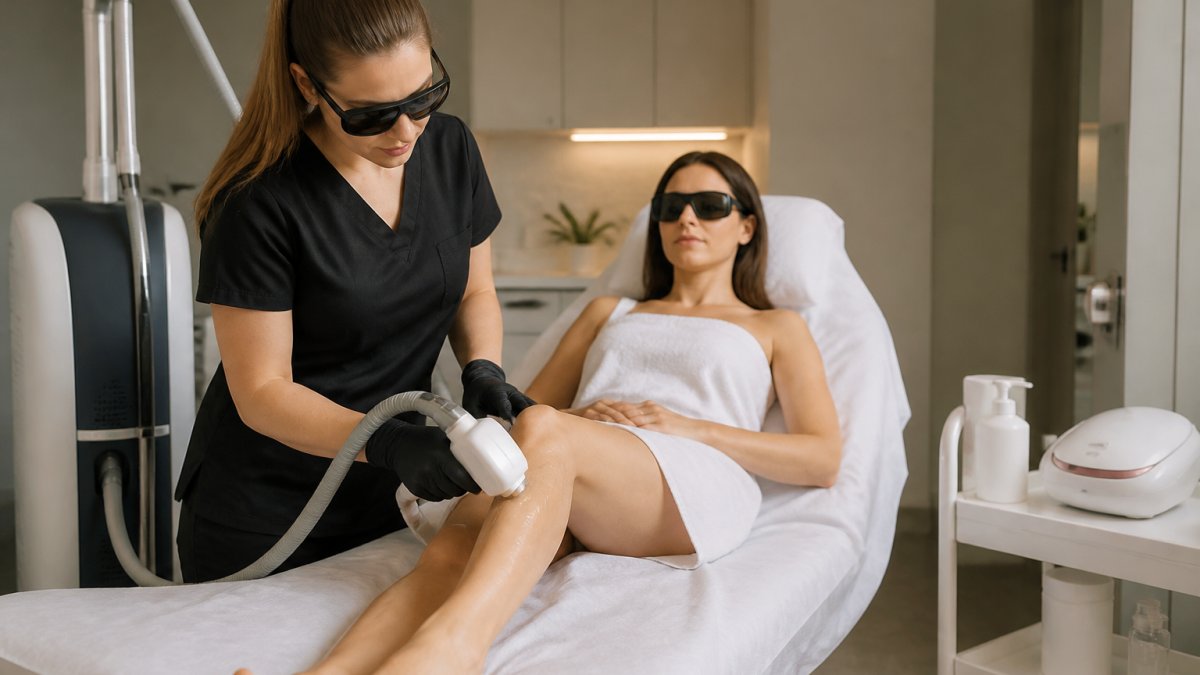
Professional systems like the SkinAct Advance run at 1200W, treating large areas in minutes; consumer devices typically run at 5-50W and need 10-20 minutes per small area.
Professional equipment includes safety interlocks, calibration systems, and cooling mechanisms that consumer devices lack.
Precision differs fundamentally: professional systems deliver consistent energy across the treatment area.
Durability is critical for practices. Professional equipment is engineered for heavy daily use, hundreds of treatments per month over years, while consumer devices are designed for occasional personal use.
Cost of ownership reflects these differences: a professional system costs more upfront but delivers consistent results, supports higher volume, and lasts years, while a consumer device cannot support a professional practice.
For practices, the only rational choice is professional equipment, consumer devices are a different product category entirely.
Choosing the Right Technology for Your Practice
Selecting the right option when evaluating laser hair removal vs IPL requires matching technology to your practice's goals, client base, and operational needs.
Start with your client demographic. A diverse population across skin tones and hair colors calls for a multi-wavelength diode laser like the SkinAct Advance.
Consider treatment volume and space constraints.
Think about positioning. Practices positioned as comprehensive aesthetic providers benefit from multi-wavelength capability, which expands the client base you can serve.
Budget matters, but it shouldn't push you toward consumer devices or inadequate professional equipment.
Training and support matter. Professional equipment requires proper training to operate safely and effectively.
Finally, verify FDA registration. Professional laser and IPL devices sold in the United States must be FDA-registered, a regulatory requirement, not a marketing claim.
Choosing the right hair removal technology directly impacts your practice's growth, client satisfaction, and competitive positioning. Professional-grade diode laser systems offer the precision, safety, and versatility modern aesthetic practices require.
Frequently Asked Questions
What is the key difference between IPL and laser hair removal?
IPL uses broad-spectrum light across multiple wavelengths to target hair follicles, while laser hair removal delivers a single, focused wavelength of light. Laser systems achieve higher energy concentration at the follicle, typically resulting in faster hair reduction and better precision on specific skin and hair types. Both use selective photothermolysis to convert light into heat that destroys the hair follicle, but laser's focused approach often requires fewer treatment sessions.
Are there different types of laser hair removal machines, and how do diode lasers differ from other options?
Yes. Diode lasers (808nm, 755nm, 1064nm wavelengths) are the most widely used in professional settings because they penetrate effectively to reach hair follicles while protecting the skin surface. The 808nm wavelength is considered the gold standard for all hair types. Multi-wavelength diode systems like the SkinAct Advance model integrate 755nm, 808nm, 940nm, and 1064nm wavelengths in one device, allowing practitioners to customize treatment for Fitzpatrick skin types I-VI with a single machine.
Which skin and hair types are suitable for laser hair removal versus IPL?
Diode laser systems work effectively across all skin tones and hair colors, including light hair, because they can be adjusted for different melanin levels. IPL performs best on lighter skin with darker hair, as it relies on melanin contrast. For practices treating diverse clientele or clients with darker skin tones, a professional diode laser hair removal machine offers broader suitability and more consistent results across your patient base.
How many laser hair removal treatment sessions are typically needed compared to IPL?
Most clients require 6-8 laser hair removal treatment sessions spaced 4-6 weeks apart for significant hair reduction, though maintenance sessions may be needed annually. IPL typically requires 8-12 sessions due to lower energy concentration per pulse. The exact number depends on hair color, skin tone, hair growth cycle, and device settings.
What safety features should professionals look for in professional hair removal equipment?
Essential safety features include an integrated cooling system to protect the epidermis from burns, adjustable energy levels and pulse duration for different skin types, proper eye protection for practitioners and clients, and FDA registration. The SkinAct Diode Laser systems include advanced cooling plates that provide an anesthetic effect while safeguarding skin, and both models are FDA-registered. Always verify equipment certification and ensure staff training covers patch testing and device-specific safety protocols.