Why Your Facial Steamer Spits Water: Diagnosis & Fixes
Last Updated: October 23, 2026
Quick Summary
Your facial steamer spits water during treatments when the heating element doesn't fully vaporize water before it reaches the nozzle, usually due to mineral buildup, overfilling, or using tap water instead of distilled water. Let your steamer warm up for 3-5 minutes before opening the nozzle, fill only to the marked line, and use distilled water exclusively to prevent spitting.
- Empty the water tank daily and wipe the nozzle to prevent bacterial growth and mineral clogging
- Perform a weekly vinegar rinse with 1 tablespoon white vinegar in distilled water to dissolve mineral deposits
- Descale every 2-3 weeks if using tap water or every 4-6 weeks if using distilled water
- Always wait 3-5 minutes after plugging in before opening the nozzle to allow full pressure stabilization
Table of Contents
- Why Your Facial Steamer Spits Water During Treatments
- Can You Use Tap Water in a Facial Steamer
- How to Clean a Facial Steamer: Step-by-Step Process
- How to Descale a Facial Steamer for Optimal Performance
- Correct Facial Steamer Water Level and Filling Techniques
- Immediate Treatment Room Safety When Spitting Occurs
- Preventive Maintenance Schedule to Stop Spitting Before It Starts
- When to Repair, Replace, or Upgrade Your Steamer
- Frequently Asked Questions
Why Your Facial Steamer Spits Water During Treatments
A facial steamer that spits water during treatments disrupts the client experience and can damage skin or equipment. Understanding why your facial steamer spits water helps you fix the problem quickly and prevent it from happening again. Learn professional techniques for proper facial steamer operation and maintenance to prevent spitting during treatments.
Most spitting problems have straightforward causes and fixes. Water temperature, mineral buildup, overfilling, and nozzle clogs are the main culprits. Let's walk through each one so you can diagnose the issue and get back to smooth, professional treatments.
Water Temperature and Pressure Imbalances
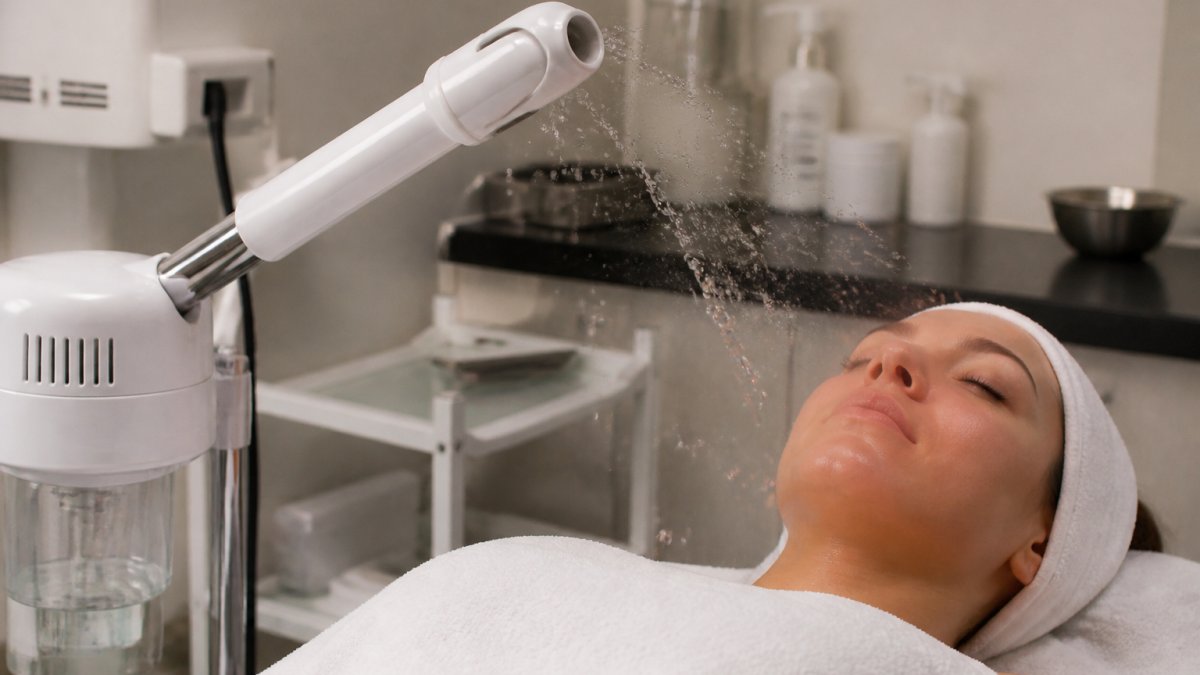
Steam spitting happens when water droplets erupt from the nozzle instead of a fine mist.
When water reaches the nozzle before it's fully vaporized, you get liquid spray instead of dry steam. The pressure inside the tank builds unevenly.
Common causes of temperature imbalance:
- Heating element not reaching full temperature before use
- Steamer turned on but nozzle opened too quickly
- Water tank overfilled, which cools the heating element
- Mineral deposits on the heating element reducing heat transfer
Pro tip: Let your steamer warm up for 3-5 minutes before opening the nozzle. Most spitting during the first minute of use stops once the unit reaches full temperature.
Mineral Deposits and Clogged Nozzles
Hard water leaves mineral deposits inside your steamer. These deposits accumulate on the heating element, inside pipes, and around the steam nozzle.
When mineral buildup partially blocks the nozzle, water pressure forces liquid through small openings instead of producing steam mist.
Signs of mineral clogging:
- Weak or uneven steam output
- Spitting that gets worse over time
- Discolored water in the tank
- Foul odors when the steamer heats up
The nozzle opening becomes narrower as deposits build up. Water that should vaporize gets forced through as liquid instead.
Overfilling and Water Level Problems
Overfilling the water tank is one of the most common causes of spitting.
The excess water cools the steam as it rises through the tank. Pressure builds unevenly.
Correct water level matters more than most estheticians realize. Fill to the line marked on your tank, not above it.
Warning: Overfilling can also damage internal components and create safety hazards. Hot water can splash out when you open the tank or nozzle, risking burns.
Can You Use Tap Water in a Facial Steamer
Tap water is the primary reason facial steamers spit and develop buildup problems.
Hard water (water with high mineral content) causes faster buildup than soft water.
Using purified or distilled water prevents mineral accumulation inside your steamer. Distilled water has minerals removed, so nothing builds up on the heating element or nozzle.
The difference is noticeable:
- Tap water steamers need descaling every 2-3 weeks
- Distilled water steamers can go 4-6 weeks between deep cleaning
- Tap water causes more frequent nozzle clogs
- Distilled water produces consistent steam quality
Professional spas and estheticians use distilled water exclusively. It's a small investment that prevents expensive repairs and keeps treatments running smoothly.
How to Clean a Facial Steamer: Step-by-Step Process
Regular cleaning keeps your steamer working properly and prevents spitting problems before they start. Daily cleaning takes 5 minutes. Weekly deep cleaning takes 15 minutes.
Daily Cleaning Routine
Do this after each treatment day:
- Unplug the steamer and let it cool for 10 minutes
- Empty the water tank completely
- Wipe the exterior with a damp cloth to remove product residue and dust
- Check the nozzle for visible mineral deposits or debris
- Wipe the nozzle opening with a clean, dry cloth or soft brush
- Leave the tank open to air dry overnight
This simple routine prevents bacterial buildup and keeps the nozzle clear. Most treatment room problems never develop if you empty the tank daily.
Weekly Deep Clean
Do this once per week:
- Fill the tank halfway with distilled water and 1 tablespoon of white vinegar
- Plug in the steamer and let it run for 2-3 minutes to heat the mixture
- Hold a cloth under the nozzle and press the steam button for 30 seconds
- Turn off and unplug the steamer
- Let it cool for 10 minutes, then empty the tank
- Rinse the tank thoroughly with distilled water three times
- Refill with fresh distilled water and run for 1 minute to flush vinegar residue
- Empty again and leave to air dry
White vinegar dissolves mineral deposits without harsh chemicals that can damage internal components. This weekly step keeps mineral buildup from accumulating.
Quad 4 In 1 Steamer Mag Light High Frequency And Galvanic Machine →
How to Descale a Facial Steamer for Optimal Performance
Descaling removes heavy mineral buildup that daily cleaning and weekly vinegar rinses can't touch. If your steamer has been used with tap water for months, descaling becomes necessary.
Descaling is different from cleaning. Cleaning removes surface residue. Descaling dissolves mineral deposits deep inside the heating element and pipes.
When to descale:
- Every 4-6 weeks if using distilled water
- Every 2-3 weeks if using tap water
- When steam output becomes weak
- When spitting or gurgling starts
How to descale:
- Fill the tank halfway with distilled water and 2 tablespoons of white vinegar
- Heat the steamer for 5 minutes
- Let it sit (unplugged) for 30 minutes
- Heat again for 3 minutes
- Hold a cloth under the nozzle and release steam for 1 minute
- Unplug and let cool completely
- Empty the tank and rinse thoroughly with distilled water four times
- Refill with distilled water only and run for 2 minutes to flush
This process dissolves calcium and mineral deposits that accumulate on the heating element. You'll notice improved steam quality immediately after descaling.
Correct Facial Steamer Water Level and Filling Techniques
Water level determines whether your steamer produces steady steam or spits water. Most spitting problems trace back to incorrect filling.
The water level line on your tank exists for a reason. Fill to that line, not above it.
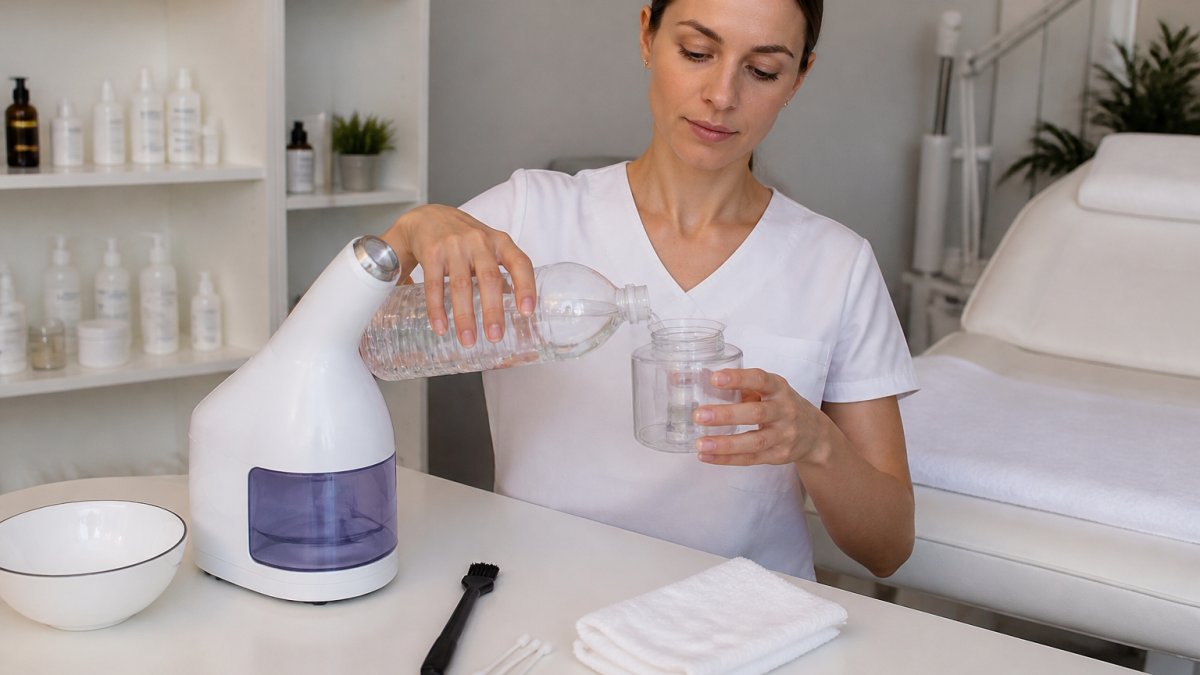
Proper filling steps:
- Unplug the steamer completely
- Remove the water tank if your model allows it
- Hold the tank up to a light source to see the fill line clearly
- Pour distilled water slowly until it reaches the line
- Do not fill above the line under any circumstances
- Replace the tank securely
- Plug in and allow 3-5 minutes for heating before opening the nozzle
Different steamer models have different tank capacities. A small steamer might hold 16 ounces. A larger professional steamer might hold 32 ounces.
Immediate Treatment Room Safety When Spitting Occurs
If your steamer starts spitting during a client treatment, act quickly to prevent burns or discomfort.
Immediate steps:
- Stop the steam flow by closing the nozzle valve or pressing the steam button to off
- Move the steamer away from the client's face
- Have the client sit up slowly and check for any discomfort
- Wipe the client's face gently with a clean, dry cloth
- Do not resume treatment with that steamer
Let the unit cool for 15 minutes before investigating the cause. Check water level, look for visible mineral deposits around the nozzle, and verify the tank is properly seated.
If spitting continues after cooling and refilling:
- Switch to a backup steamer if you have one
- Complete the treatment without steam
- Address the problem steamer after your client leaves
Never attempt to fix a spitting steamer while a client is in your treatment room. Professional spas keep a backup steamer for situations like this.
Preventive Maintenance Schedule to Stop Spitting Before It Starts
A simple maintenance schedule prevents most spitting and performance problems. Print this schedule and post it at your steamer station.
| Maintenance Task | Frequency | Time Required | What It Prevents |
|---|---|---|---|
| Empty tank and wipe nozzle | Daily | 5 minutes | Bacterial growth, mineral clogging |
| Weekly vinegar rinse | Once per week | 15 minutes | Mineral buildup, weak steam |
| Deep descaling | Every 4-6 weeks | 30 minutes | Heavy deposits, spitting, odors |
| Replace water tank seals | Every 6-12 months | 10 minutes | Leaks, pressure loss |
| Professional inspection | Annually | 30 minutes | Hidden damage, safety issues |
Following this schedule keeps your steamer reliable and extends its lifespan.
When to Repair, Replace, or Upgrade Your Steamer
Not every spitting problem can be fixed. Sometimes repair costs exceed the steamer's value, or the unit has reached the end of its useful life.
Signs your steamer needs repair:
- Spitting continues after descaling and proper filling
- Steam output is weak even after cleaning
- Water leaks from the tank or base
- Strange noises during heating
- Heating takes longer than 5 minutes
Signs it's time to replace:
- The steamer is more than 5-7 years old
- Repair costs exceed 40% of a new unit's price
- Multiple components are failing
- You've descaled and cleaned but problems persist
- The nozzle has permanent damage or corrosion
Professional-grade steamers from SkinAct are built to handle daily use in busy treatment rooms. Models like the Digital Euro Facial Steamer with Aromatherapy LED Magnifying Lamp are designed for durability and include a 1-year warranty.

For busy estheticians, having a backup steamer is practical. If you're looking to expand your skills and service offerings, Online Service Training for Estheticians covers equipment maintenance, troubleshooting, and best practices for keeping your treatment room running smoothly.
Facial steamer spitting frustrates clients and disrupts your treatment flow. SkinAct steamers are engineered for reliability and come with support to keep your practice running smoothly. View results
Frequently Asked Questions
Why does my facial steamer spit water instead of producing smooth steam?
Spitting occurs when water droplets are forced out with steam, usually caused by mineral buildup inside the heating chamber, overfilled water tanks, or incorrect steam nozzle positioning. Hard water deposits reduce steam efficiency and create pressure pockets that expel liquid. Check your water level first, it should never exceed the fill line, then inspect the steam nozzle for blockages. If the steamer is older or heavily used, descaling is likely needed to restore proper steam output.
Should you use tap water or distilled water in a facial steamer?
Distilled or purified water is strongly recommended for facial steamers. Tap water contains minerals like calcium and magnesium that accumulate as limescale inside the heating element and steam outlet, causing clogs, spitting, and reduced steam intensity. Hard water buildup also shortens equipment lifespan and requires more frequent descaling. While distilled water costs slightly more upfront, it prevents costly repairs and keeps your steamer performing reliably for years.
How often should you descale a professional facial steamer?
Descaling frequency depends on water hardness and usage. In areas with hard water or high-volume treatment rooms, descale every 2-4 weeks. For softer water or lighter use, monthly descaling is sufficient. If you notice reduced steam output, spitting, or gurgling sounds, descale immediately regardless of schedule. Many professionals descale weekly as preventive maintenance to avoid treatment disruptions. Check your steamer's manufacturer instructions for specific recommendations.
What's the correct water level for a facial steamer tank?
Fill the water tank only to the fill line marked on the tank, never overfill. Overfilling causes water to enter the steam outlet prematurely, resulting in spitting and water droplets instead of dry steam. Most steamers have a minimum line as well; don't run the unit below it or the heating element may overheat. Before each treatment, check the water level and refill if needed, but always stay within the marked range for safe, consistent steam delivery.