Customizing Spa Furniture for Your Brand Aesthetic
Table of Contents
- How Customizing Spa Furniture Reflects Your Brand Identity
- Spa Treatment Room Design: Starting With Your Brand Direction
- Selecting an Esthetician Bed That Enhances Your Aesthetic
- Spa Furniture Materials and Finishes for Durability and Design
- Small Spa Treatment Room Layout: Maximizing Style in Compact Spaces
- Storage and Shelving: Keeping Your Space Organized and Cohesive
- Budgeting and Customization Trade-Offs
- Ensuring Brand Consistency Across Multiple Locations
- Frequently Asked Questions
How Customizing Spa Furniture Reflects Your Brand Identity
Last Updated: October 12, 2026
How Customizing Spa Furniture Reflects Your Brand Identity
Your treatment room tells a story before your client ever lies down.
Customizing spa furniture for brand aesthetic means making deliberate choices that turn your space into an extension of who you are.
At SkinAct, we work with estheticians and spa directors who know a cohesive environment matters. The right furniture makes your space feel intentional and professional.
Spa Treatment Room Design: Starting With Your Brand Direction
Your brand aesthetic should guide every furniture decision. Before you shop, get clarity on what your brand represents.
Translating Brand Values Into Furniture Choices
Define your brand in three to five words, "minimalist and clinical," "warm and nurturing," "luxury and indulgent." These become your filter for every piece.
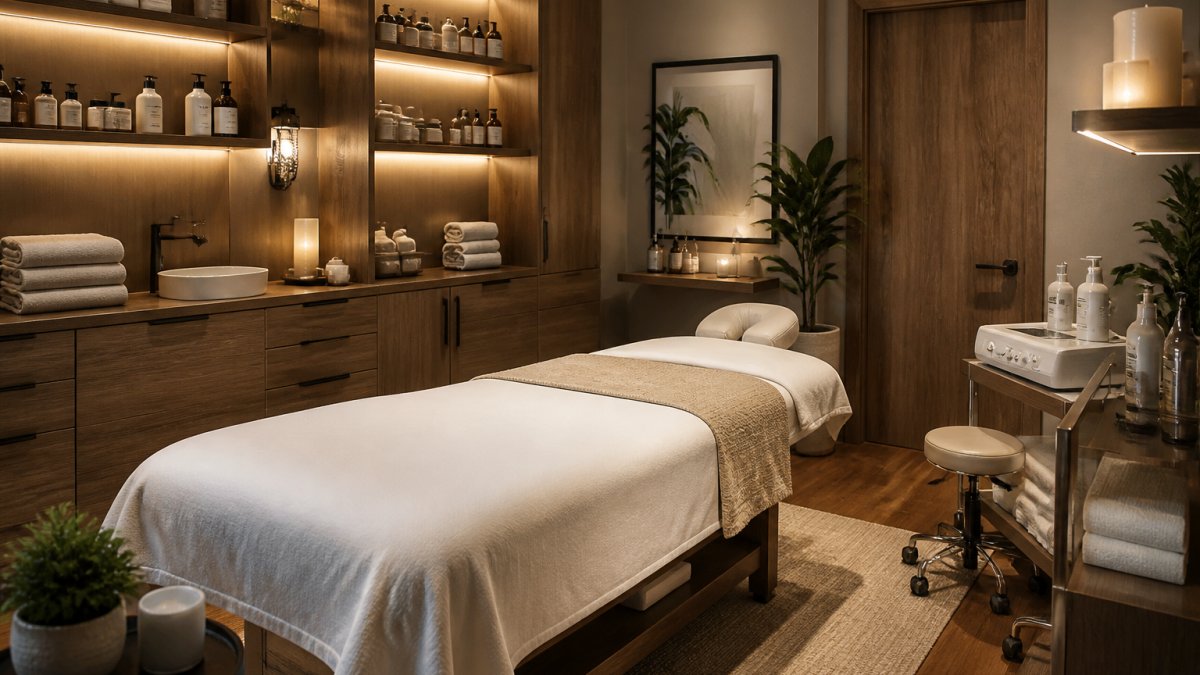
Clinical and modern brands suit metal and glass; warm and nurturing brands align with natural wood and soft textures; luxury brands demand premium finishes.
Common mistake: choosing furniture on price alone, then trying to make it fit your aesthetic afterward. Clients sense when pieces don't belong together.
Ask yourself these questions before making any purchase:
- Does this piece feel consistent with my brand words?
- Would my ideal client expect to see this in my space?
- Does it solve a real problem in my layout, or am I just filling space?
Color Palettes and Material Selection
Your color palette sets the emotional tone.
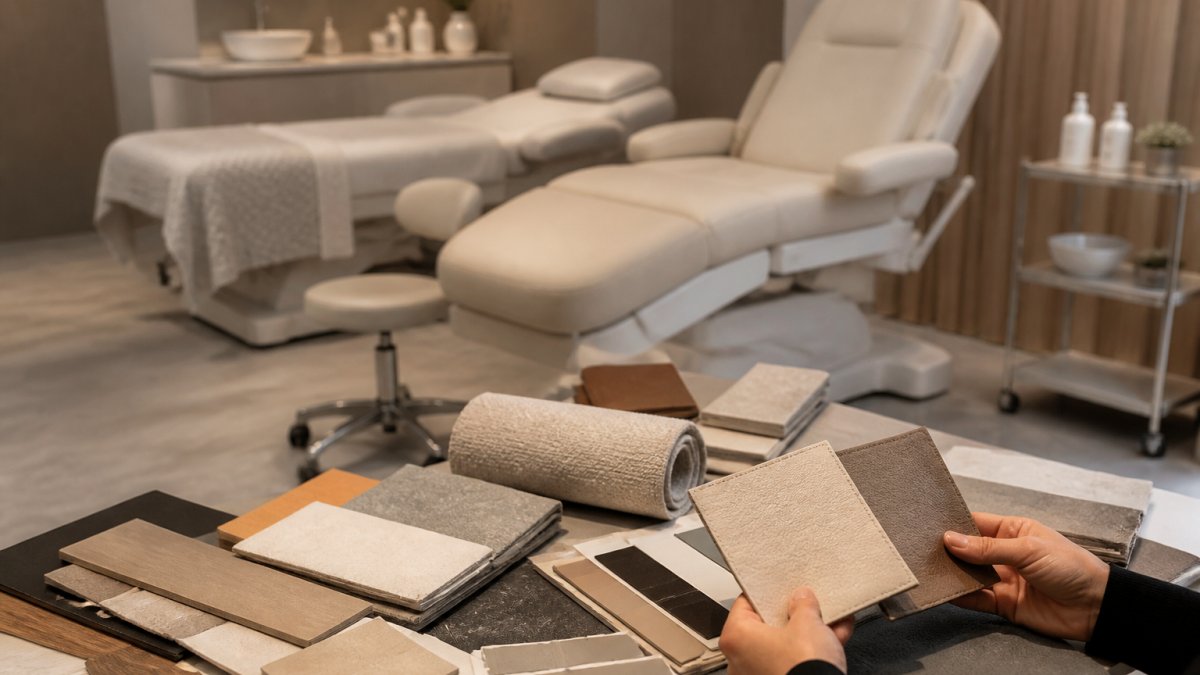
Wood finishes matter: light wood feels airy and modern, dark wood reads luxurious and grounding, warm tones create intimacy. Match the finish to your brand direction.
Material selection ties to durability and maintenance. Upholstered pieces need stain-resistant fabrics; wood surfaces need finishes that withstand oils and moisture.
Selecting an Esthetician Bed That Enhances Your Aesthetic
Your treatment table is the centerpiece of your room, setting the tone for everything else.
An esthetician bed should be comfortable for clients and accessible for you, while reflecting your brand. The Serene Professional Electric Treatment Table with Ambient LED Lighting delivers both: a solid wood base for warmth and stability, an electric lift for smooth positioning, and integrated LED underglow for signature lighting.

For smaller spaces or tighter budgets, a quality wood-frame bed with durable upholstery still communicates professionalism.
Your bed choice affects everything else. A statement bed calls for simpler surrounding furniture; a minimal bed gives you flexibility with accent pieces.
Spa Furniture Materials and Finishes for Durability and Design
Materials determine how long your space looks intentional and how much time you spend maintaining it.
Wood Finishes and Warm Accents
Natural wood brings warmth metal or plastic can't match. A wooden spa trolley cart like the Moda offers function and aesthetic value: three open shelves keep supplies accessible, and the warm wood grain ties the room together.

Wood finishes need protection from constant oils, serums, and moisture. A quality finish prevents damage and keeps the piece looking intentional for years, cheaper finishes deteriorate and look shabby fast.
Warm wood accents create a residential spa feeling. Clients pay for an experience, not just a service, the more your space feels like a curated retreat, the more premium your positioning.
Maintenance and Sanitation Requirements
Your furniture must withstand daily cleaning and sanitization, it's part of running a professional space.
Hard surfaces sanitize more easily than soft ones.
Organize for efficient cleaning: open shelving sanitizes more easily than enclosed cabinets, and mobile carts with smooth casters move for deep cleaning.
Your layout should support your workflow. If you're constantly moving pieces to clean around them, your design isn't working.
Small Spa Treatment Room Layout: Maximizing Style in Compact Spaces
Small treatment rooms demand smarter furniture choices, every piece must pull its weight.
Vertical storage is essential: wall shelving keeps supplies organized without eating floor space. A compact multi-tier cart like the Pro Double Drawer Salon Trolley Cart with two locking drawers and open shelving serves multiple functions in minimal footprint.
Moda Wooden Spa Trolley Cart →

Multifunctional furniture works harder in tight spaces.
Color and lighting make small spaces feel larger.
Many solo estheticians think they must sacrifice aesthetics in small spaces. You don't, just be intentional. One beautiful, functional item beats three mediocre ones.
Storage and Shelving: Keeping Your Space Organized and Cohesive
Storage is where small spaces thrive or fail. Disorganized shelving makes even a beautiful room feel chaotic.
Open shelving creates visual interest when organized well: group products by type, use matching containers, keep the eye moving smoothly.
Shelving style should match your spa furniture brand aesthetic.
Mobile carts offer flexibility built-in shelving can't: reposition them for workflow, move them for cleaning, or adjust your layout without renovation, valuable as your practice evolves.
Budgeting and Customization Trade-Offs
Custom furniture costs more than standard options. The question isn't whether to customize, but what to customize and where to stay standard, which means understanding what drives the price, the timeline, and where money is best spent.
What Actually Drives the Cost of a Custom Piece
Custom pricing is the sum of several variables. Knowing them lets you negotiate and prioritize:
- Material grade and finish. A commercial-grade laminate over plywood costs far less than solid hardwood with a hand-rubbed oil finish. The finish alone can represent a meaningful share of the total on a treatment table or cart.
- Upholstery and foam density. Healthcare-rated, fluid-resistant fabric and high-density foam cost more than standard upholstery, but they are what keep a table looking new after hundreds of client hours.
- Hardware and mechanisms. Electric lift columns, locking casters, soft-close drawers, and integrated LED lighting each add cost. A manual-lift table with a wood frame is the most budget-friendly configuration; an electric table with underglow is the most premium.
- Non-standard dimensions. Anything outside a supplier's standard footprint triggers a custom cut, which adds both cost and lead time.
Lead Times and Planning
Custom pieces aren't off-the-shelf: standard finishes ship quickly, while custom colors, dimensions, or upholstery add weeks. When opening a room or rebranding, order anchor pieces first and let accents follow, building in a buffer so your treatment table doesn't arrive after your first booked client.
Where to Customize and Where to Stay Standard
Customize what clients see and touch: treatment table, waiting-room seating, visible storage. Standard pieces work fine for back-of-house storage, staff areas, and utility shelving.
A practical allocation looks like this:
- Tier 1 (customize first): treatment table, primary visible cart or shelving, reception seating.
- Tier 2 (customize if budget allows): accent lighting, secondary carts, decorative shelving.
- Tier 3 (stay standard): back-room storage, cleaning supply shelving, staff lockers.
Total Cost of Ownership, Not Just Purchase Price
Consider total cost of ownership, not sticker price. Furniture replaced in two years costs more than quality pieces lasting five. Degrading finishes look shabby and undermine your brand; premium materials protect your investment. Factor in labor, downtime, and brand damage from a cracked or peeling surface.
Ensuring Brand Consistency Across Multiple Locations
When opening multiple locations, consistency becomes critical, clients expect the same experience everywhere. That means matching colors and finishes, but also the same accessibility, ergonomic, and performance standards, plus measurable results.
Documenting Your Design System
Create a simple design guide capturing furniture selections, color palette, finish specs, and layout principles, clear enough that anyone setting up a new space understands your aesthetic. Include:
- Exact finish names and color codes for wood, metal, and upholstery.
- Standard dimensions for treatment rooms, reception, and storage.
- Approved furniture models and acceptable substitutions.
- Lighting temperature and fixture types.
- Signage and wayfinding standards.
Accessibility and Ergonomics Across Every Location
A consistent brand experience includes consistent access and comfort. Under the Americans with Disabilities Act (ADA), places of public accommodation must meet accessibility standards for entry, maneuvering, and use (Americans with Disabilities Act Title III Regulations). For a spa, that means practical decisions:
- Clear floor space. Treatment rooms and reception areas need enough clear floor space for a wheelchair or mobility device to turn and approach seating.
- Reachable storage. Shelves and drawers should be reachable from a seated or standing position without strain.
- Adjustable treatment furniture. Electric-lift tables let you raise or lower the client to a comfortable transfer height and adjust the working height for the practitioner, reducing back and shoulder strain over a full day.
- Staff posture. Carts and shelving at the right height reduce bending and reaching, which matters when a practitioner performs the same movements dozens of times a day.
- Inclusive layouts. Leave enough space between pieces for a client using a cane or walker to move through the room safely.
Write these standards into your design guide so every new location starts from the same baseline. When your team understands the "why" behind these choices, they make better decisions about layout and maintenance. Resources like Online Service Training for Estheticians can help your staff understand how space design supports both client comfort and practitioner efficiency.
Standardize Core Pieces, Allow Local Flexibility
Standardize core pieces while allowing flexibility in accents. Treatment tables, primary storage, and color palette stay consistent; secondary pieces adapt to each space's dimensions. This maintains brand identity while respecting ceiling height, window placement, and room shape.
Measuring Whether the Design Is Working
A redesign is an investment, track simple metrics before and after:
- Client comfort and feedback. Note comments about the treatment table, room temperature, and overall feel. A short post-visit survey can capture this.
- Room utilization. Track how often each room is booked and whether any room is consistently underused.
- Staff workflow. Ask practitioners whether the new layout saves time or creates friction. Time spent resetting a room between clients is a useful measure.
- Booking and retention. Compare rebooking rates and average visit frequency before and after the redesign. A more cohesive, comfortable space often shows up here.
Working With Suppliers Who Can Scale
Work with suppliers who deliver consistency. When scaling, you need partners who hold the same quality and specifications every time. Confirm your supplier can maintain a finish or fabric spec across multiple orders and understands commercial-grade durability.
Train your team on why consistency matters. When staff see that every detail supports your brand, they make better decisions about placement, organization, and maintenance.
Frequently Asked Questions
What does bespoke spa furniture mean?
Bespoke spa furniture refers to custom-made pieces tailored to your specific space, brand aesthetic, and operational needs. Unlike standard catalog options, bespoke furniture is designed to match your color palette, room dimensions, and design direction. This customization ensures your treatment room feels intentional and cohesive, reinforcing your brand identity with every detail clients experience.
How do you design a spa treatment room around a brand aesthetic?
Start by identifying your brand's core values and visual identity, whether that's minimalist and modern, warm and residential, or luxurious and elegant. Choose an esthetician bed and supporting furniture that reflect these qualities through color, material, and finish. Select complementary storage solutions and accessories that maintain visual consistency. Finally, arrange your layout to support both client comfort and efficient workflow, ensuring every element reinforces your brand message.
Which spa furniture finishes are easiest to coordinate with a brand palette?
Soft neutrals and wood finishes offer the most flexibility for coordinating with various brand palettes. Warm wood grain finishes complement both minimalist and luxurious aesthetics, while neutral upholstery on treatment furniture pairs well with accent colors through accessories and decor. Monochrome schemes, using varying shades of one color, create a cohesive look with minimal coordination effort. Metal accents in brushed or matte finishes work across contemporary and residential spa styles.
How can you make a small spa treatment room feel cohesive and uncluttered?
In compact spaces, choose multifunctional furniture with built-in storage, like mobile carts with drawers and shelves. Use vertical storage to keep supplies organized and out of sight. Select an esthetician bed sized appropriately for your room without overwhelming the space. Stick to a consistent color palette with 2-3 primary colors to avoid visual clutter. Position furniture to create clear pathways and maintain a sense of flow, making the room feel larger and more intentional.