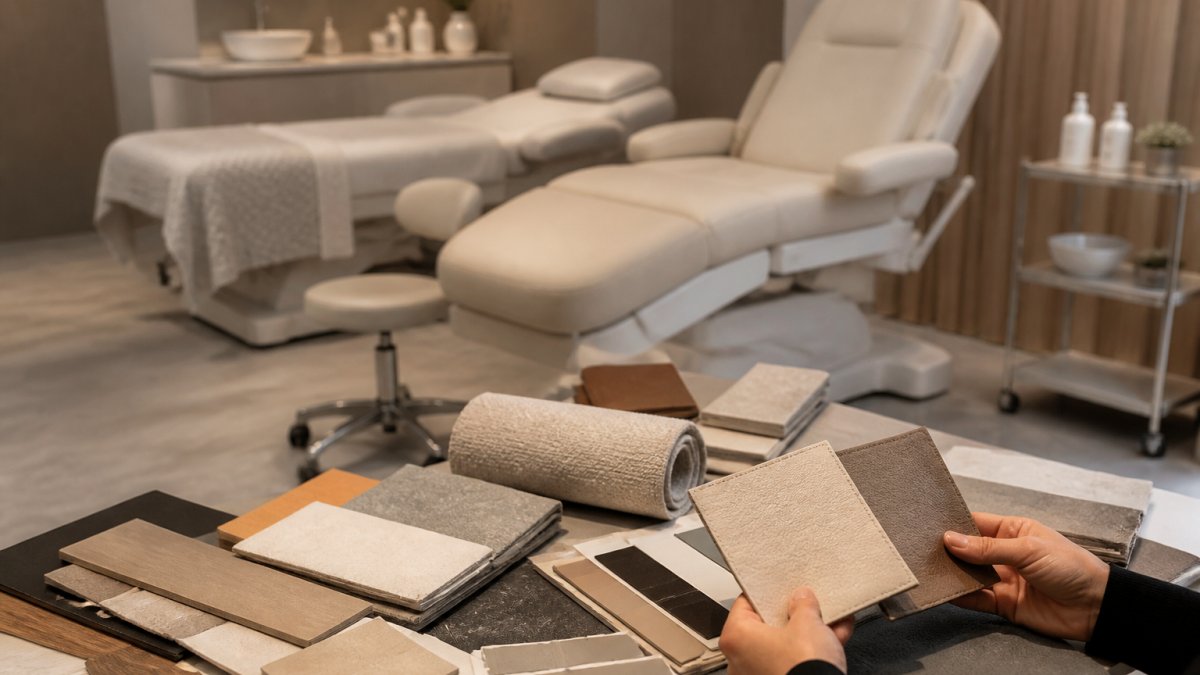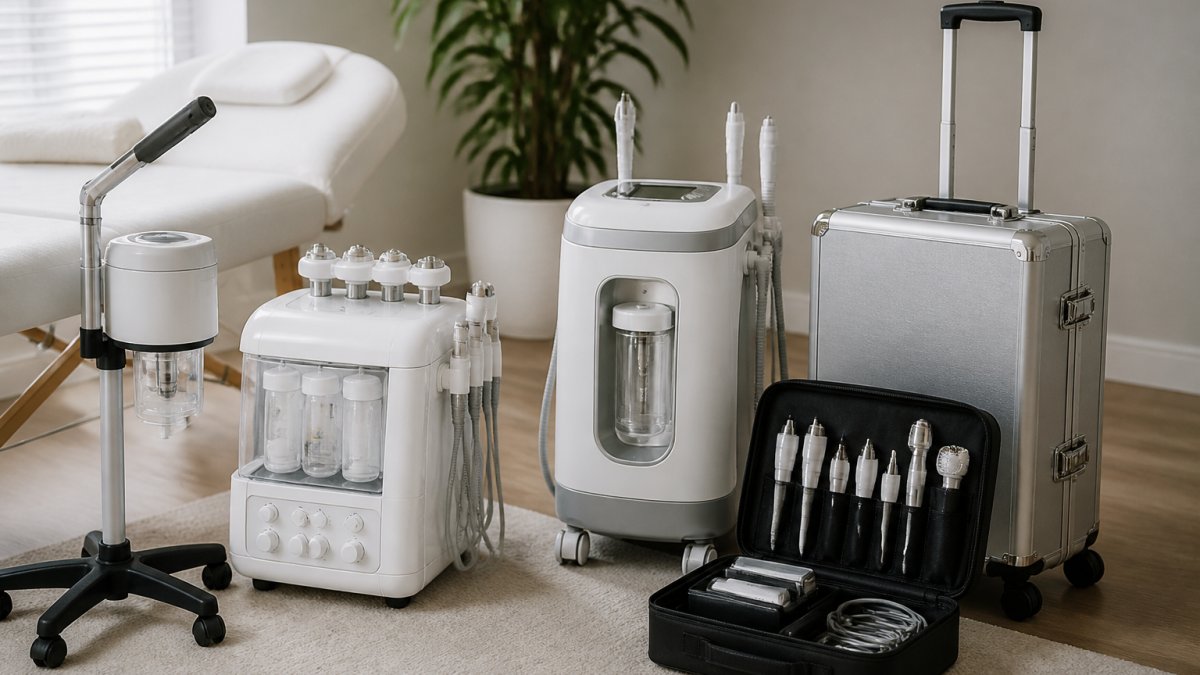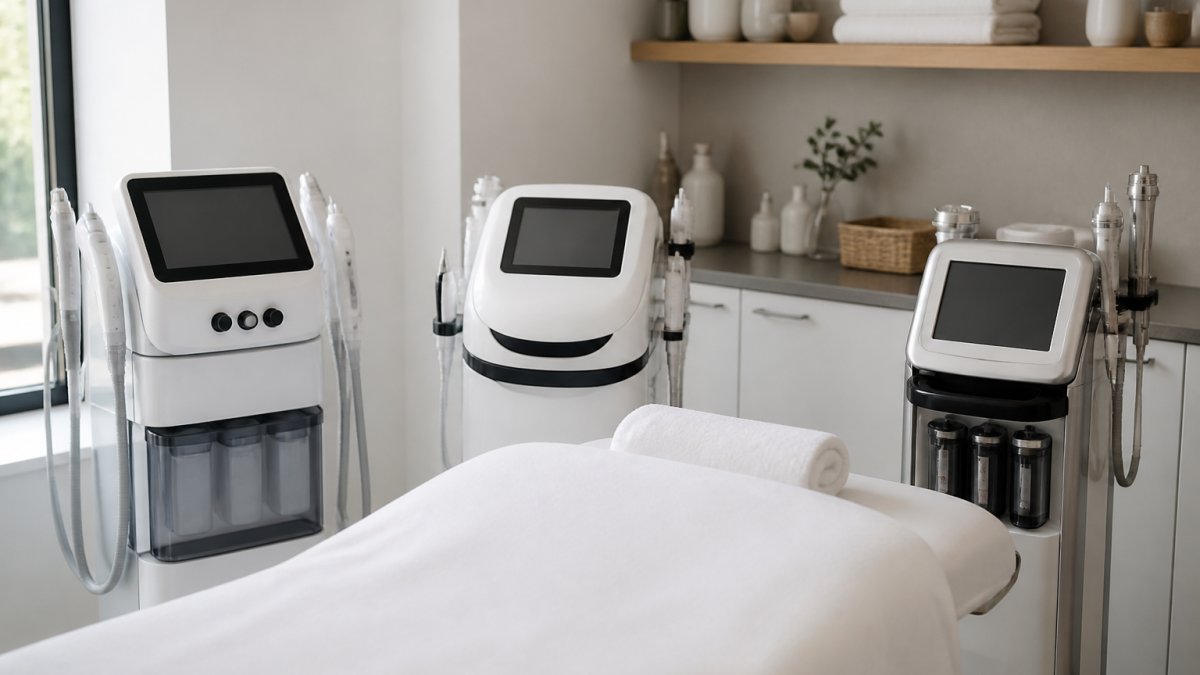
SourceOne Beauty Alternative for Spas: 2026 Buyer's Guide
Table of Contents
- Why Spas Are Looking for a SourceOne Beauty Alternative
- What a Professional Spa Equipment Supplier Should Deliver
- How to Choose Spa Equipment for Your Treatment Room
- Spa Treatment Chairs and Facial Beds: What Actually Matters
- Spa Equipment Warranty and Support: Questions to Ask First
- How SkinAct Compares as a SourceOne Beauty Alternative for Spas
- Conclusion
- Frequently Asked Questions
Last Updated: October 14, 2026
Why Spas Are Looking for a SourceOne Beauty Alternative
Searching for a SourceOne Beauty alternative for spas usually starts with three frustrations: equipment fails during a busy week, a second location opens with mismatched furniture, or a quote comes back higher because a distributor sits between the spa and the factory. This guide from SkinAct is for owners, medical spa directors, and estheticians who want to compare suppliers on substance, not sales copy.
Equipment problems rarely announce themselves politely. A hydraulic lift that won't hold height mid-facial, a backrest that slips under a heavier client, upholstery that cracks within a year: each turns a treatment room into a scheduling problem.
The evaluation criteria are simple: how the supplier sources equipment, whether it can customize without fragmenting your standard setup, how the furniture performs under professional use, and what happens after delivery when something needs fixing.
What a Professional Spa Equipment Supplier Should Deliver
A professional spa equipment supplier should deliver three things consistently: factory-direct sourcing, uniform quality across every unit, and a support structure that survives the first year of heavy use.
The spa equipment market rewards volume, not service. Many suppliers stock whatever moves and pass it along. A supplier worth a long-term contract controls how its med-spa equipment is built, holds that standard across repeat orders, and stays reachable when a room goes down.
Factory-Direct Sourcing and Consistency Across Locations
Factory-direct sourcing means the supplier manufactures or directly contracts the equipment rather than reselling through a middleman. The benefit is consistency: order ten treatment chairs for five locations, and all ten should arrive with the same frame, upholstery spec, and adjustment mechanism.
Consistency breaks down with distributor-based supply chains: the first order ships from one warehouse, the second from another, and suddenly your franchise has two visually different rooms and staff relearning controls.
Customization Without Losing Standardization
Customization and standardization sound like opposites, but they aren't when the supplier treats customization as a finish-level decision. Upholstery color, stitching, and branding can flex to match your design; frame geometry, weight capacity, and adjustment hardware should not.
A supplier that understands this lets you specify the look while locking the engineering. Ask which parts are customizable and which are fixed. If the answer is "everything," be cautious: fully customizable usually means inconsistently built.
How to Choose Spa Equipment for Your Treatment Room
Choosing spa equipment starts with the room, not the catalog. Measure the room, map the practitioner's path around the table, and confirm the chair or bed fits before comparing specifications.
The most common buying mistake is choosing equipment first and discovering the room can't accommodate it second. A chair that's perfect on paper becomes a problem the moment an esthetician can't reach the client's far shoulder without stepping around the frame.
Room Layout, Footprint, and Practitioner Access
Practitioner access is the specification nobody lists but everybody feels. A facial bed needs clearance on at least three sides: one for the practitioner, one for the client to enter and exit, and one for a cart or stool.
Footprint works the same way. A chair with a wide base and generous recline arc needs more floor space than its closed dimensions suggest. Measure the fully reclined position, not the stored one.
- Solo estheticians in small rooms: prioritize compact footprints and chairs that adjust vertically rather than sprawling.
- Medical spas running advanced procedures: prioritize stable frames, precise height adjustment, and easy sanitation.
- Multi-location franchises: prioritize identical specs across every unit so training and maintenance stay uniform.
Common Mistakes When Comparing Suppliers
The most common mistake when comparing spa equipment suppliers is treating the purchase price as the total cost. Delivery, assembly, replacement parts, and downtime during repairs all belong in the calculation.
Three more mistakes worth avoiding:
- Skipping the warranty conversation until after the order is placed, when you have no use.
- Assuming FDA registration claims are self-verifying instead of asking for documentation.
- Buying one chair to "test" a supplier, then discovering a single unit tells you nothing about how the supplier handles a ten-unit order.
Spa Treatment Chairs and Facial Beds: What Actually Matters
Spa treatment chairs and facial beds live or die on four specifications: adjustment mechanism, weight capacity, upholstery quality, and practitioner ergonomics.
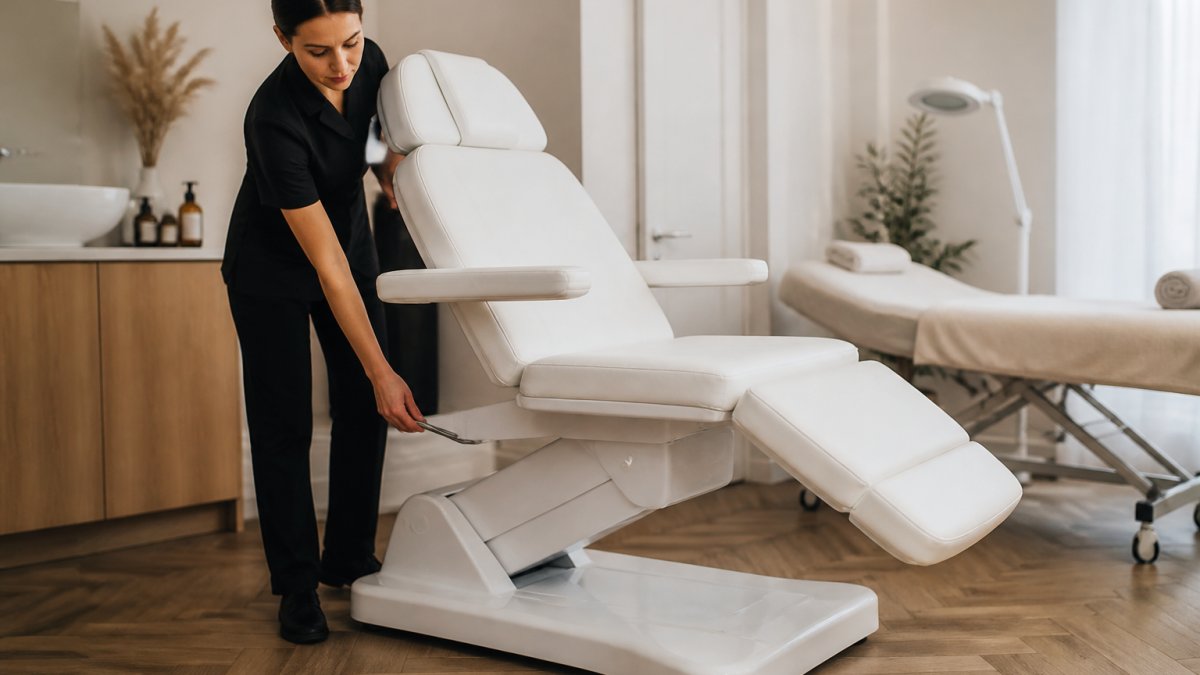
Start with adjustment. Electric gives repeatable positioning and less staff strain.
Weight capacity is the spec clients never see and suppliers sometimes obscure.
Upholstery decides how the chair looks in year three. Commercial-grade upholstery resists cracking, cleans without staining, and holds color.
| Specification | What to Check | Why It Matters |
|---|---|---|
| Adjustment type | Electric, hydraulic, or manual | Affects staff strain and positioning repeatability |
| Weight capacity | Rated limit in writing | Determines durability under daily professional use |
| Upholstery | Commercial-grade rating | Predicts how the chair looks after a year |
| Ergonomics | Practitioner reach and clearance | Decides whether staff can work comfortably all day |
Spa Equipment Warranty and Support: Questions to Ask First
Warranty and support terms decide the real cost of ownership, because every chair eventually needs a part. Get the answers in writing, understand how claims work, and know what after-sales support should look like.
The Five Warranty Questions That Separate Suppliers
Ask these before you order, and get the answers in writing:
- What's covered? Frames, adjustment mechanisms, upholstery, and electronics are often covered on different schedules. A warranty that covers the frame for years but the upholstery for months is common and worth knowing upfront.
- Who pays labor? Parts-only coverage leaves you paying a technician. Ask whether labor is included and, if so, whether the supplier sends its own technician or reimburses a local one.
- Who pays shipping on a claim? A warranty that requires you to ship a chair back at your own cost is barely a warranty. Ask whether the supplier covers inbound and outbound freight on approved claims.
- How fast do parts ship? Ask for the typical lead time on common replacement parts, not the best-case number. A warranty with slow parts is worth less than a shorter warranty with fast replacement.
- Who handles support? Confirm whether support is handled by the manufacturer or a third party, and whether you get a named contact or a general inbox.
Returns, Delivery, and After-Sales Support
Warranty is only one part of the purchase risk. Ask about these before you sign:
- Return window and condition: How many days do you have to return a unit, and what condition must it be in? Confirm whether return freight is your cost.
- Delivery method: Is delivery curbside, inside, or white-glove with assembly? For a multi-room order, this difference is significant.
- Assembly requirements: Ask what tools and how many people are needed, and whether assembly instructions are included per model.
Maintenance and Warranty Validity
Ask what routine care the manufacturer recommends for hydraulic and electric mechanisms, and whether skipping it voids the warranty. Get this in writing at purchase. For hydraulic systems, that usually means checking fluid and seals on a schedule; for electric systems, keeping controls and cabling clear of spills and cleaning chemicals. Document your maintenance in case a claim is questioned.
Independent Feedback Worth Seeking
Before committing, ask for references from practices that bought the same model at least a year ago. Ask three things: how the equipment held up under daily use, how fast the supplier responded when something needed fixing, and whether they would buy again. A supplier confident in its after-sales support provides references without hesitation.
How SkinAct Compares as a SourceOne Beauty Alternative for Spas
Most pages ranking for this query either list off-intent spa-pool sanitation products or describe furniture categories without naming a real alternative. That leaves the actual question unanswered: which suppliers can replace SourceOne Beauty for a professional spa, and how do you compare them like-for-like? Below is a shortlist by spa type plus a decision framework for when a practice asks for a quote against another supplier.
Alternative Suppliers by Spa Type
No single supplier wins every segment. Match the supplier to how you operate:
- Medical spas running advanced procedures: prioritize suppliers with stable, high-weight-capacity procedure chairs, precise electric height adjustment, and documented equipment specs you can hand to a compliance reviewer. Look for suppliers who publish load ratings and upholstery grades rather than marketing adjectives.
- Day spas with multiple treatment rooms: prioritize suppliers who can ship identical units across repeat orders and hold a consistent upholstery and frame spec. Consistency across rooms matters more than any single feature.
- Solo estheticians in small rooms: prioritize compact footprints, vertical-lift rather than wide-recline mechanisms, and suppliers who sell single units without a minimum order.
When shortlisting, consider including a factory-direct supplier, a regional distributor, and a direct-import supplier. The different models offer various trade-offs, and comparing them can help identify what best suits your needs.
A Decision Framework for Comparing Spa Equipment Suppliers
Score every candidate on the same eight criteria so the comparison is apples-to-apples:
| Criterion | What to Ask For | Red Flag |
|---|---|---|
| Product range | Written list of chair, bed, and device categories with model numbers | Catalog that changes every quarter |
| Sourcing model | Whether the supplier manufactures, contracts, or resells | Vague answers about where units are built |
| Dimensions and footprint | Fully reclined length, width, and base spread | Only closed/stored dimensions listed |
| Weight capacity | Rated limit in writing, per model | "Commercial grade" with no number |
| Adjustability | Adjustment type, range of motion, and control location | Single adjustment type across all models |
| Upholstery | Grade, cleaning instructions, and replacement availability | No replacement upholstery sold separately |
| Certifications | Documentation for any regulatory claims | Claims you cannot verify in writing |
| Service and parts | Named contact, parts lead time, and coverage terms | General inbox with no named owner |
Run the same eight questions past every supplier and record the answers in one document. The supplier that answers all eight without hedging is usually worth a long-term contract, regardless of catalog size.
Where SkinAct Fits
SkinAct manufactures and supplies directly, which allows factory-level pricing and consistent specifications across repeat orders.
For teams adding services alongside equipment, our online service training for estheticians pairs with the hardware so staff can learn new modalities without leaving the practice.
A fair evaluation still means asking us the same hard questions: warranty terms, parts availability, delivery timelines, and customization limits.
Conclusion
Equipping a spa well comes down to a decision most buyers postpone: choosing a supplier for the next five years, not the next order. Compare candidates on sourcing model, consistency across locations, warranty terms, and support responsiveness, and the shortlist narrows fast.
SkinAct supplies professional spa equipment with factory-direct pricing, strict quality control, customization options, and a product range built for medical spas, estheticians, and salons.
Frequently Asked Questions
What should a spa look for in an equipment supplier?
Start with three things: whether the supplier manufactures or resells, how consistent their product range is across orders, and what their warranty and after-sales support actually covers. Ask for documentation on quality control standards and confirm they can supply the same treatment chairs, facial beds, and spa furniture for every location you operate. A supplier who can scale with you without quality variations is worth more than one with a lower upfront quote.
How do I compare spa treatment chairs from different suppliers?
Compare the specifications that affect daily use: weight capacity, upholstery material, electric versus hydraulic adjustment, reclining backrest range, and face cradle compatibility. Then look at ergonomics for the practitioner, not just client comfort. Ask whether replacement parts and upholstery repairs are available after purchase. A chair that fits your room layout and your most common treatments will outperform one with extra features you never adjust.
How can spas evaluate equipment warranties and after-sales support?
Read the warranty terms before you buy, not after something breaks. Confirm what is covered, how long coverage lasts, whether shipping costs for repairs fall on you, and how returns are handled. Ask how quickly the supplier responds to a service request and whether they stock replacement parts. For multi-location operations, get the same terms in writing for every order so support does not vary by site.
Where can I buy professional spa equipment for a new or expanding practice?
You can buy through distributors, resellers, or directly from a manufacturer. Factory-direct suppliers often provide more consistent quality control and clearer answers on customization because you are dealing with the people who build the equipment. Before ordering, request current pricing for your quantities and delivery details, since those vary by order size and location. SkinAct publishes its product range and course offerings online for estheticians adding new modalities.