Essential Equipment for a Brow Waxing Business in 2026
Last Updated: November 5, 2026
Quick Summary
A brow waxing business needs a core station built around a wax warmer, hard or soft wax, applicators, a clean tray and disposable tools. Choose a sturdy treatment bed with a headrest, and follow a strict between-client sanitation routine to protect skin and reputation.
- Use a wax warmer that holds steady temperature through a full day of appointments.
- Keep hard wax as your primary option, since it suits delicate brow skin without strips.
- Make wax-touching tools disposable wherever a disposable option exists.
- Wipe the bed and station with a registered disinfectant between every client.
- Check your state board's cleaning and record-keeping rules before opening.
Table of Contents
- Core Equipment Every Brow Waxing Station Needs
- Choosing the Best Treatment Beds for Brow Services
- Brow Workstation and Precision Tool Setup
- Sanitation Requirements for Waxing Salons
- Matching Equipment to Service Volume and Budget
- Financing Your Esthetician Equipment Purchases
- Plan Your First Equipment Order and Training Path
- Frequently Asked Questions
A brow waxing business lives or dies on its setup. The right wax warmer, the right wax, a clean and comfortable treatment bed and a disciplined sanitation routine let you deliver consistent results from your first client to your thousandth. This guide walks through the equipment a new esthetician needs to build a dependable brow service, from the core station to the financing choices that make it affordable.
Core Equipment Every Brow Waxing Station Needs
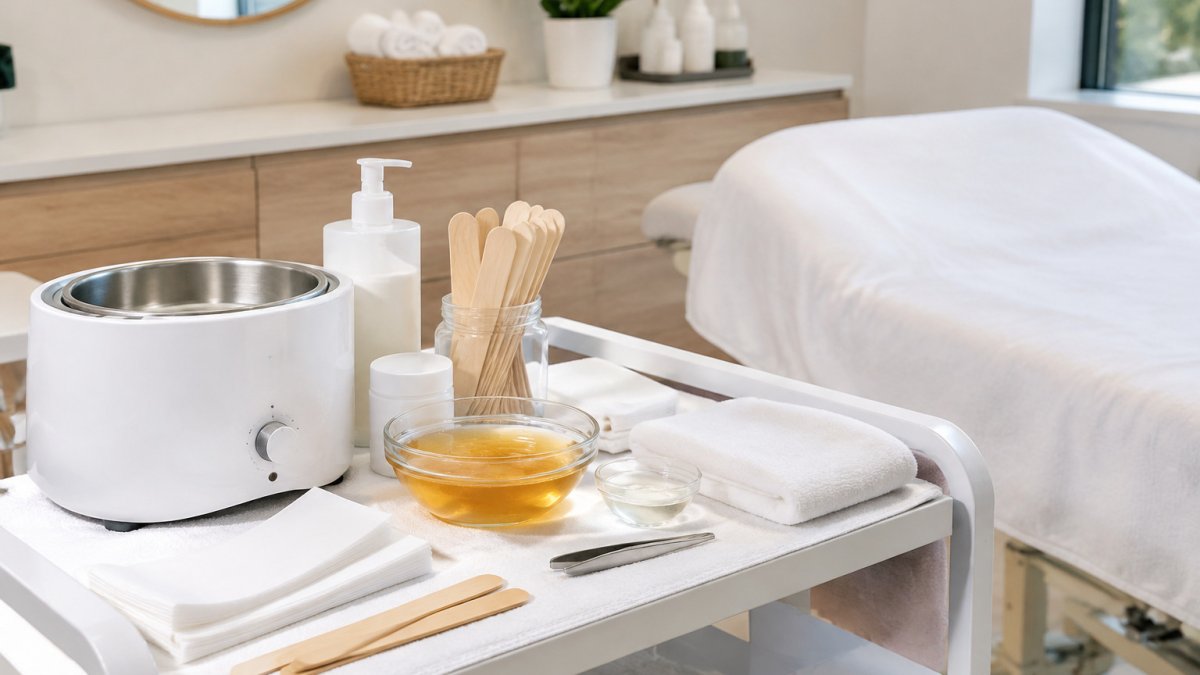
A brow waxing station starts with a small set of essentials: a wax warmer, hard or soft wax, applicators, a clean tray and a supply of disposable tools.
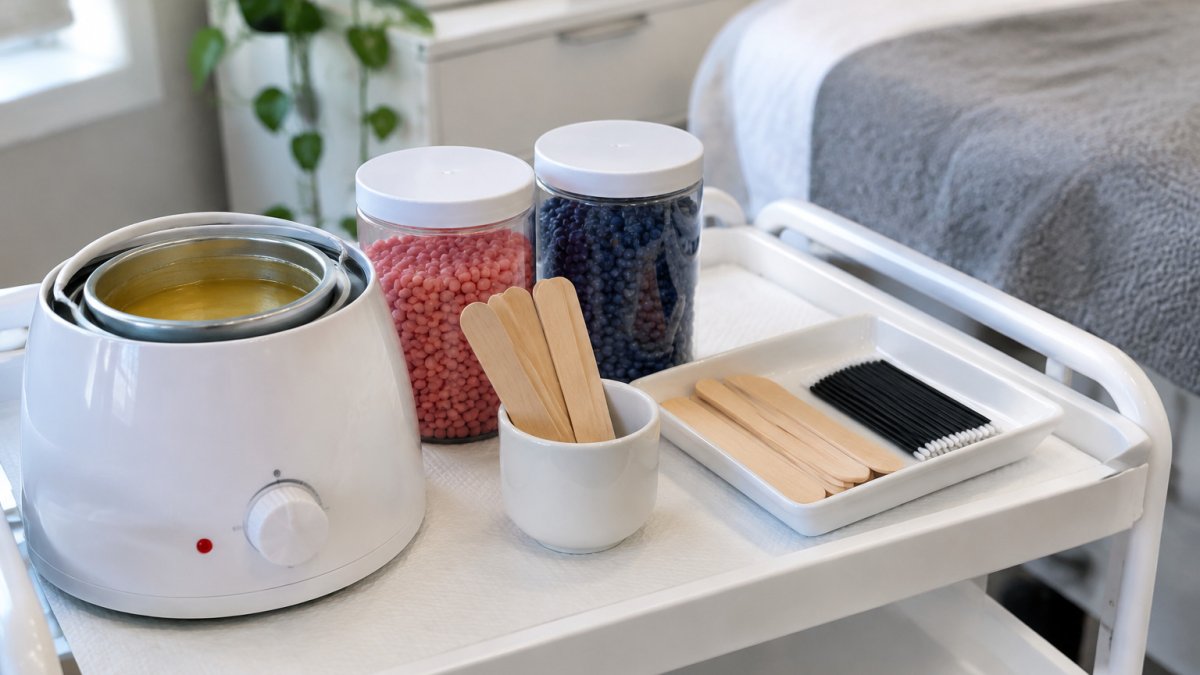
Plan your station around the services you actually offer. Brow work relies on small, precise tools, so keep applicators, spatulas and disposable sticks within reach and replace them between clients rather than reusing them.
Wax Warmers and Heaters
A wax warmer keeps your wax at a steady working temperature so it spreads thin and lifts cleanly. For a brow-focused practice, a single-pot warmer is often enough to start. The Single Wax Warmer from SkinAct is an electric unit designed to heat a single pot of wax to a consistent working temperature.
Choose a warmer that holds temperature steadily through a full day of appointments, and check that the pot size suits the wax you buy in bulk.
Hard Wax Versus Soft Wax Supplies
Hard wax and soft wax do different jobs. Hard wax grips short, coarse hair without strips and is well suited to the delicate skin around the brow.
For brow work, many estheticians keep hard wax as their primary option. The Lavender Hard Wax Beads 1 lb bottle from SkinAct is a stripless formula that suits brows, lip, underarms, bikini and body, and it is designed for professional use.
Stock a small supply of each wax type so you can switch based on the client's hair and skin, and keep the actual bottle sizes in mind when you calculate your monthly consumable costs.
Choosing the Best Treatment Beds for Brow Services
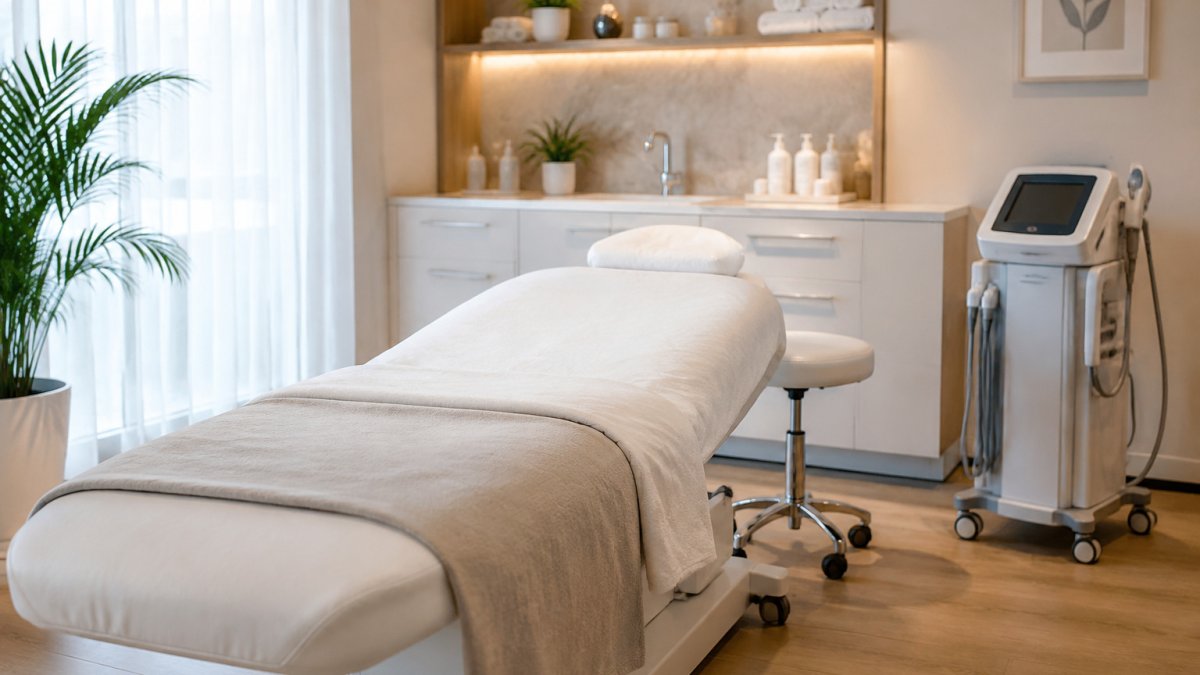
A treatment bed is the one piece of furniture you and every client touch for the entire appointment, so it deserves more scrutiny than a quick online order. Brow services are short, often 15 to 30 minutes, but they demand steady, close-in positioning: the client must recline comfortably while you work at face height with neutral wrists.
Specifications That Actually Matter
Compare beds on these practical criteria rather than upholstery color:
- Height range and adjustability. Look for a bed that adjusts low enough for you to sit at the client's head and high enough to work standing if you prefer. A pneumatic or electric lift saves time between clients compared with a manual crank.
- Weight capacity and frame stability. Check the published weight rating and look for a welded steel or reinforced frame. A bed rated well above your heaviest client will feel solid and last longer.
- Headrest and face cradle. A removable or adjustable headrest lets the client tilt back for brow work without craning, which keeps the brow area flat and accessible.
- Padding density and upholstery. Firm, closed-cell padding holds up to daily disinfection better than soft foam, and a smooth, non-porous surface wipes down quickly between clients.
- Portability versus permanence. If you rent a suite or travel, a folding bed with a carry case matters more than a stationary table. If your room is fixed, a sturdier non-folding table is the better long-term buy.
Set Up the Bed for Brow Work, Not Full-Body Waxing
Position the bed so you can reach the client's head from the end or the side without leaning over the torso. Keep a small side tray or trolley at brow height for your warmer, applicators, and finishing tools so you are not twisting to reach supplies. A stool that rolls and adjusts lets you match the bed height instead of compromising your posture.
Watch out: a bed that is comfortable for a 60-minute body wax is not automatically right for brow work, test the headrest angle and your seated reach before you commit, because a bed that forces you to hunch will cost you more in fatigue than it saves in price.
Match the Bed to Your Space and Volume
A solo esthetician in a single room can justify a sturdier stationary table, while a renter or mobile practitioner should prioritize a folding bed with a rated weight capacity and a carry case. If you plan to add lash, facial, or body services later, choose a bed with enough length and a headrest system that supports those treatments too, so you are not replacing furniture in year two.
Brow Workstation and Precision Tool Setup
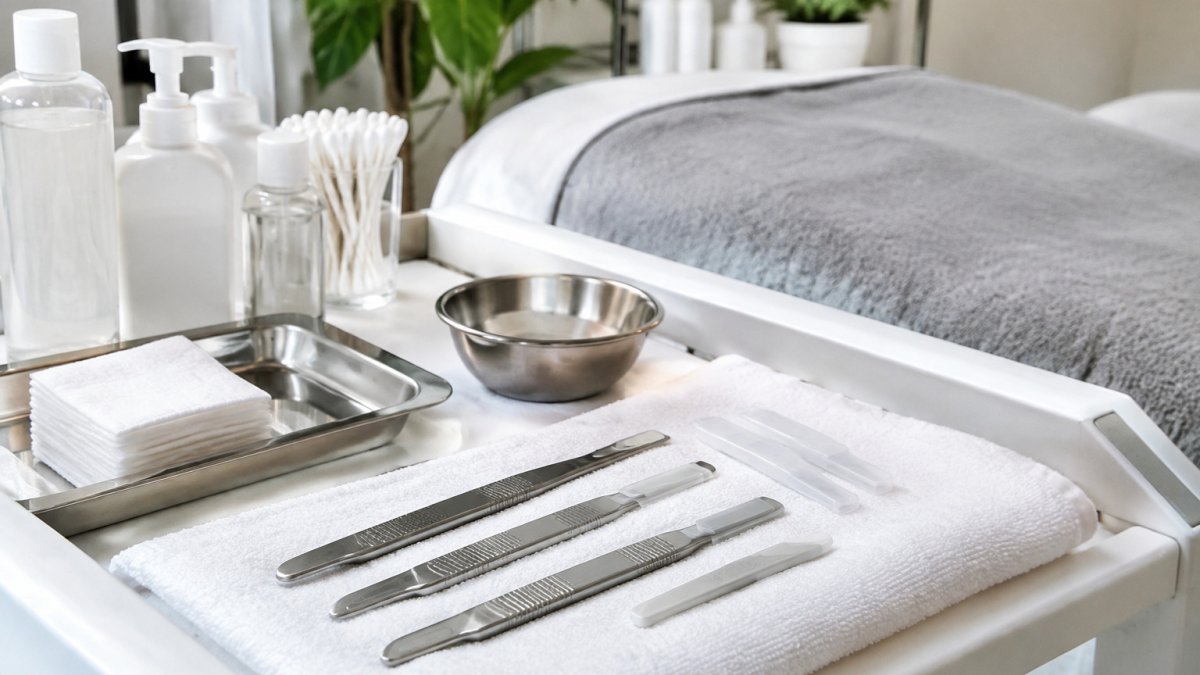
Precision work depends on organization. Arrange tweezers, brow scissors, a mapping string, measuring calipers and brow pencils in the order you use them, so your hands never have to search. Keep disposable spoolies and sticks in a covered container at the front of the station.
Set your tools up for a single session at a time. Refill only what you need for upcoming appointments, and wipe down the station surface between each client. A consistent layout reduces mistakes and makes your service faster to repeat.
Brow Specialist Training: Waxing, Mapping & Precision Design for Estheticians →
The article's setup advice comes down to a few concrete, scannable habits you can apply from day one.
| Area | Practice | Why it matters |
|---|---|---|
| Tool layout | Order tools by use sequence | Hands never search |
| Disposables | Keep spoolies and sticks in covered container | Fast, clean access |
| Station surface | Wipe down between each client | Consistent, clean service |
| Refills | Stock only upcoming appointments | Less waste, tidy station |
Sanitation Requirements for Waxing Salons
Sanitation is where a brow business earns or loses its reputation. Brow skin is thin, close to the eyes, and often sensitized by tweezing and retinol use, so a sloppy hygiene routine shows up fast as irritation, breakouts, or cross-contamination between clients. Treat your cleaning protocol as part of your equipment, not an afterthought.
Single-Use Versus Reusable: Decide Tool by Tool
The simplest rule is to make anything that touches wax or skin disposable wherever a disposable option exists. A practical split looks like this:
- Single-use: wooden spatulas and applicator sticks, waxing strips, disposable spoolies, gloves, and paper bed rolls or couch covers. Discard after every client.
- Reusable with full reprocessing: metal tweezers, brow scissors, and reusable metal spatulas. These must be cleaned of wax residue, then disinfected or sterilized according to your state board's rules before reuse.
- Never double-dip. Use a fresh spatula each time you return to the wax pot, or pour a small working portion into a disposable cup so the main pot stays clean.
A Step-by-Step Between-Client Workflow
A repeatable sequence keeps you fast and compliant:
- Remove and discard single-use items and the bed cover.
- Clean wax residue from reusable metal tools, then disinfect or sterilize them per your board's requirements and let them dry fully.
- Wipe the bed, tray, warmer exterior, and any touched surfaces with an EPA-registered disinfectant labeled for the surface and contact time.
- Replace gloves, lay a fresh bed cover, and set out new single-use tools for the next client.
- Wash your hands before gloving for the next service.
Clean wax residue from a tool before you disinfect it, because residue can shield bacteria from the disinfectant.
Check Your State Board's Rules
Cleaning and record-keeping requirements are set at the state level by the board of cosmetology or barbering that licenses you. Confirm the specific disinfectant categories, contact times, storage rules for clean versus dirty tools, and any required logs before you open, because the details vary by state and a compliant routine in one state may not satisfy another.
Consultation and Contraindication Supplies Competitors Skip
Equipment lists rarely mention the supplies that protect you before wax touches skin. Keep intake forms, a client history record, and patch-test materials on hand, and build a short skin assessment into every brow appointment. Ask about recent retinol or acid use, Accutane within the past year, active breakouts, cold sores, and known sensitivities, and defer waxing when the skin is compromised. Documenting the consultation protects the client and gives you a record if a reaction is ever questioned. That documented skin assessment also helps you recognize when waxing for sensitive skin calls for extra caution or a different approach.
Matching Equipment to Service Volume and Budget
Not every new brow business needs the same setup. A solo esthetician seeing a handful of clients a week can start with one warmer, one wax type, a compact bed and a basic tool kit. A busier practice booking several brow clients a day will benefit from a faster warmer, larger wax supplies and a more ergonomic bed.
Match your purchases to the volume you expect in the first year. Buying for a much larger practice ties up cash in unused stock, while underbuying leads to frequent reorders and slower service. Track your monthly use of wax, applicators and gloves so you can adjust your order sizes as your bookings grow.
Financing Your Esthetician Equipment Purchases
Startup equipment can be a significant expense, so plan your purchases in stages. Start with the items that directly support your first services, then add tools and furniture as your client base grows. Compare payment options such as outright purchase, business credit or equipment financing, and read the terms carefully before committing. If you are unsure which route suits your situation, a small business advisor or accountant can help you weigh the costs against your projected revenue.
Plan Your First Equipment Order and Training Path
Start with a short order list: one wax warmer, a hard wax of your choice, a supply of single-use applicators and spatulas, gloves, a disinfectant and a compact treatment bed. Once that station is running, invest in brow-specific training so your technique matches your equipment.
Build your order around the services you will offer in the first 90 days, then reorder as your bookings tell you what you actually use. Keep your supplier relationship simple and your inventory tracked, and your equipment will support a brow business that grows steadily rather than one that stalls under unplanned costs.
Frequently Asked Questions
What do I need to start my own waxing business?
Starting a brow waxing business requires a treatment bed or chair, a wax warmer, hard wax beads, disposable applicators, pre-wax cleanser, post-wax care products, single-use gloves, and a disinfectant suitable for your work surfaces. Most new practitioners also buy tweezers and brow scissors for finishing. Begin with a focused kit that covers your core services, then add inventory as client volume grows. Check your state licensing board for any required equipment or sanitation rules before you order.
What equipment is required to open a professional brow waxing studio?
A professional brow waxing studio needs a dependable wax warmer, a comfortable treatment bed, a clean workstation with good lighting, and a supply of hard wax suited to facial hair. You also need single-use applicators, sanitation products, and storage for consumables. SkinAct's Single Wax Warmer at $39.00 and Lavender or Milk Hard Wax Beads at $7.99 per 1 lb bottle are practical starting points for a brow-focused setup.
How do I choose the right professional wax warmer for brow services?
For brow work, choose a warmer that holds a steady temperature and can melt hard wax beads evenly without scorching. Small pot capacity is usually enough for brow-only services, since you refresh wax frequently for hygiene. The SkinAct Single Wax Warmer is designed to warm one pot of wax to the correct temperature. Match the warmer to how many clients you expect to see each day.
Build a dependable brow service from the start. Equip your station with SkinAct's wax warmers and professional hard wax, then add the online training that turns that equipment into consistent results for every client.