How to Choose Durable Spa Furniture for Your Practice
Table of Contents
- Start With How the Room Actually Gets Used
- Spa Furniture Materials That Survive Daily Treatment Use
- What Separates a Durable Esthetician Bed From a Disposable One
- Don't Overlook the Esthetician Stool
- Space-Saving Spa Furniture for Small Treatment Rooms
- Choosing Durable Spa Furniture: A Buyer's Checklist
- Maintenance Habits That Extend the Life of Durable Spa Furniture
- Conclusion
- Frequently Asked Questions
Last Updated: October 9, 2026
Start With How the Room Actually Gets Used
Durable spa furniture is treatment furniture built to hold up to daily professional use, not occasional home use. The difference shows up in the frame, the foam, and the upholstery. At SkinAct, we supply treatment tables and chairs to medical spas, estheticians, and salons, and we see the same pattern again and again: furniture fails because it was chosen for looks instead of workload. Investing in high-quality frames is only half the battle, as the longevity of your equipment ultimately depends on selecting durable upholstery fabrics that can withstand the rigors of constant sanitization and heavy client turnover.
Before you compare a single product, answer three questions about your room.
- How many clients do you see per day?
- Which treatments run on the bed, and do they need tilt, leg rest, or Trendelenburg positioning?
- Who adjusts the furniture, and how often?
A room doing six facials a day puts very different stress on a bed than one doing two massages. Motorized adjustments, repeated height changes, and heavy clients all add load. Write your answers down. They become the spec sheet you shop against.
Spa Furniture Materials That Survive Daily Treatment Use
Spa furniture materials decide how long a bed lasts. Two parts matter most: the frame and base underneath, and the upholstery and foam on top. Get both right and the furniture outlasts its warranty. Get either wrong and you replace it within a couple of years.
Frames and Bases: Wood, Steel, and Weight Ratings
Weight capacity is the first number to check. A sturdy base should carry at least 400 lbs for professional use. The Alora and Lucera electric treatment chairs, for example, are built on a sturdy base rated to 440 lbs.
Wood and steel both work, but they behave differently. A solid wood pedestal, like the one on the Serene electric treatment table, gives you stability and a warm look that suits a high-end treatment room. Steel frames tend to be lighter and easier to move. Neither is automatically better. What matters is the build quality and the rated capacity, not the material name alone.

Upholstery and Foam: Where Cheap Furniture Fails First
Foam is where budget furniture gives out. Low-density foam compresses within months under daily use, and once it flattens, clients feel the frame. Look for multi-layer high-density foam. The Serene table uses multi-layer high-density foam under oil-resistant upholstery, which is the combination you want in a room where oils and creams are part of every service.
Upholstery should wipe clean and resist oils. If a fabric stains or cracks, the foam underneath is exposed and the bed is done.
What Separates a Durable Esthetician Bed From a Disposable One
A durable esthetician bed is one you can still adjust smoothly after a year of daily use. The clearest sign is the mechanism. Motorized beds with programmable memory let you return to the same position every time, which cuts wear from constant manual resetting.
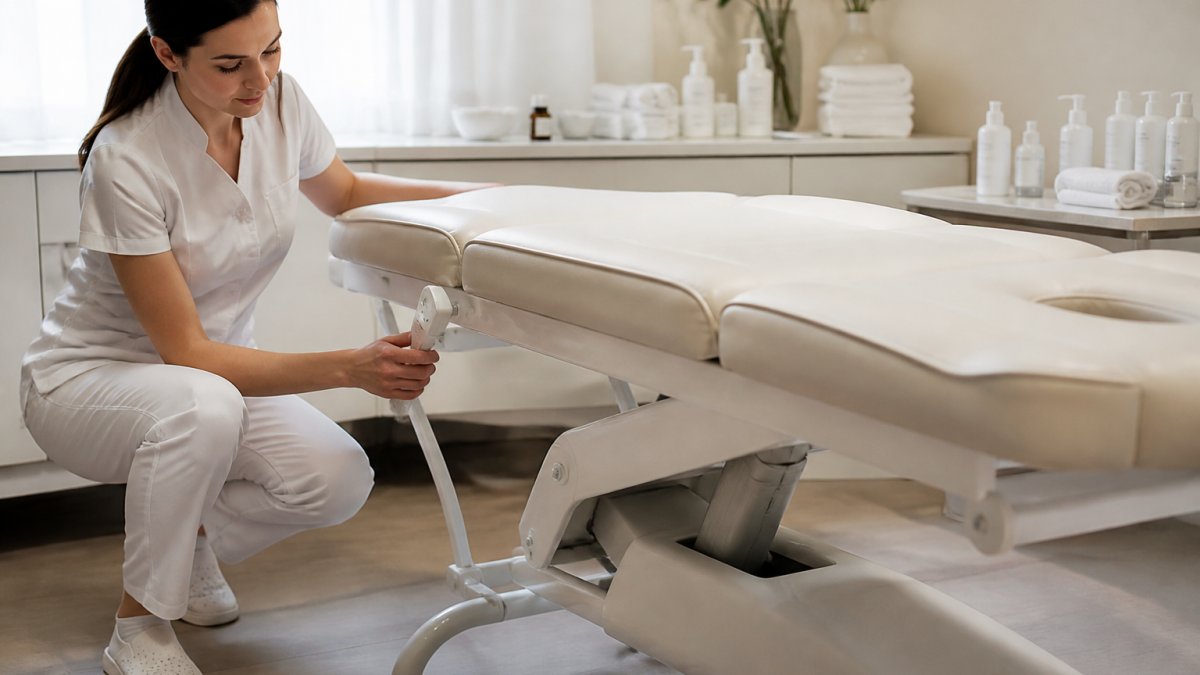
Look for these signals of a bed built to last:
- Rated weight capacity of 400 lbs or more
- Programmable memory settings so staff aren't hunting for positions
- A safety control lock and emergency stop on motorized models
- A low entry height for client access, around 19 inches on ADA-compliant chairs
- Replaceable parts, so one worn cushion doesn't retire the whole bed
Don't Overlook the Esthetician Stool
An esthetician stool is the piece practitioners use most and think about least. You sit on it for every service, so a cheap stool with a thin pad and a wobbly base wears out fast and takes your back with it.
Match the stool to the bed height. If your bed adjusts, your stool should too. Height-adjustable stools with a wide, stable base and a padded seat hold up better than fixed-height models. A rolling stool saves movement in a tight room, but lock the casters during treatments so you stay steady.
Buy the stool from the same supplier as the bed when you can. You get consistent height ranges and one point of contact if something needs replacing.
Serene Professional Electric Treatment Table with Ambient LED Lighting →
Space-Saving Spa Furniture for Small Treatment Rooms
Space-saving spa furniture solves the problem solo estheticians face most: a small room that still needs to feel professional. The fix is not smaller furniture. It is furniture that does more than one job.
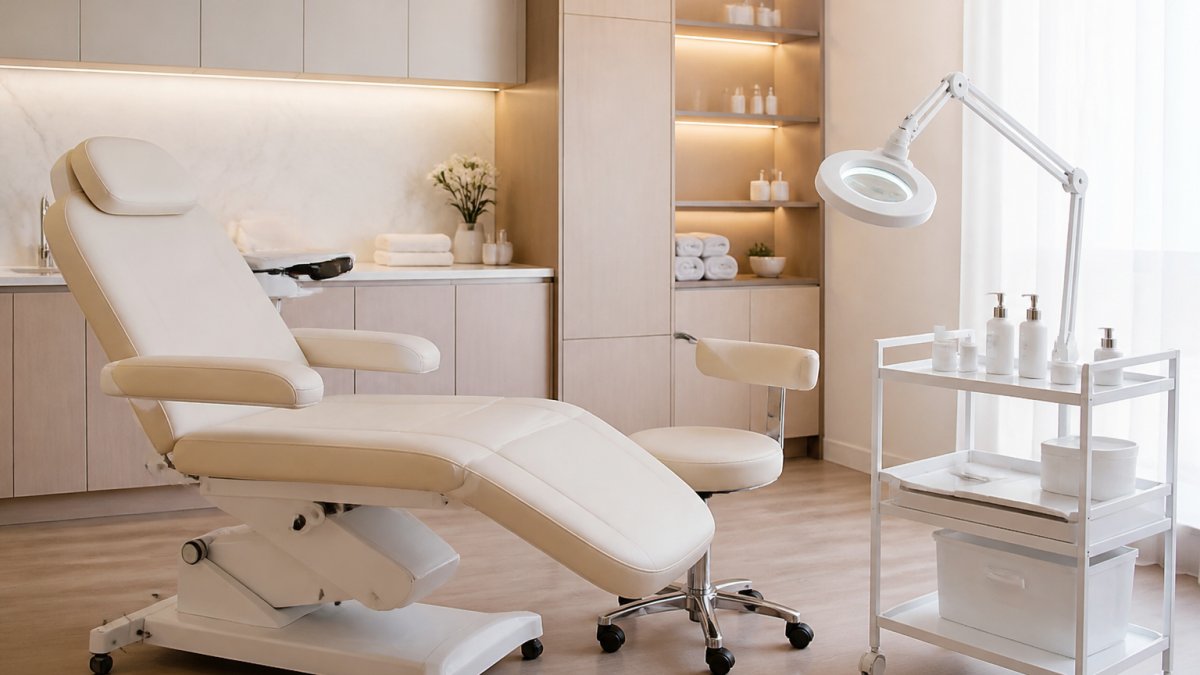
A treatment chair that converts between seated and flat positions replaces two pieces. The Alora and Lucera chairs rotate 240 degrees, so you can reach every angle without walking around the bed. That rotation alone can save a foot of clearance you would otherwise need.

Here is how to think about it:
- Choose a chair over a flat table if you do both facial and seated procedures
- Pick a rolling stool you can tuck under a counter between clients
- Keep the footprint clear on one side so you can work from either position
- Measure the swing of any rotating seat before you commit
For a small room, one versatile electric chair often beats a table plus a separate procedure chair.
Choosing Durable Spa Furniture: A Buyer's Checklist
Use this checklist before you place an order. It covers the factors that decide whether furniture lasts in a working practice.
| Factor | What to Check | Why It Matters |
|---|---|---|
| Weight capacity | 400 lbs or higher | Prevents frame and motor failure |
| Foam density | Multi-layer, high-density | Stops flattening under daily use |
| Upholstery | Oil-resistant, wipe-clean | Survives creams and oils |
| Mechanism | Programmable memory, safety lock | Cuts wear from constant resetting |
| Entry height | Around 19 inches if ADA-compliant | Easier client access |
| Parts support | Replaceable cushions and parts | Extends the bed's service life |
| Supplier | Factory-direct, consistent stock | Same quality across locations |
Work down the list and score each option. If a product fails the first two rows, stop there. No price makes up for a frame that can't carry the load or foam that flattens in a season.
Maintenance Habits That Extend the Life of Durable Spa Furniture
Good furniture still needs care. A few habits add years to a treatment bed and keep it safe for clients.
- Wipe upholstery after every client with a cleaner made for the material
- Check motorized parts and cables monthly for wear
- Tighten base and frame bolts on a set schedule
- Keep the weight load within the rated capacity every time
- Store oils and creams off the upholstery between services
A common mistake is using harsh disinfectants on upholstery that isn't rated for them. That cracks the surface and lets moisture into the foam. Use the cleaner the manufacturer specifies, and replace worn cushions before they expose the frame. For practices adding new services, pairing the right furniture with proper training helps staff use it correctly from day one. SkinAct offers online service training for estheticians to support that.
Conclusion
Choosing furniture that lasts comes down to matching the build to the workload, then caring for it. Too many practices buy on looks, then replace the bed in a year. Start with weight capacity and foam density, size the furniture to your room, and buy from a supplier who stocks replacement parts. SkinAct builds treatment tables, chairs, and stools with rated weight capacities, multi-layer high-density foam, and oil-resistant upholstery, backed by factory-direct pricing and dependable supply for practices of every size. Get started with SkinAct and furnish a room that holds up to daily treatment use.
Frequently Asked Questions
What should I look for when buying spa furniture?
Focus on four things: the frame material and weight capacity, the foam density and upholstery type, the motor quality if you're buying electric, and how easily the surface can be cleaned between clients. A treatment bed rated for 440 lbs with oil-resistant upholstery and a stable base will outlast a lighter, cheaper unit in a busy room. Ask for the actual weight rating rather than assuming it, and check whether replacement parts are available.
What materials are best for durable spa furniture?
Solid wood and powder-coated steel are the two most reliable frame materials for treatment furniture. For upholstery, look for oil-resistant, non-porous fabrics that wipe clean without soaking in product. High-density multi-layer foam holds its shape far longer than low-density padding, which compresses within months under daily use. Materials matter more than brand names when you're judging how long a piece will actually last.
How can I tell if an esthetician bed is built to last?
Check the weight capacity, the motor warranty if it's electric, and whether the base wobbles when you press down on one end. Look at the stitching and seams on the upholstery, since that's where tearing starts. Beds with programmable memory settings, safety locks, and emergency stop switches tend to be built for professional use rather than occasional home treatments. A one-year warranty is a reasonable signal the manufacturer stands behind the frame.
How do I choose spa furniture for a small treatment room?
Measure your room and map the clearance you need around the bed for you to work from both sides. Space-saving spa furniture often means a rotating seat or a chair-style treatment unit that lets clients get on and off from one side rather than needing walk-around space. A low entry height, around 19 inches on ADA-compliant models, also helps in tight rooms. Prioritize adjustability over size when square footage is limited.