Medical Spa Budget: Complete Outfitting Guide
Table of Contents
- Understanding Your Medical Spa Budget Foundation
- Medical Spa Equipment List: Essential vs. Optional Purchases
- Med Spa Treatment Room Setup: Facility and Build-Out Costs
- Medical Spa Equipment Financing: New, Used, Leased, and Financed Options
- Medical Spa Equipment Checklist: Phased Purchasing Strategy
- Hidden Costs and Contingency Planning
- Budgeting for Different Spa Sizes and Service Models
- Frequently Asked Questions
Last Updated: October 10, 2026
Understanding Your Medical Spa Budget Foundation
Opening a medical spa requires careful planning. The difference between a thriving practice and one that struggles often comes down to smart budgeting from day one. A medical spa budget isn't just about equipment costs, it includes facility build-out, furniture, supplies, technology, and contingency funds for unexpected expenses.
Medical Spa Equipment List: Essential vs. Optional Purchases
Your medical spa equipment list should separate must-haves from nice-to-haves. This distinction saves money and keeps your focus on revenue-generating tools.
Core Treatment Equipment
Treatment equipment is the backbone of your revenue. These devices directly support the services you offer and generate income from day one.
Essential core equipment includes:
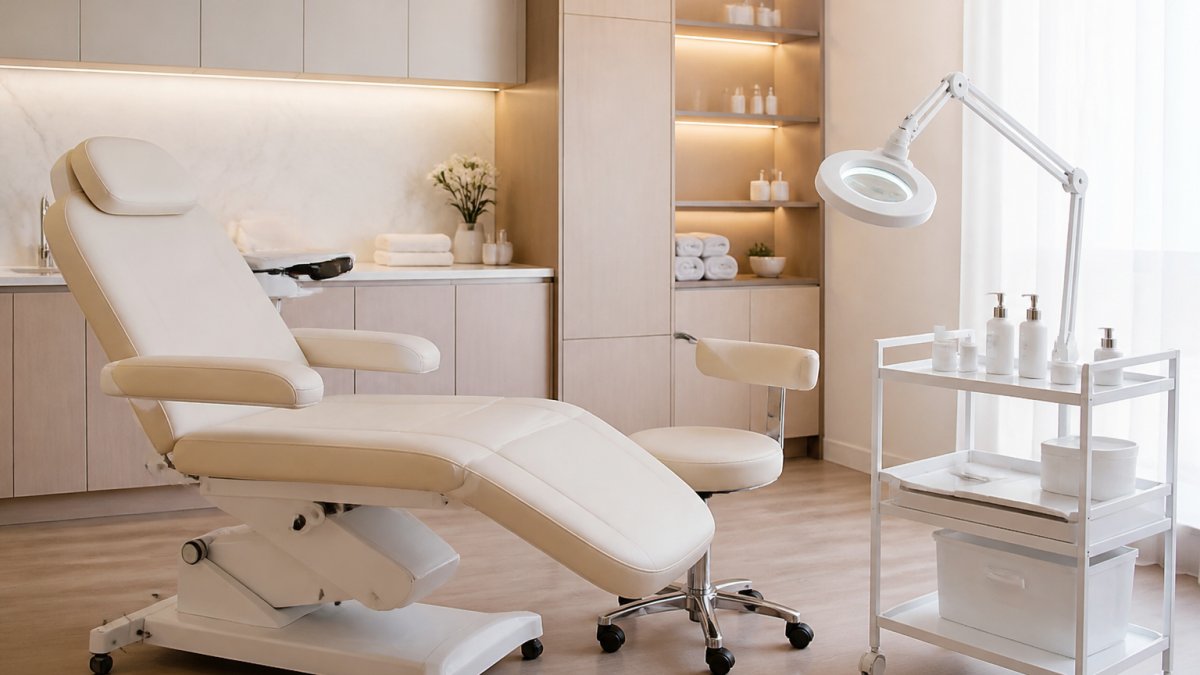
- Facial treatment table or chair with adjustable height and backrest
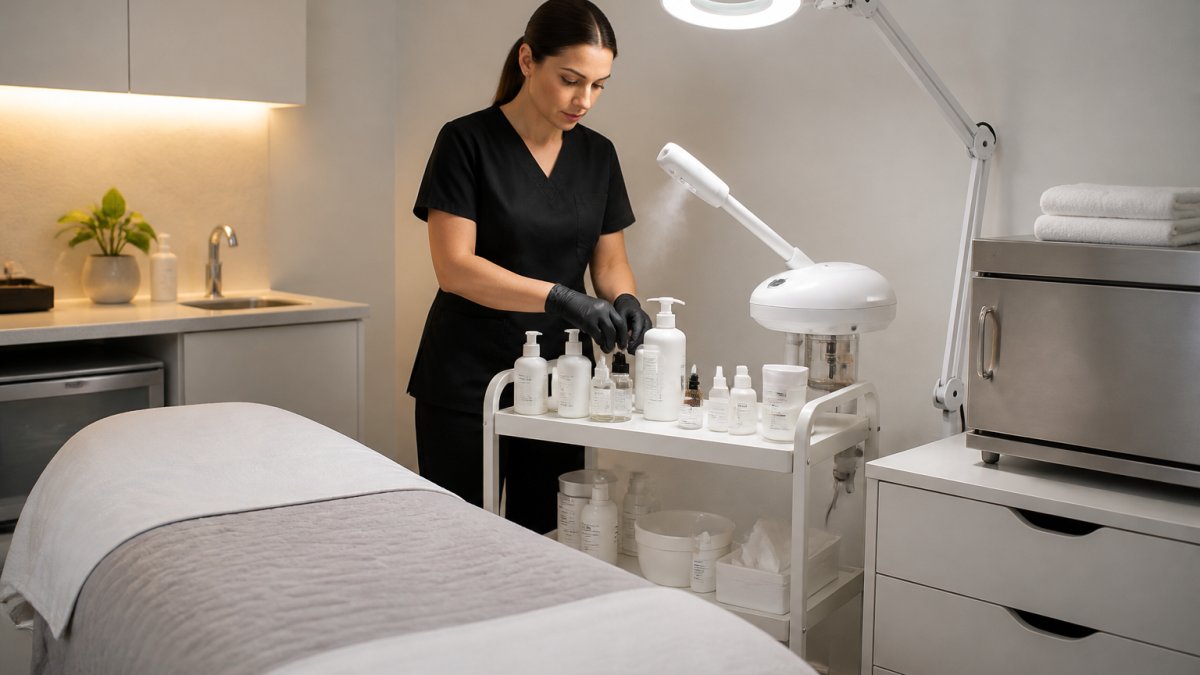
- Facial steamer with magnifying lamp for skin analysis and preparation
- High-frequency and galvanic machines for facial treatments
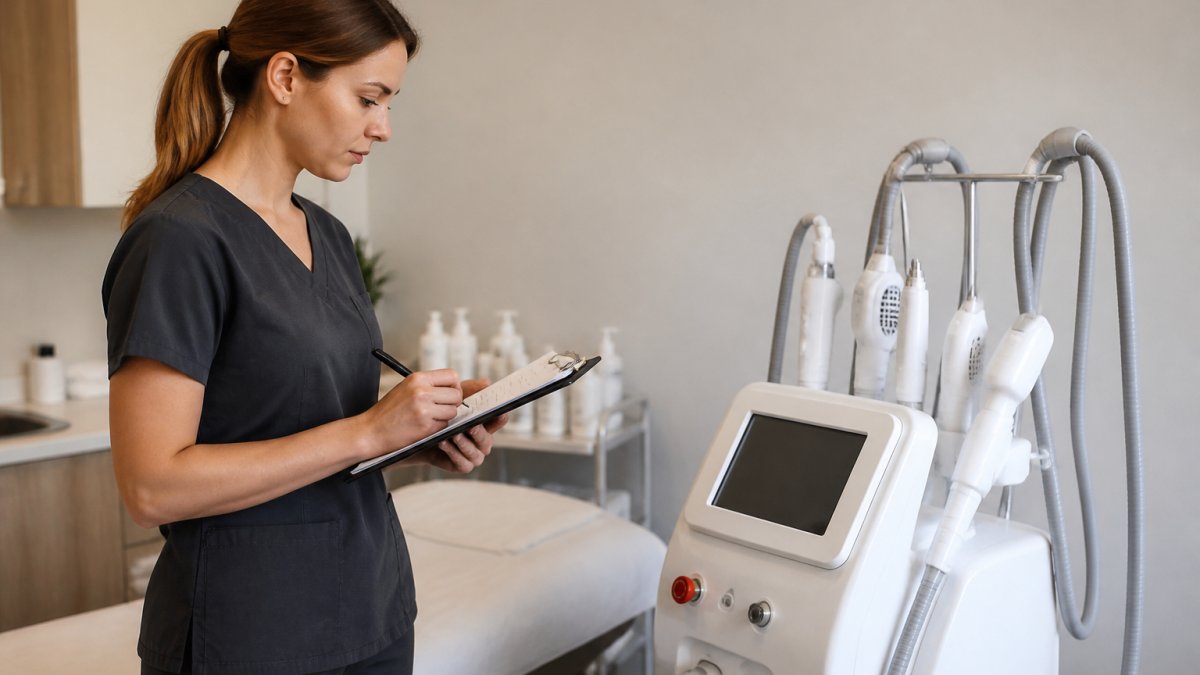
- Microdermabrasion or similar exfoliation device
- Hot towel warmer or sterilizer cabinet
Each serves a specific function: treatment tables enable safe reclining, steamers open pores, high-frequency machines reduce inflammation, and microdermabrasion removes dead skin and promotes collagen production.
The SkinAct MediSpa Ultimate Starter Kit bundles core equipment with supplies. It includes a fully electric treatment table, esthetician chair, and storage cart, designed specifically for practitioners opening their first space.

Furniture and Client Comfort Items
Client comfort directly impacts satisfaction and repeat bookings.
Essential furniture includes:
- Treatment table or chair (covered above)
- Esthetician stool with proper back support for practitioner comfort
- Reception area seating for waiting clients
- Storage cart or shelving for supplies and tools
- Towel warmer for client comfort
Quality furniture reduces practitioner fatigue and improves client perception of your practice.
Med Spa Treatment Room Setup: Facility and Build-Out Costs
Facility preparation includes flooring, walls, plumbing, electrical upgrades, and HVAC adjustments. Understanding major cost drivers and regulatory requirements helps you avoid budget overruns.
Core Build-Out Categories and Typical Ranges
Flooring and surface preparation must resist moisture and bacteria. Tile, sealed concrete, or luxury vinyl plank typically costs $8-$15 per square foot installed. A 200-square-foot treatment room runs $1,600-$3,000. Some states explicitly require non-porous flooring.
Plumbing modifications for steamers and hand-washing stations typically require $2,000-$5,000 per treatment room. Older buildings may require rerouting pipes to handle simultaneous demand.
Electrical upgrades are frequently underestimated. Advanced devices require dedicated circuits. Upgrading from 100-amp to 200-amp service costs $3,000-$8,000. Adding circuits and grounding per treatment room typically runs $1,500-$3,500.
HVAC and ventilation must handle moisture and meet state health department standards. Upgrading for a 400-square-foot suite typically costs $4,000-$10,000.
Walls and finishes include moisture-resistant drywall and semi-gloss paint. Wall finishing for a single treatment room typically costs $800-$1,500.
Lighting upgrades are often overlooked but essential for skin analysis and treatment visibility. Medical-grade lighting with color-corrected bulbs (often 5000K daylight temperature) costs more than standard office lighting. A single treatment room with proper task lighting and ambient lighting typically requires $600-$1,200 in fixtures and installation.
Regulatory and Compliance Build-Out Costs
State medical boards and local health departments impose specific facility requirements that directly affect build-out budgets. These are not optional.
Sanitation and infection control requirements often mandate separate hand-washing stations in each treatment room. Dedicated stations with foot-operated or sensor faucets may be required. Verify your state's medical board rules before finalizing layout.
Medical waste disposal systems are required for invasive procedures.
Sterilization and storage areas may be required for reusable instruments. An autoclave may be required, or use a sterilization service.
Privacy and security requirements vary by state. Verify requirements early; retrofitting is expensive.
Room-by-Room Budgeting Framework
A practical approach is to budget build-out by room type:
Single treatment room (200 sq ft): Flooring $1,600-$3,000, plumbing $2,000-$5,000, electrical $1,500-$3,500, HVAC $2,000-$4,000, walls/finishes $800-$1,500, lighting $600-$1,200, compliance setup $500-$1,500. Subtotal: $9,000-$20,000 per room.
Reception and waiting area (300 sq ft): Flooring $2,400-$4,500, electrical $800-$1,500, walls/finishes $1,000-$2,000, lighting $800-$1,500, HVAC (shared or upgraded) $1,000-$2,000. Subtotal: $6,000-$12,000.
Staff/break room (150 sq ft): Flooring $1,200-$2,250, plumbing $1,500-$3,000, electrical $500-$1,000, walls/finishes $500-$1,000, lighting $400-$800. Subtotal: $4,100-$8,050.
Contingency and Hidden Facility Costs
Contractors frequently discover hidden problems: outdated electrical panels, code violations, structural issues, or inadequate HVAC. Also account for permits and inspections.
Phasing Facility Build-Out
If cash flow is tight, you can phase facility work. Prioritize treatment rooms and compliance systems first (sanitation, hand-washing, medical waste). Reception and staff areas can be finished more simply initially and upgraded later. However, do not defer electrical, plumbing, or HVAC upgrades, these are foundational and expensive to retrofit.
Medical Spa Equipment Financing: New, Used, Leased, and Financed Options
You have four ways to acquire equipment. Each has trade-offs between upfront cost, long-term value, and flexibility.
New equipment offers reliability and warranty coverage but highest upfront cost. Used equipment reduces spending by 30-50% but carries unknown history and no warranty. Leased equipment spreads costs over time but you never own it. Financed equipment lets you buy now and pay over 3-5 years.
Medical Spa Equipment Checklist: Phased Purchasing Strategy
Smart spa owners don't buy everything at once. They phase purchases based on priority and cash flow. This approach reduces risk and lets you learn what services clients actually want.
Phase 1: Essential Startup Equipment
Phase 1 equipment generates revenue immediately and establishes your core service offerings.
Priority Phase 1 purchases:
MediSpa Ultimate Starter Kit →
- Treatment table or chair (fully electric preferred for adjustability)
- Facial steamer with magnifying lamp
- High-frequency and galvanic machine
- Microdermabrasion device
- Hot towel warmer
- Storage cart for supplies
- Esthetician stool
- Basic reception furniture
These items let you offer fundamental facial and skin treatments and generate early revenue.
The Econo Spa Equipment Package Plus from SkinAct provides most Phase 1 essentials at a lower entry price point. It includes a hydraulic bed with 90-degree back and leg adjustment, a free stool, a facial spa aroma ozone steamer with high frequency, a magnifying lamp, a double wax warmer, a trolley cart, electric mittens, electric booties, HydroSculpt Glow: Diamond Microdermabrasion + Blue LED Light Therapy, a hot towel warmer cabinet with sterilizer adjustable temperature, SkinAct Oversize Premium Wash Cloth, and 24-count SkinAct Hand Sanitizer 8.12 OZ (240 ML). It also includes Oxygen Infusion Vitamin C Skin Brightening, Oxygen Infusion Anti-Aging Collagen, Oxygen Infusion Detox, and a 2 In 1 High Frequency Plus Galvanic Facial Machine.

Phase 2: Expansion and Service Growth
Phase 2 begins once you have steady client flow and understand which services generate the most revenue.
Phase 2 typically begins 6-12 months after opening. You'll have real data on which services clients request most. Invest in equipment that directly supports those high-demand services. This is also an ideal time to invest in staff development, Online Service Training for Estheticians helps your team master new modalities and expand your service offerings based on client demand.
Phase 3: Premium and Specialty Additions
Phase 3 equipment targets clients willing to pay premium prices for advanced treatments.
These additions typically have higher price points and require practitioner training. Add them only after proving demand and establishing profitability.
Hidden Costs and Contingency Planning
New spa owners often focus on equipment and facility costs while underestimating the operational, regulatory, and lifecycle expenses that accumulate over the first 2-3 years. These hidden costs frequently exceed initial equipment investment and can strain cash flow if not planned for.
Regulatory, Licensing, and Compliance Costs
These are non-negotiable and vary by state, but they are often overlooked in initial budgets.
Medical spa licensing and permits vary significantly by state. Some require a medical director; others require esthetician or facility licenses. Licensing application fees typically range $200-$1,000, with annual renewal fees. Check your state's medical board website for exact requirements.
Professional liability insurance is essential and often required by landlords or lenders. Budget this as an annual recurring cost. General liability and property insurance protect against slip-and-fall claims and property damage.
Infection control and medical waste compliance requires ongoing costs. Medical waste disposal, sharps containers, and sterilization supplies are recurring expenses.
Continuing education and practitioner certification is required in most states.
Equipment Lifecycle and Maintenance Costs
Equipment doesn't last forever, and maintenance costs accumulate.
Service contracts and repairs are often overlooked. High-end devices typically require annual service contracts to maintain warranty coverage. Out-of-warranty repairs can cost $1,000-$5,000 per incident.
Replacement parts and consumables add up quickly. Microdermabrasion tips, steamer filters, and electrodes are recurring expenses.
Equipment replacement cycles mean devices purchased today will need replacement in 5-10 years. Budget for equipment replacement as an ongoing capital expense.
Technology and Software Costs
These are often underestimated but essential for operations.
Client management and booking software typically costs $100-$300 per month. Point-of-sale and payment processing include software subscriptions and transaction fees. Email marketing and website hosting add additional recurring costs. Total annual technology costs for a small spa typically range $2,000-$6,000.
Staffing and Training Costs
Initial staff training on equipment, protocols, and client service requires 40-80 hours per employee before opening. Ongoing training for new services costs $500-$2,000 per practitioner per year. Staff uniforms and PPE cost $100-$300 per employee initially, then $50-$100 annually for replacements.
Marketing and Client Acquisition
Grand opening promotion typically requires $1,000-$5,000 in advertising and promotional offers. Ongoing marketing typically costs $500-$2,000 per month to maintain client flow.
Contingency Fund Strategy
Plan contingency reserves. Allocate across facility surprises, equipment failures, and operational shortfall. Keep contingency funds in a separate account and resist spending them on non-essential items.
Ongoing Cost Tracking and Adjustment
Create a detailed spreadsheet tracking startup and operational costs by category. Update it monthly during your first year to identify spending patterns, inform pricing, and support future planning.
Budgeting for Different Spa Sizes and Service Models
Your budget depends heavily on spa size and the services you offer. A solo esthetician's budget looks very different from a multi-room medical spa.
Opening a medical spa requires strategic planning around equipment, facility, and operational costs. Phase purchases based on revenue and client demand: start with essential equipment that generates income immediately, expand as revenue grows, and add premium services once profitable.
SkinAct provides pre-configured equipment packages for different spa sizes and budgets, including options for solo practitioners, small spas, and multi-room facilities.
Beyond equipment, explore Small Business Administration guidance on startup planning for detailed budgeting frameworks. Review state medical board regulations for spa licensing requirements to ensure compliance with local standards. Consider consulting with business advisors specializing in spa operations for personalized guidance on your specific situation.
Your equipment investment directly impacts client experience and practice profitability. Quality, durable equipment reduces maintenance costs and downtime. Professional-grade furniture improves practitioner comfort and client satisfaction. Strategic phasing balances cash flow with growth potential.
Frequently Asked Questions
What equipment does a new medical spa need to start?
A new medical spa needs core treatment equipment (steamer, high-frequency machine, microdermabrasion device), a comfortable treatment table or chair, esthetician work stool, storage cart, hot towel warmer, and essential supplies. Starter packages like the Silver Facial Spa Equipment Package ($599) provide foundational equipment for facial services, while the MediSpa Ultimate Starter Kit ($2,099) includes a fully electric treatment table and additional tools. Your specific needs depend on which services you plan to offer first.
How much should I budget for medical spa equipment financing?
Equipment is a significant part of your total startup budget. Financing options include purchasing new equipment outright, buying used or refurbished items, leasing equipment, or financing through equipment loans. Factory-direct suppliers often offer better pricing than distributor markups, reducing your capital expenditure.
Should a new medical spa buy or lease treatment equipment?
Buying works best for permanent fixtures and high-use items you'll keep 5+ years, while leasing suits equipment you may upgrade or test before committing. New purchases offer ownership and tax depreciation benefits but require upfront capital. Leasing preserves cash flow and includes maintenance, but costs more long-term. Many new spas buy essential items (treatment table, steamer) and lease specialty equipment to test demand before investing further.
What costs are often overlooked when outfitting a medical spa?
Common hidden costs include electrical upgrades and plumbing for treatment rooms, HVAC adjustments for steamer use, flooring and wall finishes, business software and scheduling systems, regulatory compliance documentation (intake forms, consent templates), staff training on equipment, initial inventory of skincare products and consumables, insurance and liability coverage, and a contingency reserve for unexpected expenses. Professional intake and treatment plan templates protect your practice and should be part of your startup budget.