Are Professional Microneedling Devices Worth the Money?
Last Updated: October 30, 2026
Quick Summary
Professional microneedling devices are generally worth the money for practices that run many sessions per week, because they hold steady motor performance and offer more needle and depth options than at-home pens. Whether they pay off depends on volume, treatment mix and consistency needs. Calculating the fully loaded cost per session shows if the investment fits your practice.
- Professional devices are built for repeated sessions on different clients, unlike single-user at-home pens.
- Motor consistency, needle options and build quality are the three main differences that show up in practice.
- Cartridges are usually the largest recurring cost and are often underestimated by buyers.
- Calculate cost per session by adding device price, consumables, serums and maintenance, then dividing by expected treatments.
- Screen clients for contraindications and check your state esthetics board rules before offering the service.
Table of Contents
- What Separates a Professional Microneedling Device From an At-Home Pen
- Professional vs. At-Home Microneedling: Where the Real Differences Show Up
- Comparing the Professional Microneedling Pens in the SkinAct Lineup
- Microneedling Treatment Frequency and What It Means for Your Cost Per Session
- Who Should Avoid Microneedling and How Evidence Quality Shapes Expectations
- Training Requirements for Estheticians Before Offering Microneedling Services
- Deciding Whether Professional Microneedling Equipment Fits Your Practice
- Frequently Asked Questions
What Separates a Professional Microneedling Device From an At-Home Pen
Are professional microneedling devices worth the money for a spa or esthetics practice? For most working practitioners the answer depends on volume, treatment mix and how much consistency matters to the business. SkinAct builds professional-grade equipment for medical spas and estheticians.
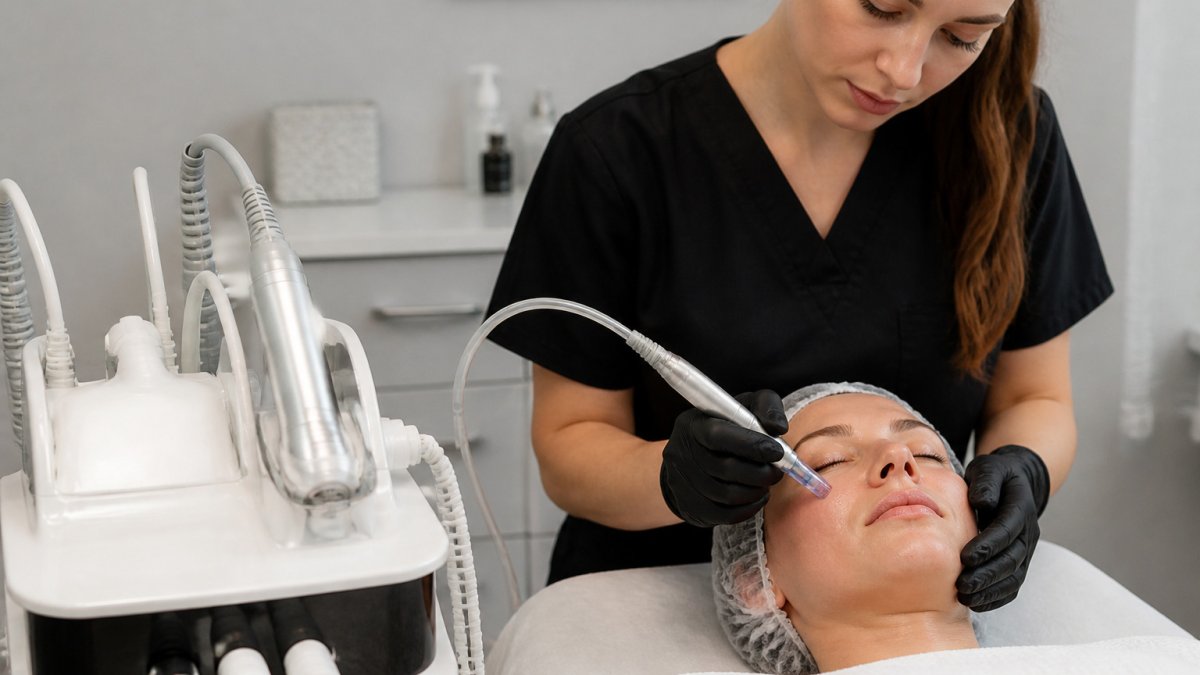
The core difference is intended use. An at-home pen is designed for a single user treating their own skin at low intensity. A professional device is built for repeated sessions on different clients, with more stable motor performance and a wider range of needle options and depth settings. Consistency across many treatments per week is one factor that can justify the price.
Professional units generally offer more control over needle depth and speed than at-home pens, which matters when treating different skin concerns on different clients.
Professional vs. At-Home Microneedling: Where the Real Differences Show Up
Consumer dermarollers and pens are the most common comparison point. They work for basic skin care at home, and the cost is low. The trade-off is limited power, variable motor consistency and fewer options for adjusting treatment.
For a practice, the differences show up in three places:
- Motor consistency: Professional devices are engineered to hold steady speed across long sessions.
- Needle options: Practitioners need cartridges and depths matched to specific concerns such as acne scars or uneven tone.
- Build quality: Equipment used daily must survive frequent cleaning and handling.
Whether these differences justify the cost depends on how often the device is used. If you are also weighing other professional device options such as IPL, compare them in Laser Hair Removal vs IPL: Which Device Fits Your Practice. A device used once a week for a few clients is a different investment than one used daily.
Comparing the Professional Microneedling Pens in the SkinAct Lineup
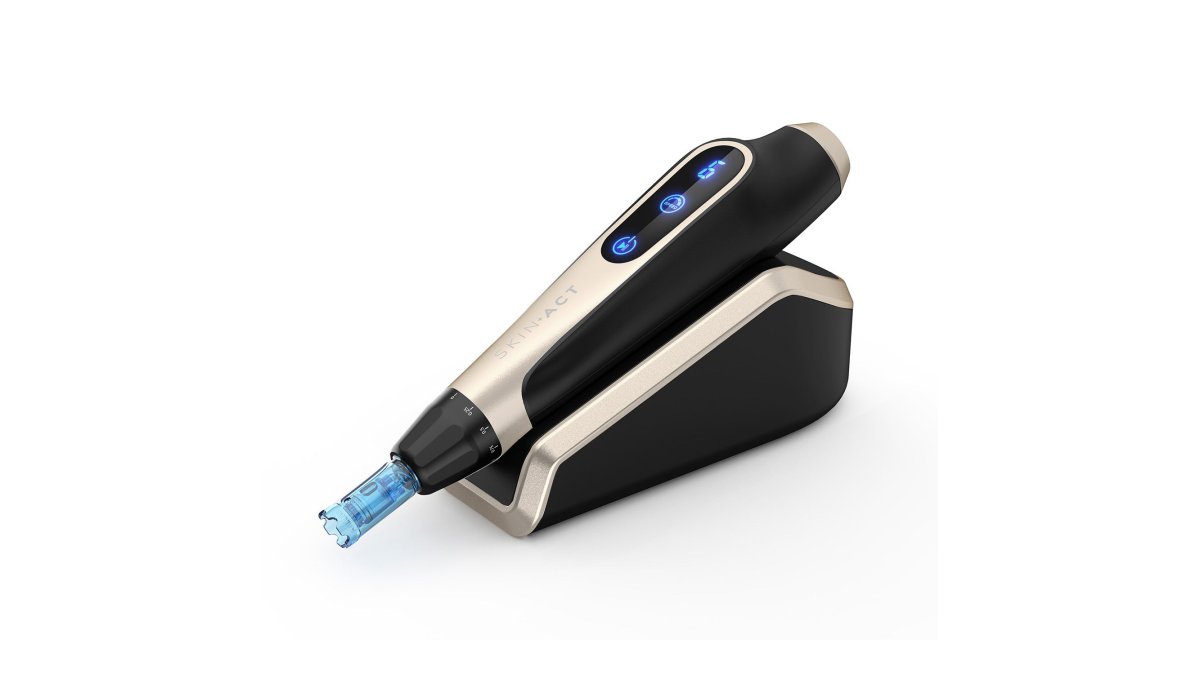
SkinAct offers several professional pens, and each fits a different practice profile. The Wireless Microneedling Pen is priced at $199.00. Explore the full range in our microneedling product collection, or review the standard model directly on its Skinact Wireless Microneedling Pen page.

Standard Wireless Pen vs. Pro Pen With EMS and Light Therapy
The Pro Wireless Microneedling Pen With EMS & Light Therapy costs $259.00 and adds microcurrent (EMS) and light therapy features to the standard pen. The Pro Wireless Microneedling Pen With EMS & Light Therapy adds microcurrent (EMS) and light therapy features to the standard pen. Compare the Pro Wireless Microneedling Pen With EMS & Light Therapy features and price before deciding.

Single Pen vs. Serum Bundles: Total Cost Over Time
The Wireless Microneedling Pen With Serums Package is priced at $377.00, and the Pro version with serums is $428.00. Bundles change the cost math, because serums are an ongoing expense once you start treating clients. Viewing the Pro Wireless Microneedling Pen With Serums Package shows what the bundle includes.

Calculate cost per session by adding device price, expected serum use and the number of clients you plan to treat.
Microneedling Treatment Frequency and What It Means for Your Cost Per Session
Most comparisons stop at the sticker price of the pen. That number tells you almost nothing about value. What matters is the fully loaded cost per treatment, and that figure depends on four inputs: device price, consumables, practitioner time, and the number of sessions the device actually delivers over its service life.
Build a total cost model, not a price comparison
A simple worksheet gets you most of the way there. List each line item once, then divide the total by your realistic session count.
-
Device price: the one-time capital cost. A standard wireless pen and a pro model with added modalities sit at different price points, so start from the model that matches your treatment menu.
-
Consumables: needle cartridges are single-use in any professional setting. Estimate one cartridge per treatment and multiply by your monthly session count. This is usually the largest recurring cost and the one most buyers underestimate.
-
Serums and topicals: if you use a hyaluronic acid or peptide serum during treatment, add the per-session product cost. Bundles that include serums change the upfront math but do not eliminate the ongoing expense.
-
Downtime and recovery: if clients need a day or two of social downtime, that affects how you schedule and how many sessions you can realistically book per week.
The per-session formula
Add device price, projected consumable cost over the device's service life, serum cost, and maintenance. Divide by the total number of treatments you expect to perform before replacement. The result is your true cost per session. Compare that to your service price to see your margin, and compare it to the cost of referring clients out to another provider to see whether owning equipment beats outsourcing.
Run the numbers with your own session count rather than a generic average.
Frequency changes the answer
The break-even point is different for every practice, which is why a written cost model beats a gut check.
The table below summarises the fully loaded cost inputs the article identifies for each treatment.
| Cost input | What it covers | Note |
|---|---|---|
| Device price | One-time capital cost | Start from the model that matches your menu |
| Consumables | Needle cartridges per treatment | Usually the largest recurring cost |
| Serums and topicals | Per-session product cost | Bundles change upfront math, not ongoing cost |
| Downtime and recovery | Client recovery time | Affects how many sessions you can book per week |
| Cost per session | Total cost divided by expected treatments | Compare to your service price and referral cost |
Who Should Avoid Microneedling and How Evidence Quality Shapes Expectations
Two things separate a professional from a device owner: knowing whom to turn away, and knowing how to talk about results without overselling. Both belong in your intake process.
Screen for contraindications before every series
Microneedling creates controlled micro-injuries, so any condition that impairs healing or raises infection risk is a reason to pause. A practical screening list includes:
- Active skin infection or inflammation in the treatment area, including cold sores, bacterial infections, and open lesions.
- Active acne with cysts or pustules in the treatment zone, which can worsen with needling.
- Certain skin conditions such as eczema or psoriasis in the treatment area, where trauma can trigger a flare.
- History of keloid or hypertrophic scarring, which warrants a conservative approach or referral.
- Blood-thinning medications and some prescription topicals, including isotretinoin, which affect healing and bleeding.
- Pregnancy and compromised immune status, where elective treatment is generally deferred.
- Recent cosmetic procedures or fillers in the same area, which need a waiting period.
Your training and your state esthetics board's scope-of-practice rules determine which clients you can treat and which you must refer to a physician. Document the screen, and when in doubt, refer out.
Separate established evidence from marketing claims
Published research on microneedling varies widely in size and design, and much of the marketing around devices outruns the evidence. A useful habit is to sort claims into three buckets:
Set realistic timelines
Results are cumulative, not immediate, and build over a series of treatments. Avoid promising specific outcomes. Describe microneedling as a treatment many clients find helpful over a series, and let your consultation set the timeline.
Training Requirements for Estheticians Before Offering Microneedling Services
Owning a professional device does not qualify a practitioner to use it. Training in sterile technique, needle depth selection, contraindications and aftercare is essential. Practices that want to add microneedling with proper preparation can start with the Online Service Training for Estheticians.
Check your state's esthetics board rules for scope of practice and any device requirements before you offer the service to clients.
Deciding Whether Professional Microneedling Equipment Fits Your Practice
Start with three questions. How many microneedling sessions will you run each week? Which add-on treatments do you already offer? Can you commit to training before you start?
If your practice runs regular sessions and wants consistent results, a professional device is usually worth the investment. If you treat clients only occasionally, a lower-cost option or a service referral may fit better. Comparing your projected volume with the cost per session is the fastest way to decide.
Frequently Asked Questions
What is microneedling?
Microneedling is a treatment that uses fine, sterile needles to create many tiny micro-injuries in the skin. The body responds by producing new collagen and elastin during healing, which can improve skin texture, the look of fine lines and the appearance of some acne scars. Professional treatments are performed by trained practitioners using automated pens or other devices, and results build over several sessions rather than appearing after one treatment. The depth of needling, the device used and the client's skin condition all affect the outcome and the safety profile.
Are professional microneedling devices more effective than at-home devices?
Professional devices generally offer more precise needle depth control and a wider range of needle configurations than at-home pens. Those features matter when a practitioner needs to treat different skin concerns at different depths in a single session. Effectiveness also depends on technique, sterilization and how often treatments are done, so the device alone does not determine results.
How often can clients receive professional microneedling treatments?
Most professional protocols space sessions several weeks apart so the skin has time to heal and rebuild collagen between treatments. Practitioners typically plan a series of sessions rather than a single visit, and the exact interval depends on needle depth, the client's skin and the practitioner's protocol. Spacing treatments too closely can increase irritation and infection risk. Your intake and aftercare plan should document the interval you use so clients and your records stay consistent.
What training is needed to offer microneedling services?
Training requirements for offering microneedling depend on your state's scope-of-practice rules, so check with your state licensing board before adding the service. Estheticians generally need training that covers sterile technique, needle depth selection, bloodborne pathogen safety, contraindications and aftercare. An online course can build the theory and protocol knowledge, but confirm that your state accepts it and arrange hands-on practice under supervision before treating paying clients. Keep records of your training for your files.
Ready to find the right professional microneedling pen for your practice? Explore the SkinAct lineup and match a device to your treatment volume, add-on services and training plan.