Medical Spa Equipment Financing Options 2026: A Complete Guide
Last Updated: October 30, 2026
Quick Summary
Medical spa equipment financing in 2026 comes down to choosing between an equipment loan, which you own at term end, and a lease, which you use for a set period. Compare total cost of ownership, not the monthly payment, and match the structure to your practice stage.
- Lenders check credit score, time in business, revenue, and collateral, weighing them differently by product.
- Gather an itemized equipment quote first, since lenders underwrite against a specific number.
- Buy equipment you will keep past the term and that holds value; lease fast-cycling technology.
- Startups often face 12-36 month terms with a personal guarantee and higher down payments.
- Ask every lender for the total of payments figure in writing before signing.
Table of Contents
- Why 2026 Is the Year to Rethink Medical Spa Equipment Financing
- Equipment Loans vs. Equipment Leasing: What's the Difference?
- Medical Equipment Financing Requirements Lenders Actually Check
- Your Medical Equipment Financing Application Checklist
- Lease vs. Buy Medical Spa Equipment: A Decision Framework
- Medical Spa Equipment Financing Examples for Different Practice Stages
- Comparing Financing Offers: Rates, Fees, and Total Cost of Ownership
- Choosing Equipment and Financing That Work Together
- Frequently Asked Questions
Why 2026 Is the Year to Rethink Medical Spa Equipment Financing
Medical spa equipment financing in 2026 looks different from the arrangements most owners signed three or four years ago. Buyers have more ways to split the cost of a treatment room than ever.
Here is what most guides get wrong: the cheapest advertised rate is rarely the cheapest deal.
This guide breaks down the main equipment financing paths, what lenders check, how to model cash flow, and how to match a payment structure to your practice stage.
Equipment Loans vs. Equipment Leasing: What's the Difference?
An equipment loan is a debt you own the equipment with; a lease is a right to use it for a set period. The distinction drives everything that follows: tax treatment, balance sheet impact, upgrade flexibility, and what happens when the term ends.
With a loan, you borrow a fixed amount, repay it with interest over a set term, and own the equipment outright once the final payment clears. The asset sits on your books and typically qualifies for depreciation and, where applicable, Section 179 expensing under IRS guidance on business asset expensing.
With a lease, you pay for use. Operating leases keep equipment off your balance sheet and often bundle maintenance, suiting practices that refresh technology on a cycle. Finance leases sit closer to a purchase and usually end with a buyout option.
| Feature | Equipment Loan | Equipment Lease |
|---|---|---|
| Ownership | You own it at term end | Lessor owns it; buyout optional |
| Down payment | Often required | Frequently lower or waived |
| Tax treatment | Depreciation, possible expensing | Payments may be deductible |
| Upgrade flexibility | Sell or trade the asset | Swap at term end |
| Best for | Long-life furniture and beds | Fast-cycling technology |
Medical Equipment Financing Requirements Lenders Actually Check
Medical equipment financing requirements generally come down to credit, time in business, revenue, and collateral. Lenders weigh them differently depending on the product.
Credit score is the first filter.
Time in business and revenue determine whether you qualify for conventional bank terms or need an alternative lender. Startups without a track record often face higher rates or personal guarantees.
Down payment and collateral reduce lender risk and improve terms.
Your Medical Equipment Financing Application Checklist
A complete application checklist saves weeks. Missing documents are the most common reason approvals stall, and a stalled application can push an opening date.
- Business tax returns for the last two years
- Personal tax returns for the last two years
- Current profit and loss statement and balance sheet
Gather the equipment quote first. Lenders underwrite against a specific number, and an itemized vendor quote speeds up approval.
Lease vs. Buy Medical Spa Equipment: A Decision Framework
Lease vs. buy medical spa equipment is a cash-flow question with three inputs: how long you will use the asset, how fast it becomes obsolete, and how much cash you can part with today.
Run this framework for each major purchase:
- Estimate useful life. Tables, chairs, and cabinetry last many years; technology-driven devices cycle faster.
- Estimate resale or trade value. Items that hold value favor buying.
- Compare total payments. Add down payment, monthly payments, fees, and buyout.
- Check the tax angle with your accountant. Depreciation and expensing can change the math substantially.
- Stress-test against slow months. If a slow quarter would break the payment, the structure is too aggressive.
If you expect to keep the equipment past the term and it holds value, buy. If the technology will likely be replaced before the term ends, lease.
Medical Spa Equipment Financing Examples for Different Practice Stages
The right structure for a solo esthetician opening a single room differs sharply from a five-location group. These patterns show how borrower profile, equipment scope, and payment structure fit together at each stage.
Startup: solo esthetician or single-room suite
A startup typically has limited time in business and thin financials, so the approval path matters as much as the rate. Common patterns:
- Short term (12-36 months) to keep total interest down while revenue builds.
- Personal guarantee is common at this stage; plan for it.
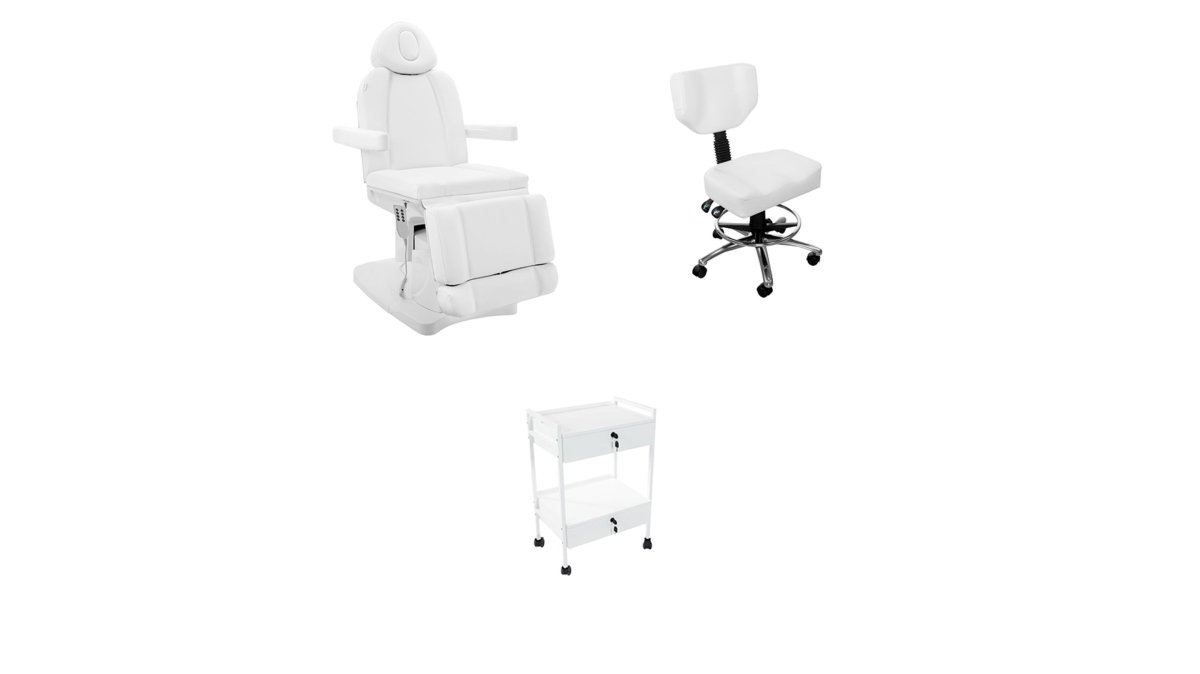
A package like the MediSpa Ultimate Starter Kit bundles an electric treatment chair, an esthetician chair, and a storage cart into one purchase. Model the payment against a conservative treatment volume, if the setup cannot cover its total cost at 60% of target bookings, downsize the package rather than stretch the term. If you are still building the skills to fill those rooms, Online Service Training for Estheticians can help you add modalities without adding equipment debt.

Growing practice: adding modalities
Here the question is which device pays for itself fastest. Terms vary by lender and borrower profile, so compare offers directly.
Run a per-device model before committing:
- Estimate treatments per week the new modality can realistically sell in year one.
- Multiply by average ticket to get monthly revenue.
- Subtract consumables, staff time, and a maintenance reserve.
- Compare the remainder to the monthly payment plus any down payment amortized over the term.
If the device covers its total cost at conservative volume, finance it. If it only works at full utilization, wait or choose a lower-cost modality. Owners planning the full build-out will find the medical spa budget guide useful for line-by-line outfitting costs.
MediSpa Ultimate Starter Kit →
Multi-location group: standardization and scale
Consistency across sites matters as much as price. Standardizing on the same equipment can simplify training and maintenance across sites.
At this stage, consider:
- Master lease or equipment line that lets you add units across sites without a new application each time.
- Finance leases for technology that will be refreshed on a cycle, with a planned buyout or swap at term end.
- Loans for long-life furniture, beds, and cabinetry that will stay in service for years.
For a fuller cost picture across sites, our multi-location outfitting guide breaks down the operational side of expansion.
Limited credit history or a credit blemish
Borrowers with limited credit history are not shut out, but the structure changes:
- Expect a larger down payment, a co-signer, or both.
- Vendor programs often price risk differently than banks and may approve where a conventional lender will not.
- A shorter term reduces lender exposure and can improve approval odds.
Comparing Financing Offers: Rates, Fees, and Total Cost of Ownership
Comparing financing offers means comparing total cost of ownership, not monthly payments. Two offers with the same payment can carry very different fee structures, terms, and end-of-term conditions. The sections below give you a benchmark framework and a cash-flow model to run before you sign.
2026 benchmark ranges by borrower profile
Rates and terms in 2026 vary widely by lender type and borrower profile. The ranges below are typical patterns, not quotes, always confirm the actual APR and total of payments in writing.
| Borrower profile | Typical APR range | Typical term | Down payment | Common lender type |
|---|---|---|---|---|
| Established practice, strong credit, 5+ years in business | Lower single digits to low double digits | 36-60 months | 0-10% | Bank or credit union |
| Growing practice, good credit, 2-5 years in business | Mid single digits to mid teens | 24-60 months | 10-20% | Specialty equipment lender |
| Startup or limited credit history | Upper teens and higher | 12-36 months | 20%+ or co-signer | Alternative or vendor program |
| Vendor in-house program | Varies; often priced into equipment | 12-48 months | Frequently low or waived | Equipment vendor |
A longer term lowers the monthly payment but raises total interest. Compare the all-in cost, not just the payment.
A worked total-cost-of-ownership model
Monthly payment is only one line. Build a five-year model with these rows for each device or package:
| Cost or revenue line | What to include |
|---|---|
| Acquisition | Down payment + sum of all monthly payments + origination fee + buyout |
| Maintenance | Service contract, preventive visits, parts not covered |
| Consumables | Per-treatment supplies, tips, gels, single-use components |
| Training | Initial certification and refresher training for staff |
| Insurance | Rider or policy addition for the equipment |
| Downtime | Estimated lost treatment revenue during service windows |
| Expected treatment revenue | Treatments per week × average ticket × weeks operated |
Run the model at a conservative volume, say, 60% of your target, and again at target. If the device still covers its total cost at the conservative volume, the structure is defensible. If it only works at full utilization, you are financing optimism.
Contract terms that change the math
Beyond rate and term, these clauses move total cost more than most buyers expect:
- Prepayment penalties. Some notes charge a fee or lost-interest amount if you pay off early. Ask specifically.
- Personal guarantees. A guarantee puts your personal assets behind the debt; it also affects your ability to borrow elsewhere.
- Liens and UCC filings. The lender may file a blanket lien on business assets, not just the equipment.
If you want a quote specific to your setup, you can contact our team to talk through equipment and payment structures together.
Choosing Equipment and Financing That Work Together
Equipment and financing decisions are one decision, not two. The device you pick determines the amount financed, the term that makes sense, and the resale value the lender considers.
Start with the treatment menu, then the equipment that delivers it, then the payment structure that matches your cash flow. Our guide on how to choose medical spa equipment walks through that selection process in detail, from treatment tables to modality devices.
A common mistake is buying more capability than current patient volume supports. A device that sits idle still generates a monthly payment.
Financing is a tool for matching the cost of durable equipment to the revenue it produces over time. Get the match right and the equipment pays for itself.
Frequently Asked Questions
What financing options are available for medical spa equipment?
The main options are equipment loans, equipment leases, and vendor financing. Equipment loans give you ownership but require a down payment and good credit. Leases keep monthly payments lower and preserve cash flow, but you don't own the equipment at the end. Some lenders also offer specialized medical equipment financing with deferred or step-up payments for new practices.
Can a new medical spa get financing for equipment?
Yes, but approval is harder without a track record. New medical spas typically face stricter requirements: larger down payments, personal guarantees, or co-signers. Some lenders specialize in startup financing and will review your business plan, projected patient volume, and personal credit score instead of business revenue.
What do lenders require for medical equipment financing?
Most lenders review your credit score, time in business, annual revenue, and the equipment itself. Lenders also want to see bank statements, tax returns, and a clear list of the equipment you plan to buy. For larger amounts, they may ask for collateral or a personal guarantee. Requirements vary by lender, so compare at least two or three offers before committing.
Can medical spa equipment financing cover multiple devices?
Yes. Equipment financing can cover a single device or a full package of treatment tables, facial steamers, microdermabrasion units, and spa furniture. Bundling multiple items into one financing agreement often simplifies payments and may reduce overall fees. Be clear about the full scope when you apply so the lender can structure the right amount.
Is it better to lease or finance medical spa equipment?
It depends on your cash flow and long-term plans. Leasing keeps monthly payments lower and preserves cash for operations, which suits new practices or those testing new treatment offerings. Financing costs more upfront but you own the equipment and build equity. If you plan to keep the equipment for five or more years and have stable revenue, buying is usually cheaper overall. If technology changes quickly in your treatment area, leasing gives you flexibility to upgrade.
Can I finance used medical spa equipment?
Used equipment financing terms depend on the lender and the equipment. Get an independent appraisal before financing used equipment. Get an independent appraisal before financing used equipment, and confirm the seller provides service records and a warranty where possible.
The practices that get this right treat financing as part of the equipment decision, not an afterthought. SkinAct supplies professional-grade treatment furniture and devices at factory-direct pricing, with strict quality control and customization options, so the equipment side of your financing equation starts from a known quantity. Get started with SkinAct and build a treatment room that pays for itself.